Delivery of Suomi National Polar-orbiting Partnership (Suomi NPP) satellite data products will cease on November 1, 2026. Data users should transition now to alternative products from NOAA-21 and NOAA-20.
Suomi NPP data announcement
Filters

The CMR provides fast, efficient search and access to NASA Earth science data and data products for data users around the world.
Feature Article
Nov. 4, 2020
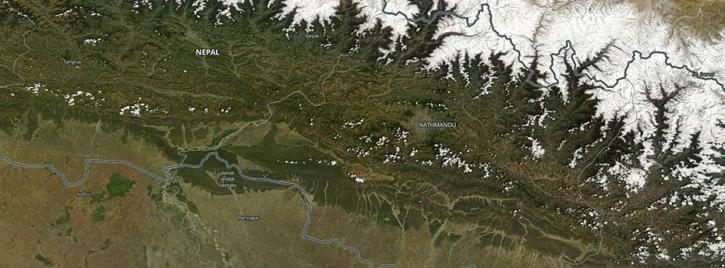
Explore and download data and imagery from EOSDIS for the the Nepalese region affected by the earthquake on April 25, 2015 and aftershocks.
Feature Article
Nov. 4, 2020
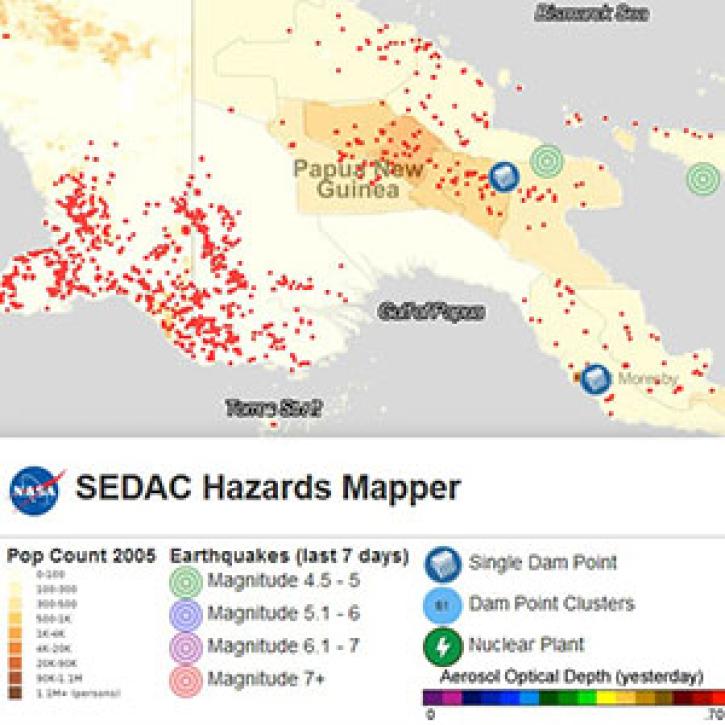
Determining risk from a wide range of natural hazards is only a mouse click away thanks to SEDAC's Hazards Mapper application.
Feature Article
Nov. 4, 2020

Global composites of 30m resolution Landsat imagery available in Worldview
Feature Article
Nov. 4, 2020
NASA’s EOSDIS constantly assesses user needs, and uses this input to continually improve data, products, and services.
Feature Article
Nov. 4, 2020

Ground validation campaigns connect the dots between what is being remotely-sensed by a satellite instrument and ongoing Earth processes.
Feature Article
Nov. 4, 2020
Data discovery, access, use, and understanding are key functions of metadata. The application of ISO metadata standards to NASA Earth science data will help unify NASA Earth science metadata under a single international standard.
Feature Article
Nov. 4, 2020

Colored bands in an interferogram show the gradual sinking of land (subsidence) in Arizona’s McMullen Valley Groundwater Basin between April 2010 and May 2015.
Feature Article
Nov. 4, 2020
SHOWING 8 OF 535