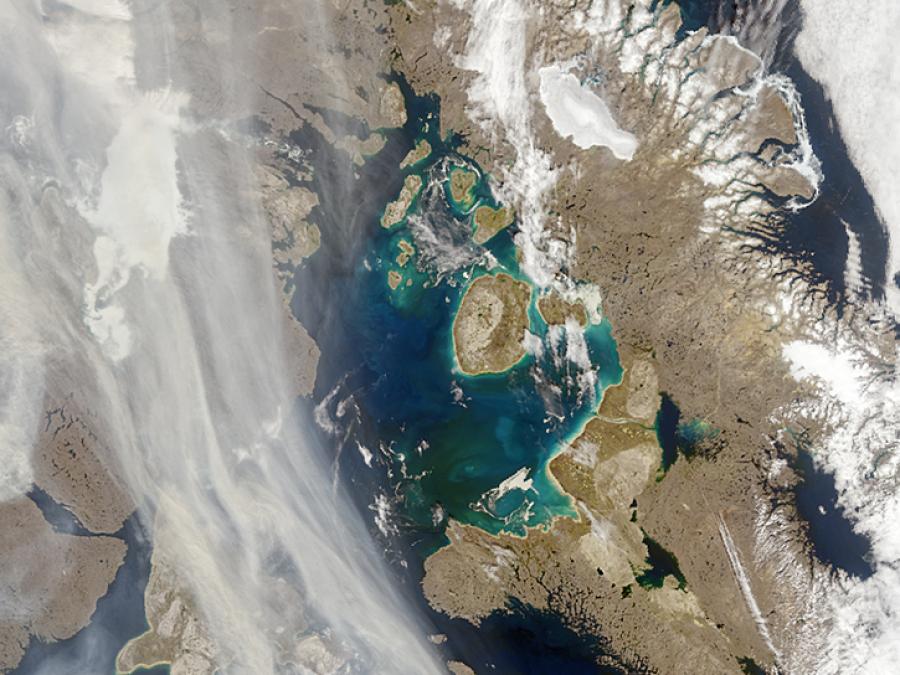

PACE satellite image over Canada
cloud rays over the Peruvian coast
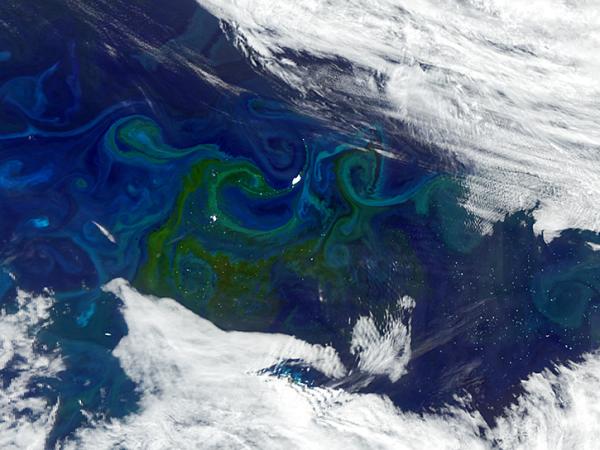
ocean color swirl

Field Support Group

Biological, Biogeochemical, and Interdisciplinary Oceanographic Research

Through the Field Support Group, the Ocean Ecology Laboratory sustains a cooperative field program mandated with advancing the state of the art of in- and above-water optical and biogeochemical measurements, which are critical for calibration and validation of satellite radiometry and secondary data products and for refinement of ocean color algorithms. The FSG works in collaboration with the Ocean Biology Processing Group and within a global network of partnerships where international expertise can be shared and distributed.

The overarching goal of the FSG is ensuring and expanding the ability of the research community to generate complete sets of in situ optical and biogeochemical data for inclusion in Earth science climate data records and other supporting data records used for ocean color satellite vicarious calibration, data product validation, and bio-optical algorithm development. 
Field and Laboratory Activities in Support of NASA

Lab activities include:

  • Coordination of and participation in interdisciplinary field campaigns.
  • Collaborative evaluation of instruments and methods, with attention to revision of uncertainty budgets.
  • Revision and distribution of community-vetted protocols for in situ data collection, processing, and analysis.
  • Extensive interaction and collaboration with the research community.

Learn more about our facilities, services, and reports:

How Do We Accomplish Our Mission?

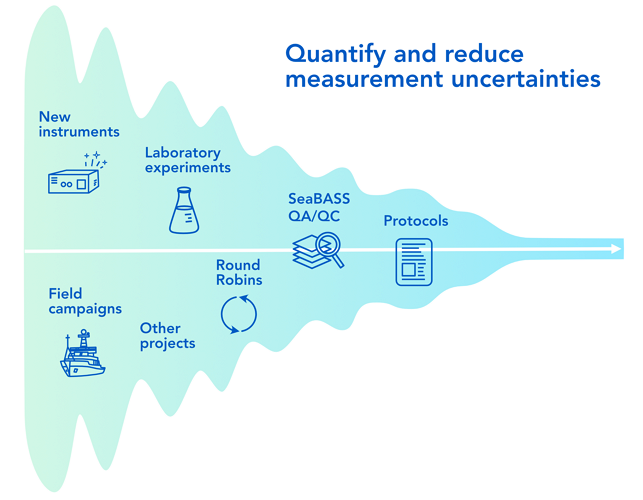
We perform various activities to quantify and reduce uncertainties in field measurements.

  • SeaBASS data quality control
  • Field and lab measurements, experiments, and community round-robins
  • Data processing and analysis
  • Measurement protocols
  • Evaluate new instrumentation in the lab and field
  • Develop community software tools

We engage the scientific community in all these activities.

The FSG's mission is to engage in activities that ensure the quality of NASA's optical and biogeochemical field datasets used in the development of Ocean Color (OC) satellite algorithms and in the validation of OC satellite data products (and models). Everything we do feeds into improving knowledge of and reduction of field measurement uncertainties and thus through interdependence improve satellite data products and knowledge of their inherent uncertainties. Meeting these objectives is crucial to mission success, in particular for the Plankton, Aerosol, Cloud, ocean Ecosystem (PACE) mission.

Why Are Field Data Necessary? Why is Knowing Their Uncertainties Important?

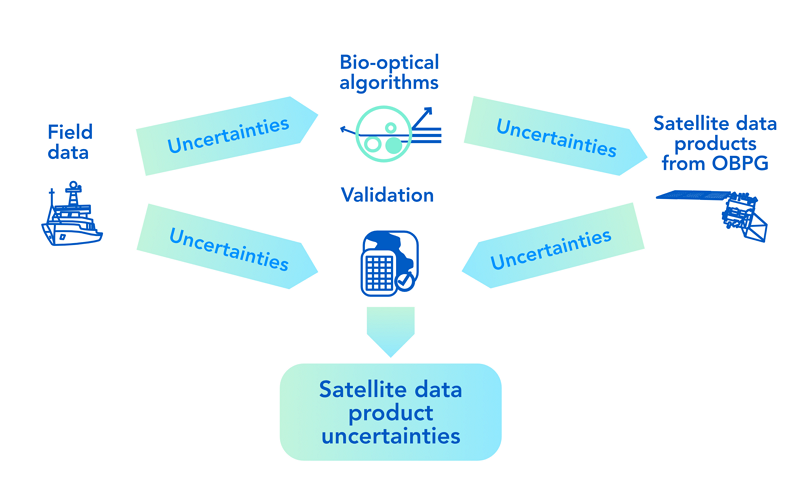
Both satellite-derived data and the field measurements have inherent uncertainty.

Image

Knowing and improving upon field measurement uncertainties allow for higher fidelity algorithms, satellite data products, and models.

Image

Over the past decade, NASA has sponsored several workshops with experts to update and develop new community consensus field measurement protocols for ocean color satellite validation. The newly drafted protocols will be made available to the international user community on the International Ocean Colour Coordinating Group (IOCCG) webpage for a period of time for public comment and review before they are accepted as international reference standards. Once accepted, the protocols will receive a publication date and version number, and will also have a digital object identifier (DOI). These revised protocols will be revisited periodically to determine if enough changes have taken place to warrant a significant update, in which case a new version number will be assigned.

Documentation

TitleDate Published
Inherent Optical Property Measurements and Protocols: Particle Absorption CoefficientSept. 2017
Volume 1.0 - Inherent Optical Property Measurements and Protocols: Absorption CoefficientNov. 2018
Volume 2.0 - Beam Transmission and Attenuation Coefficients: Instruments, Characterization, Field Measurements and Data Analysis ProtocolsApril 2019
Volume 3.0 - Protocols for Satellite Ocean Color Data Validation: In situ Optical RadiometryDec. 2019
Volume 4.0 - Inherent Optical Property Measurements and Protocols: Best Practices for the Collection and Processing of Ship-Based Underway Flow-Through Optical DataNov. 2019
Volume 5.0 - Measurement Protocol of Absorption by Chromophoric Dissolved Organic Matter (CDOM) and Other Dissolved MaterialsDraft
Volume 6.0 - Particulate Organic Matter Sampling and Measurement Protocols: Consensus Towards Future Ocean Color MissionsAugust 2021
Volume 7.0 - Aquatic Primary Productivity Field Protocols for Satellite Validation and Model SynthesisSept. 2022
Noteworthy and Supplemental Topics on Ocean Colour Radiometry ProtocolsDraft