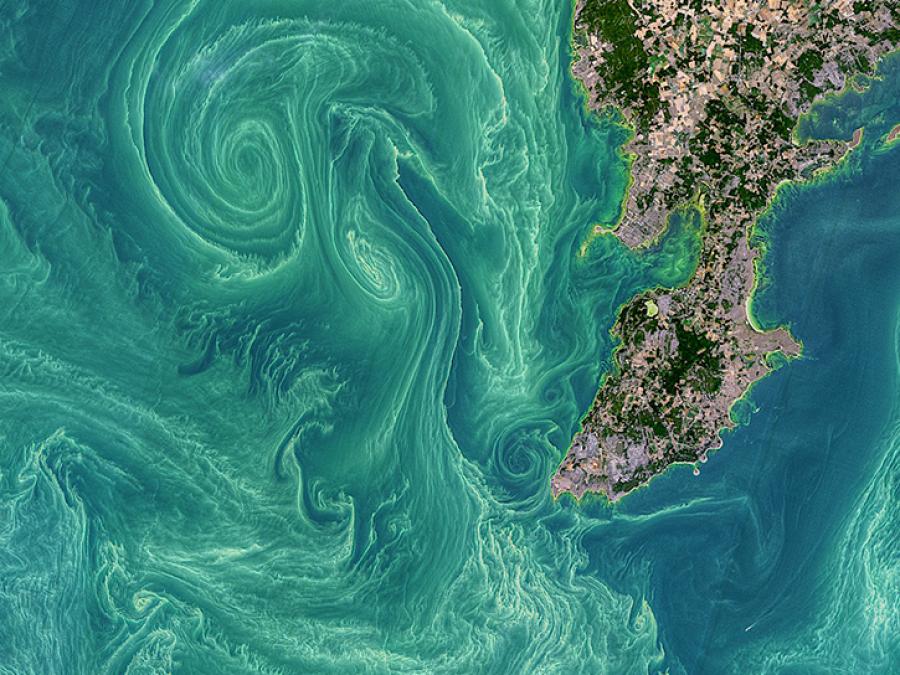
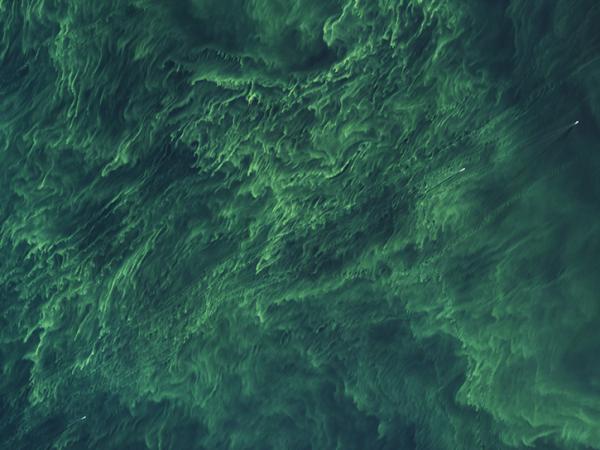
cyanobacteria bloom in the Baltic Sea
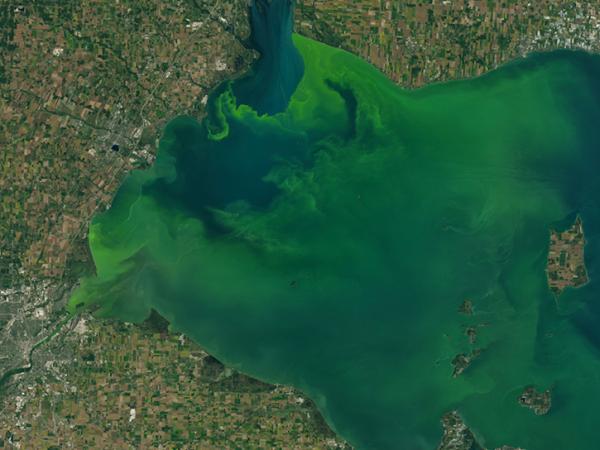
green algae bloom in Lake Erie
algae bloom in the Baltic Sea

CyAN

Cyanobacteria Assessment Network

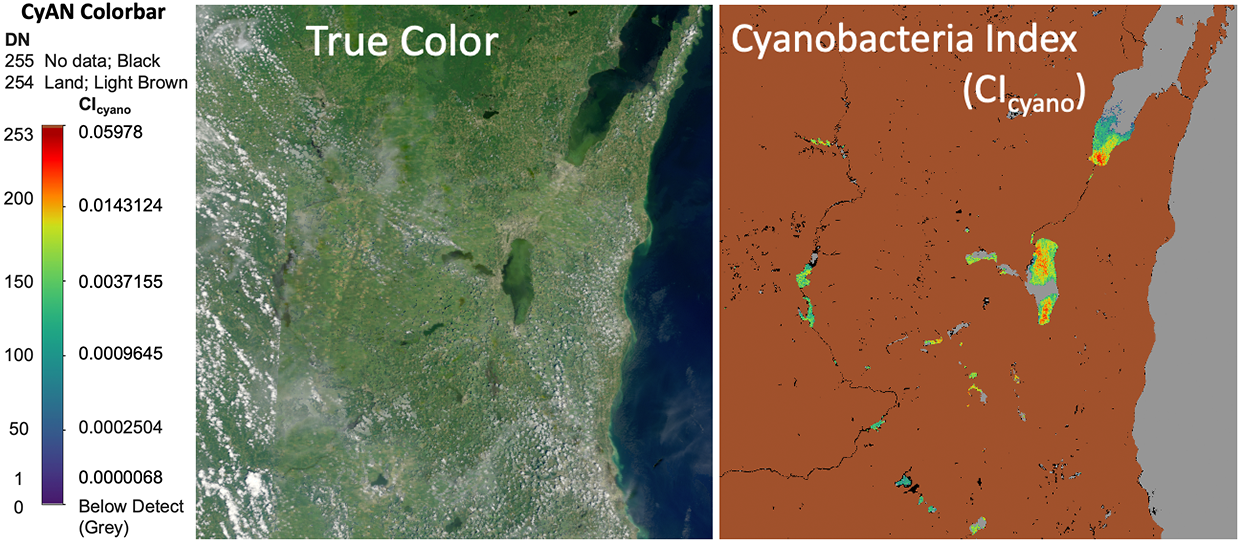
The Cyanobacteria Assessment Network (CyAN) is a multi-agency project to support the environmental management and public use of U.S. lakes and estuaries by providing a capability of detecting and quantifying cyanobacteria algal blooms. This effort has resulted in the production of satellite remote sensing products using the cyanobacteria index (CI) algorithm to estimate cyanobacteria concentrations (CI_cyano) in lakes across the contiguous United States and Alaska (CONUS).

The CI data products available are GeoTIFF dailies and a 7-day maximum value composites from different ESA sensors: MERIS (2002-2012) and the Ocean and Land Colour Instrument (OLCI) on Sentinel-3A (2016-present) and OLCI on Sentinel-3B (2018-present).

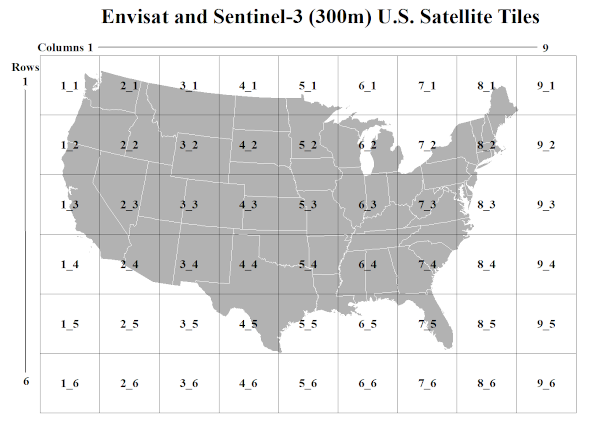
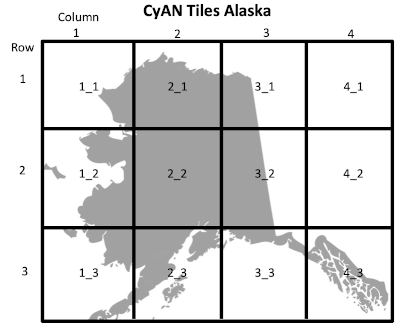
Data produced for CONUS is delivered in tiles referred to as the column number followed by row number (see "Tile Maps" below). The sensor spatial resolution is 300m. The contiguous US images use a 50m land mask, while the Alaska product uses a less refined 500m land mask. The temporal resolution depends on the sensor and date with best coverage since 2018, as images utilize sensors on two Sentinel-3 satellites.
Image
Image Caption

Data tile definition for CONUS. Credit: OB.DAAC

Image
Image Caption

Data tile definition for Alaska. Credit: OB.DAAC

The GeoTIFF data is provided as digital numbers (DN). Areas with no data, land, and cloud cover are flagged.

DN Guide

  • 0 indicates below threshold of CI detection limits (grey color)
  • 1-253 are data
  • 254 is land (brown)
  • 255 are no data (black—e.g., a cloudy pixel)

To convert Digital Number (DN) to CI_cyano:

CIcyano=10(DN∗0.011714−4.1870866)

That range is ~10,000 to 7,000,000 cells/ml.

Image
Image Caption

Figure 2: Example imagery one can produce from standard CyAN data products. Credit: OB.DAAC

SYYYYDDDYYYYDDD.LLL_TT_PROJ_PRODUCT_TILEVERSION_RESOLUTION_TILEcol_row
(e.g. L20202012020207.L3m_7D_CYAN_CI_cyano_CYAN_CONUS_300m_5_2)

where:

S = Instrument/Sensor (e.g. M= MERIS, L = OLCI);
YYYYDDDYYYYDDD (20202012020207) = year 2020 calendar day 201 through year 2020 calendar day 207;
LLL = Satellite processing: L3m (level 3 mapped);
TT = Time length of data composite (e.g. DAY=Daily);
7D = 7-day composite;
PRODUCT = Project identifier: CYAN_ CI_cyano, CyANTC_tc, CYANAK_ CI_cyano, CYANAKTC_tc
(CI_cyano is the CI cyanobacteria product and tc is the true color product);
TILEVERSION = Tile version: CYAN_CONUS (contiguous USA; CYAN_AK (Alaska);
RESOLUTION = pixel resolution: 300m;
TILEcol = Tile location: column number: 5 in example
row = Tile row number: 2 in example

CyAN data are processed to Version 6. Review changes and version details.

The release notes provide an overview on CyAN data and imagery production, interpretation, limitations and known issues, in addition to details on version updates.

If using CyAN data please cite us. The citation should resemble the example below.

NASA Ocean Biology Processing Group (OBPG). Cyanobacteria Assessment Network (CyAN), Merged Sentinel-3A and Sentinel-3B OLCI Regional Mapped Cyanobacteria Index (CI) Data, version 6.0, NASA Ocean Biology Distributed Active Archive Center. DOI: ** 10.5067/MERGED-S3/OLCI/L3M/CYAN/CI/6.0 Accessed from https://oceandata.sci.gsfc.nasa.gov/api/cyan_file_search on YYYY/MM/DD

Read more details on how to cite data.

A variety of resources have been developed to allow end users to work with the CyAN data. These cover the CyAN mobile app, SeaDAS software, and RS_Tools.

Mobile App Tutorials

  • Introduction to CyAN app - Read all about EPA's Cyanobacteria Assessment Network mobile application (CyAN app) and download it from the GooglePlay store.
  • EPA Webinar - The first presentation of this webinar covers a general overview of the CyAN app, followed by a step-by-step demonstration on how to use the app.

SeaDAS Training

  • Introduction to SeaDAS - This presentation introduces the Sea, earth, atmosphere Data Analysis System (SeaDAS) software, covers demonstrations of its features using CyAN products, and informs the user how to get additional help with the software.

RSTools

RSTools allows calculation of all composites and extraction of time series data for points and polygons using ArcGIS.

Shapefiles

Below are links to shapefiles that are available to download. The shapefiles are not perfect and occasionally updates are made to correct known errors. You can also edit them for your own needs. The CONUS Shapefile is from the National Hydrology Dataset Plus (NHDPlus) version 2.0 database.