We are in the process of migrating all NASA Earth science data sites into Earthdata from now until end of 2026. Not all NASA Earth science data and resources will appear here until then. Thank you for your patience as we make this transition.
Read about the Web Unification Project
DSCOVR Resources
Earthdata resources for users working with NASA’s Deep Space Climate Observatory (DSCOVR) data include tutorials and other learning resources, news announcements such as instrument updates and data releases, user guides and related documents, and frequently asked questions.
Table of contents
DSCOVR Learning Resources
Demonstrates how to remotely access the Deep Space Climate Observatory (DSCOVR) L4 instantaneous total ozone column data files via OPeNDAP, and then analyze the data by resampling instantaneous data into daily averages.
External Resource
Jupyter Notebook
April 10, 2026
Demonstrates how to remotely access the Deep Space Climate Observatory (DSCOVR) L2 instantaneous total ozone column data files via OPeNDAP, and then analyze the data by resampling instantaneous data into daily averages.
External Resource
Jupyter Notebook
April 10, 2026
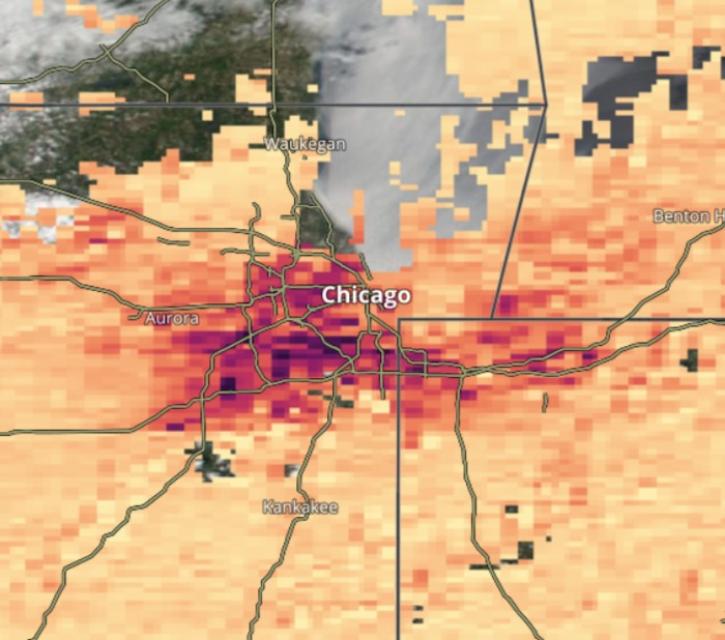
This notebook illustrates a comparison of ultra-violet aerosol index (UVAI) between the Tropospheric Emissions: Monitoring of Pollution (TEMPO) instrument and DSCOVR EPIC UVAI.
External Resource
Jupyter Notebook
April 10, 2026
The "dark side" of the Moon is not dark for NASA's Earth Polychromatic Imaging Camera (EPIC) aboard the Deep Space Climate Observatory (DSCOVR).
StoryMap
March 30, 2026
This code graphs four different parameters from the DSCOVR EPIC Level 2 Total Ozone, Version 3 product (Ozone, Reflectivity, Radiative Cloud Fraction, and Cloud Pressure).
External Resource
GitHub Repository
May 21, 2025
This notebook investigates the time lag between wildfire smoke detected by satellite scans and the corresponding readings from ground-based sensors.
External Resource
GitHub Repository
May 21, 2025
This notebook illustrates a comparison of ultra-violet aerosol index (UVAI) between TEMPO and DSCOVR EPIC.
External Resource
GitHub Repository
This notebook illustrates a comparison of TEMPO ultra-violet aerosol index (UVAI) against DSCOVR EPIC UVAI as well as a comparison of DSCOVR EPIC AOD against AERONET.
External Resource
GitHub Repository
May 21, 2025
SHOWING 8 OF 11
DSCOVR News
View All News
Filters
A summary of datasets, products, and resources released by NASA’s Distributed Active Archive Centers (DAACs) in November 2024.
News
Dec. 4, 2024
A summary of datasets, products, and resources released by NASA's Distributed Active Archive Centers (DAACs) in June 2024.
News
July 2, 2024
NASA researchers and data offer new insights into the impish and interesting visual phenomenon of sunglint in satellite imagery.
Feature Article
June 25, 2024
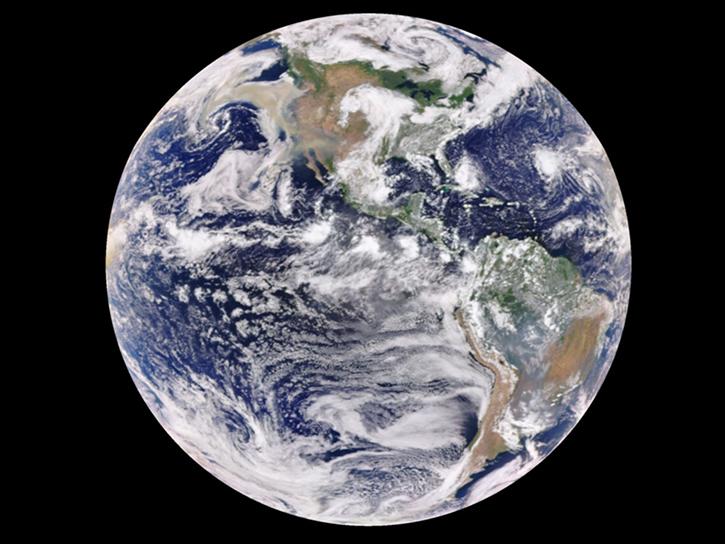
NASA released the first image of the sunlit side of Earth captured by the space agency's EPIC camera on NOAA's DSCOVR satellite.
News
July 20, 2016
SHOWING 4 OF 4
Frequently Asked Questions
Earthdata Forum
Our online forum provides a space for users to browse thousands of FAQs about research needs, data, and data applications. You can also submit new questions for our experts to answer.
Submit Questions to Earthdata Forumand View Expert Responses