HawkEye was an instrument aboard the SeaHawk platform designed to measure ocean color in 8 spectral bands across the land and sea. The instrument was developed for the Sustained Ocean Color Observations using Nanosatellites (SOCON) program funded by the Gordon and Betty Moore Foundation and managed by the University of North Carolina-Wilmington. With a volume of only 10 X 10 X 10 cm (a CubeSat 1U), it can produce 8 bands of image data in a single pass, each with 1800 x 6000 pixels, with a resolution of 120 meters per pixel.

Radiometric Calibration

The HawyEye instrument consists of four CCD arrays with two bandpass filters per array to provide the 8 spectral bands for the sensor. Each band consists of an 1800 illuminated elements

Each scene includes the collection of 64 dark scans at the end of the imaging sequence. These dark scans are used to provide the electronic baseline

Calibration Equation

L=K1[band]∗DN∗K2[band,pixel,time]∗K3[band,temperature]∗K4[band,pixel]∗(1+K5[band,pixel]∗DN)∗K7[band,pixel]

where:

  • DN = Digital Number from the
  • K1 = Gain coefficients (at nadir pixel)
  • K2 = Temporal correction coefficients
  • K3 = Temperature correction coefficients
  • K4 = Response vs Scan correction coefficients
  • K5 = Non-linearity correction coefficients
  • K7 = CCD smile correction coefficients (not currently used)

Vicarious Calibration

The vicarious calibration of HawkEye was accomplished using a process similar to that used for OCTS. A clear-water radiance model based on a climatological chlorophyll time-series of SeaWiFS data over the MOBY location was used to derive an estimate of the target water-leaving radiance. MOBY data were not availble for the few dates that HawkEye imaged the MOBY location.

Geometric Registration

Since there are four separate CCDs, each supportig two spectral bands, the data from each band are offset in both the along track and cross track directions and must be registered to a common reference band. Additionally, the focal length varies slightly from band to band. Corrections for the physical offsets and the focal length differences are necessary to ensure that the data from each pixel for each band match the same geolocated area in the scene.

The HawkEye Instrument been in orbit since December 3, 2018. The optics were covered by a solar panel and protected somewhat from the orbital environment up until March 21, 2019, when the solar panel was deployed and a first light image of California collected. Problems with stability and pointing prevented collection of useful ground data (for assessing calibration) until an image of Baja, California, on May 24, 2019, was captured. This image geometry was repeated on May 23, 2021, with very similar spacecraft attitude, pointing and sun angle, providing a good test of stability.

CCD Stability

An analysis of dark frame data from the instrument, captured with the shutter closed, has shown no changes in charge-coupled device (CCD) dark currents or offsets, nor any accumulation of dead pixels.

The most obvious change with the CCDs is the accumulation of a few dust particles over time. Since the CCD is windowless, a speck of dust landing on a 10 micron pixel can cause a large shift in sensitivity, and appears as a vertical dark line in the final image. Transferring the instrument from the manufacturer in California to integrate with the spacecraft in Glasgow, Scotland and back to Vandenberg Air Force Base, as well as the launch to space resulted in 20 to 30 new “lines” appearing in several bands due to such particles. Since launch a dust particle has appeared or shifted about once every two or three months. The impact of these particles on the data are corrected by updates to the flat field calibration tables.

Very rarely a dark line will appear in the data resulting from a radiation hit on a pixel in the dark data portion of the image. This has only been noted a few times, so radiation events seem to be rare, less than once per hundred images. A single bright pixel or two in the ground data would not be noticed, in general.

Currently the software looks for anomalous dark frame pixels and filters them out. CCD vulnerability to radiation has not been a problem, nor has exposure to direct sunlight, which likely happened many times as the spacecraft tumbled. The bandpass filters attenuate the bulk of the incident sunlight, eliminating any thermal damage.

Dark current in the CCDs in the typical instrument exposure time of 4.1 milliseconds is small, and easily corrected by use of the dark frame.

Loss of Sensitivity

Two images of the same ground location two years apart were collected, starting only two months after solar exposure began. We have looked at the ADUs detected from a dry riverbed in Baja California. Figure One shows the change detected over two years.
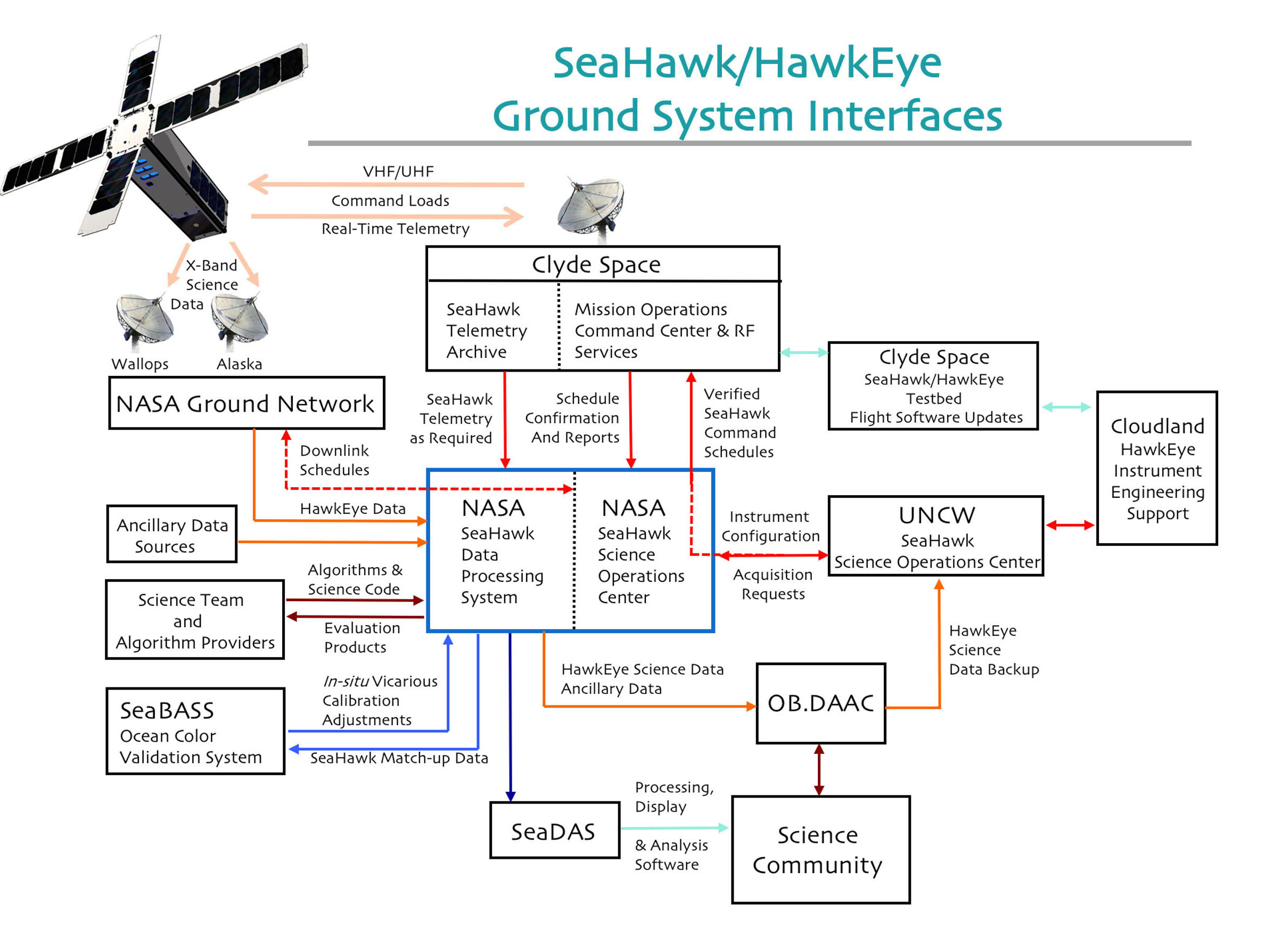
The goal of the SeaHawk mission was to demonstrate as a proof of concept whether it is possible to obtain high quality, high resolution (~100m) ocean color imagery using a low-cost miniature ocean color sensor (HawkEye) carried aboard a CubeSat (SeaHawk). Under the terms of the formal NASA/HQ Space Act Agreement (2017) between NASA and the University of North Carolina/Wilmington ), NASA provides services for the collection, processing, calibration, validation, archival and distribution of the HawkEye data. The diagram below depicts all the interfaces involved in supporting the SeaHawk Mission which despite its small size, requires that all the same functions be performed as one would expect in the typical Earth observing satellite mission.

Image
Image Caption

SeaHawk Interfaces. Credit: OB.DAAC

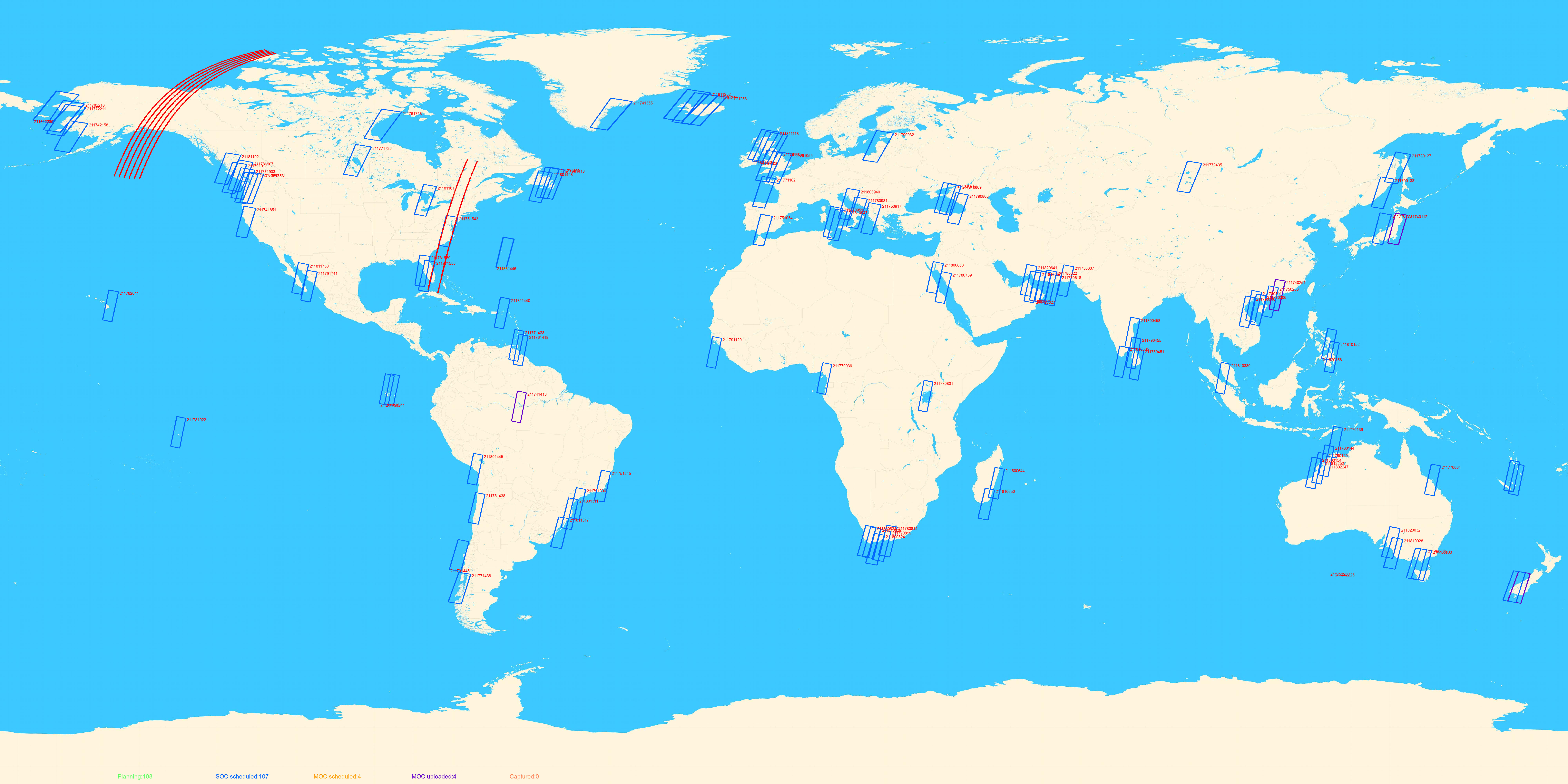
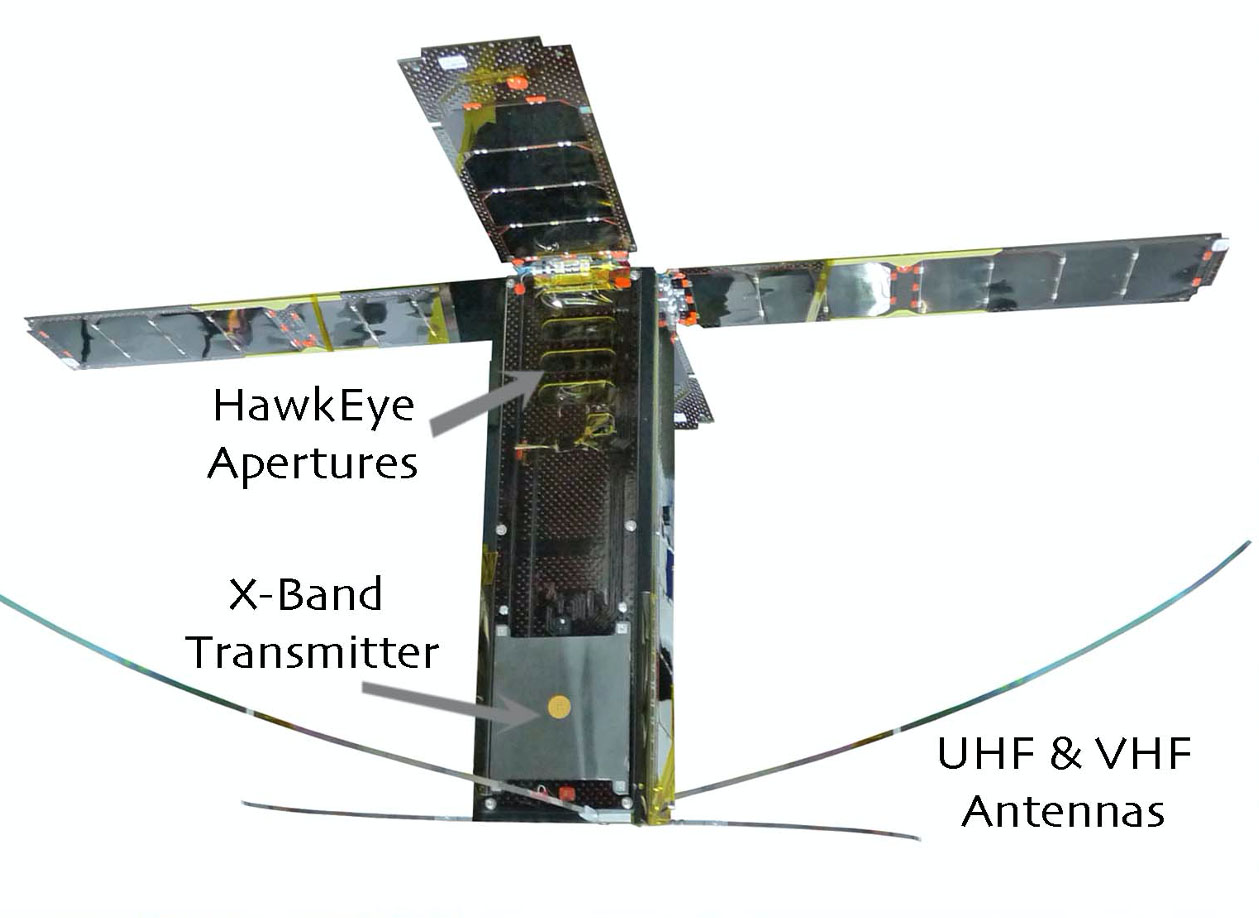
The HawkEye instrument collects images that are 1800 pixels x 6000 lines over 100 seconds which at the current altitude (~585km) provides a scene that is approximately 200 km across track and 600 km along track. Each image is approximately 100MB in size and the storage capacity onboard the spacecraft allows for 18 images (1.8GB) to be stored. SeaHawk has a miniature X-band transmitter that it uses to downlink the stored images as it passes over the NASA Near Earth Network receiving stations at Wallops Island, Virginia and the University of Alaska, Fairbanks and typically, we are able to schedule six or seven downlinks per week. Schedules for image collection and data downlinks are created to cover a 10-day period and we try and maximize the number of images collected between downlinks. Taking into consideration a number of other operational constraints, this allows us to anticipate collecting on average 100 images per week. 

Image
Image Caption

The HawkEye X-band transmitter. Credit: OB.DAAC

Image
Image Caption

Schedules for image collection and data downlinks are created to cover a 10-day period, as shown above. Credit: OB.DAAC

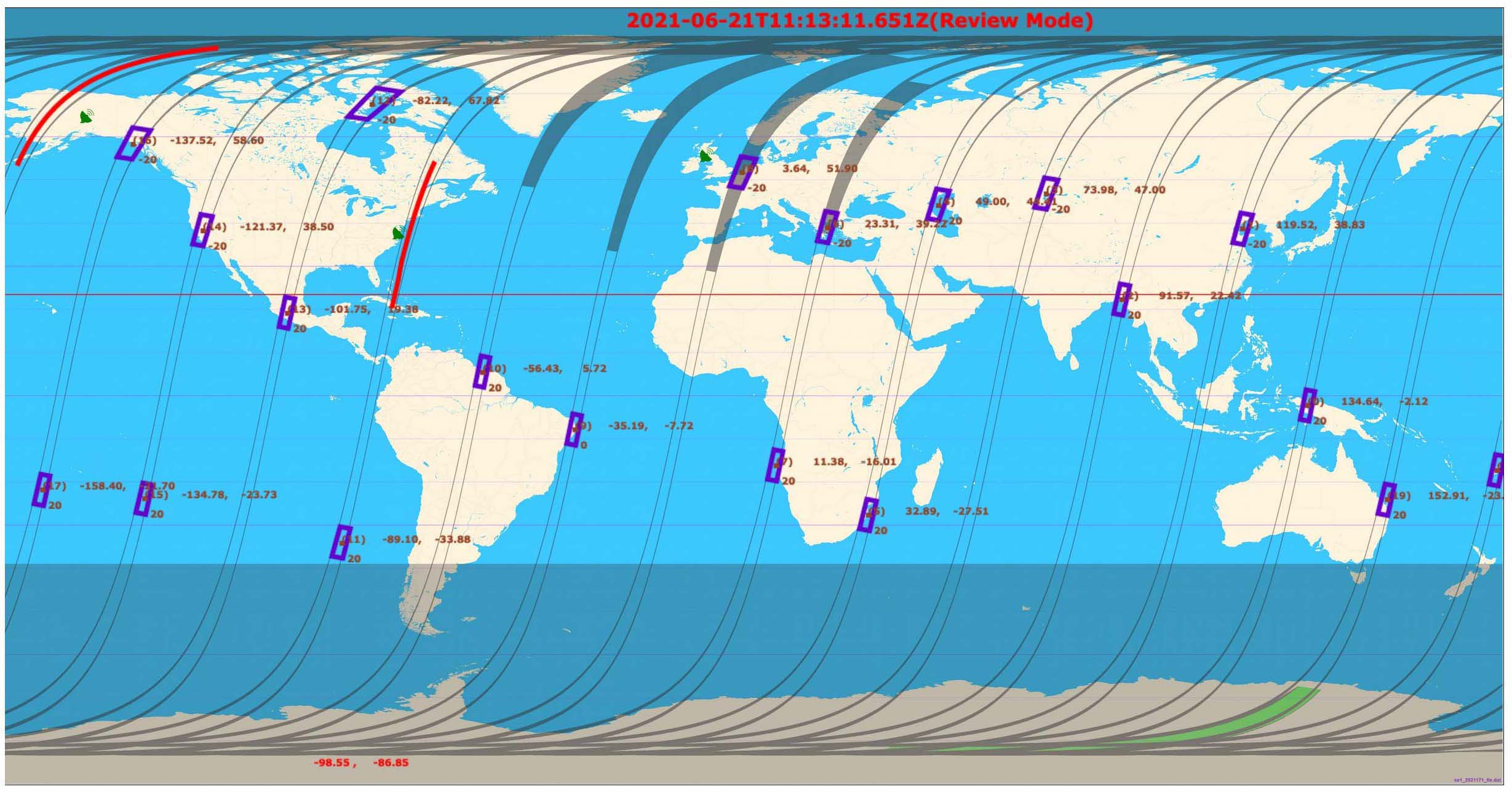
Below is the map that was generated by our planning tool showing the images that were scheduled and data downlinks at both Wallops and Alaska for June 21, 2021, our first day of nominal operations.

Image
Image Caption

SeaHawk activity schedule for June 21, 2021.

Within minutes of the data being downlinked at the ground stations, the files are transferred to the Ocean Biology Processing Group's facility at NASA/Goddard where they are processed into Level-1a files and the special browse images that are used in the manual renavigation step that is described in the section on geolocation. Once the navigation adjustments are determined, each file is then submitted for processing to Level-2 and released for distribution via the OceanColor Web browser.

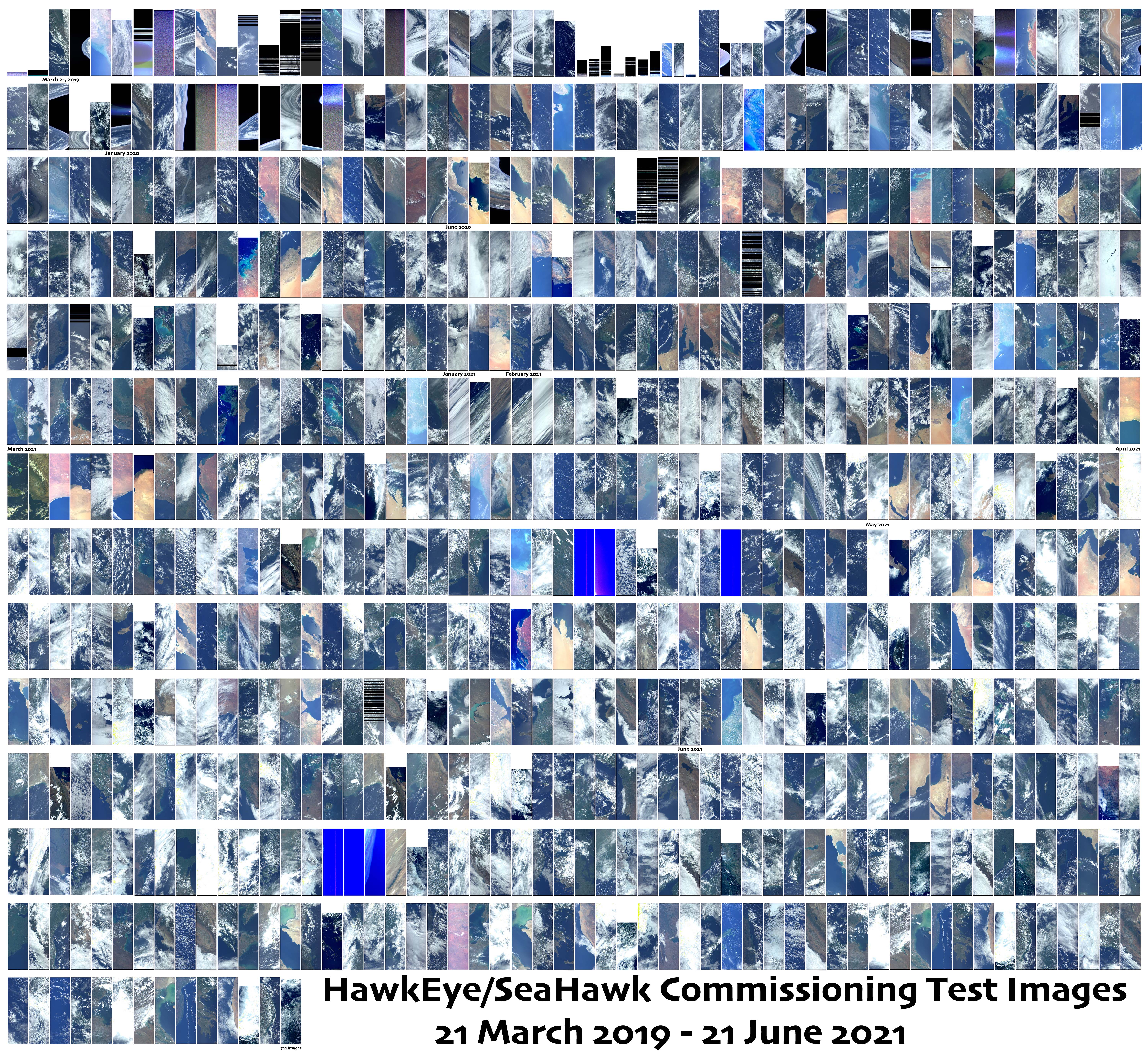
Over the course of the 2 ½ year commissioning phase of the mission, a number of different instrument configurations were tested to try and maximize the scientific quality of the images finally settling on a configuration on April 16, 2021, that was decided would be the default as we moved into nominal operations. The current calibration configuration that is used in our production system and that is provided in SeaDAS is optimized for data collected after this date. However, all data collected from the very first image that was collected on March 21, 2019, through the present day are available for download.

Image
Image Caption

A quilt of images showing different instrument configurations. Credit: OB.DAAC

The Hawkeye instrument has been in orbit since December 3rd, 2018. Early in the mission life, an unstable attitude control resulted in the spacecraft tumbling between exposures, subjecting the optics and surfaces to direct solar illumination as well as pointing into the flight direction. Some loss of sensitivity in the blue bands has been noted, as well as apparent ablation of anti-reflection coatings on the exterior optical surfaces.

The HawkEye sensor has a band set similar to SeaWiFS and is capable of using the same Gordon and Wang (1994) approach for atmospheric correction. Unfortunately, as a result of this apparent ablation of the AR coating, the NIR bands suffer from a ghosting problem when there are bright targets (land, clouds) in the scene. This renders the use of the NIR bands in the atmospheric correction less than optimal. To avoid this issue affecting the operational products, the approach used for the Coastal Zone Color Scanner Experiment (CZCS) has been used.

This CZCS-like atmospheric correction uses a single aerosol model (instead of the 80 used in the current implementation of the GW94 approach) and the 670nm band to estimate the aerosol contribution with the assumption that the water-leaving signal is negligible. As it well known that the water-leaving signal at 670nm is often not negligible, especially in coastal and productive waters, a simple correction for estimating this contribution is employed. However, if there is a moderate to large water-leaving contribution, this correction will not be effective and the aerosol signal will be over estimated. This will result in an under estimate the Rrs which in turn will result in an over estimate of the chlorophyll concentration.

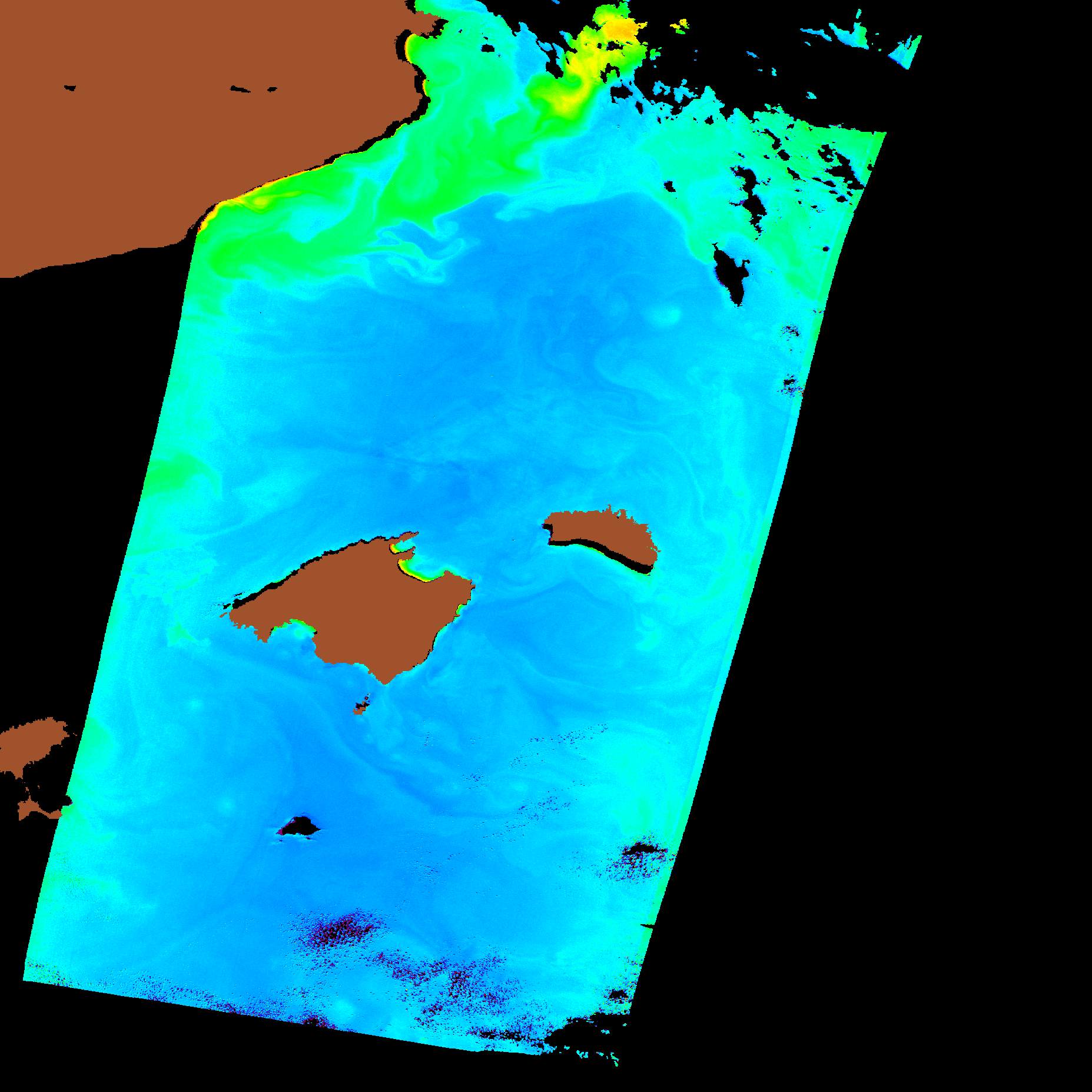
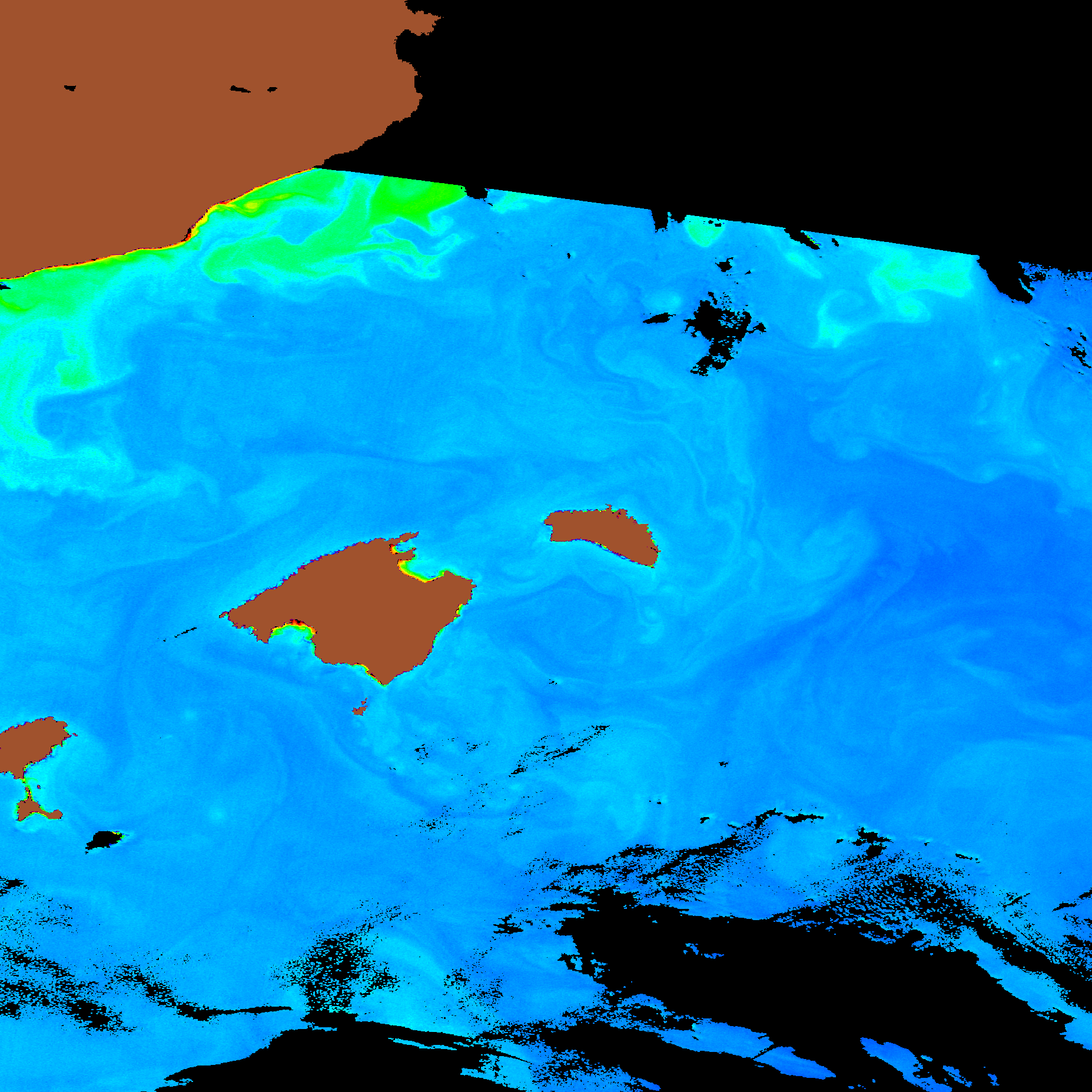
For most of the data collected by HawkEye, the results using the simplified CZCS-approach are quite good and comparable to coincident measurements by other satellite instruments. Below are two comparisons between HawkEye and the other sensors that we work with. The first is a qualitative comparison of the chlorophyll concentration estimate from HawkEye and OLCI on Sentinel-3A collected over the western Mediterranean Sea around Mallorca on May 29, 2021. Both images were mapped to 300m resolution.

Image
Image

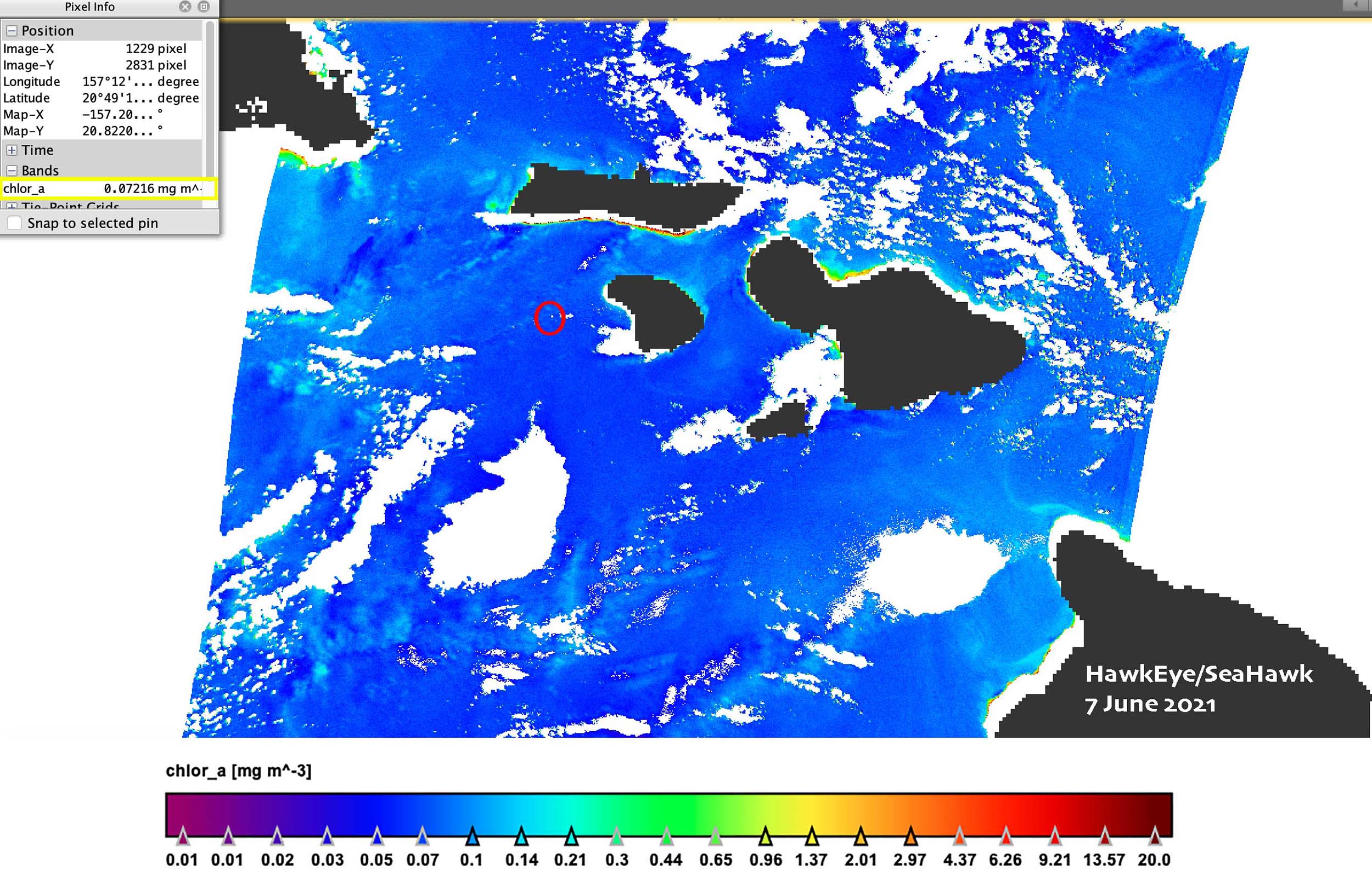
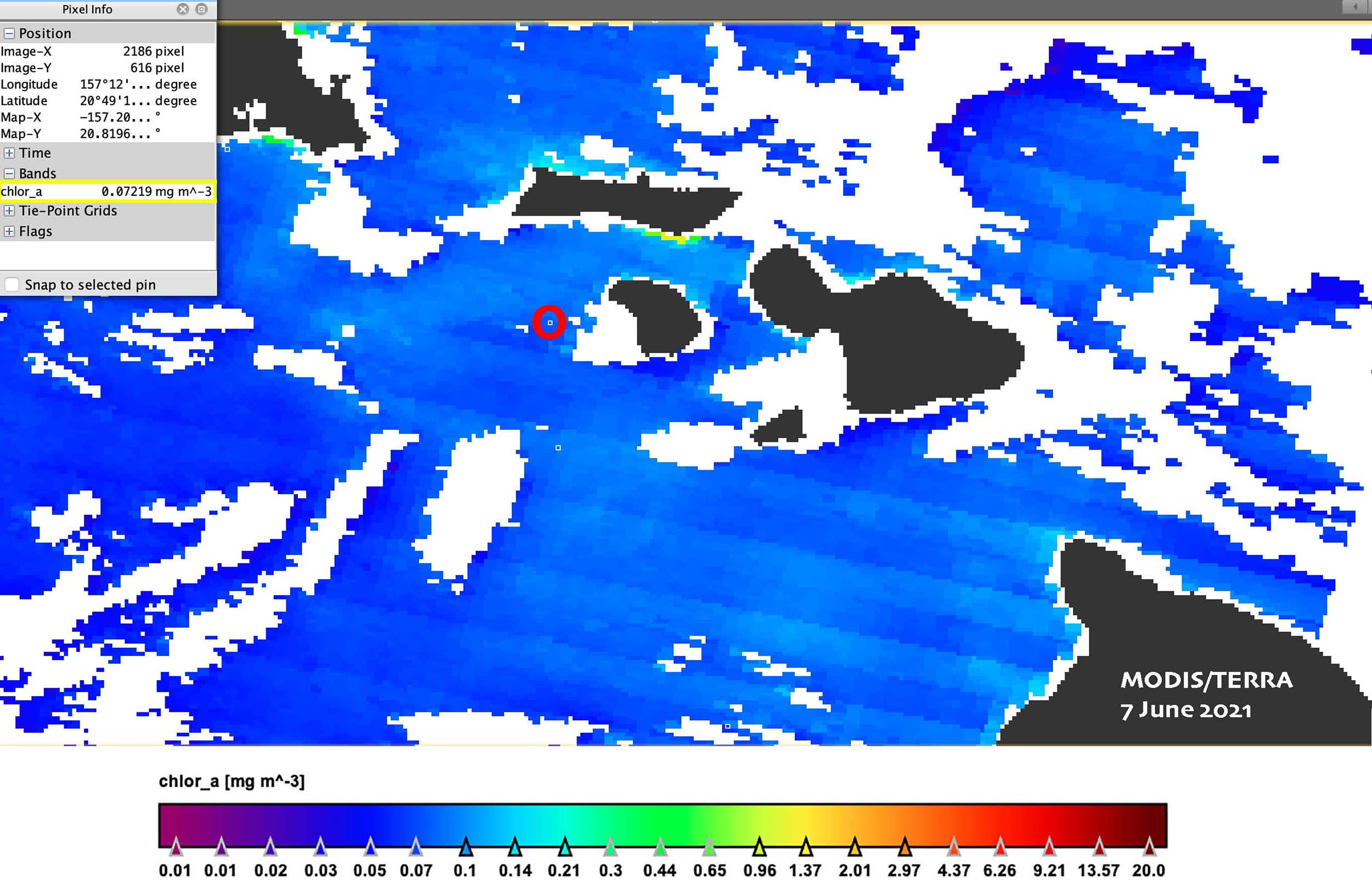
The second is a pair of images that were acquired over the MOBY ocean optical buoy located to the west of Lanai, Hawaii by HawkEye and Moderate Resolution Imaging Spectroradiometer (MODIS)-Terra on 7 June 2021 within minutes of each other. Both images were processed by our automated processing system, downloaded from our web browser and analyzed with SeaDAS. The derived chlorophyll concentration at the approximate location of MOBY for each image can be seen outlined in yellow in the upper left corner of each image and the agreement is really quite remarkable. This is not completely unexpected since as described in the Hawkye calibration section, the vicarious calibration was based on a clear-water radiance model based on a climatological chlorophyll time-series of SeaWiFS data over the MOBY location.

Image
Image

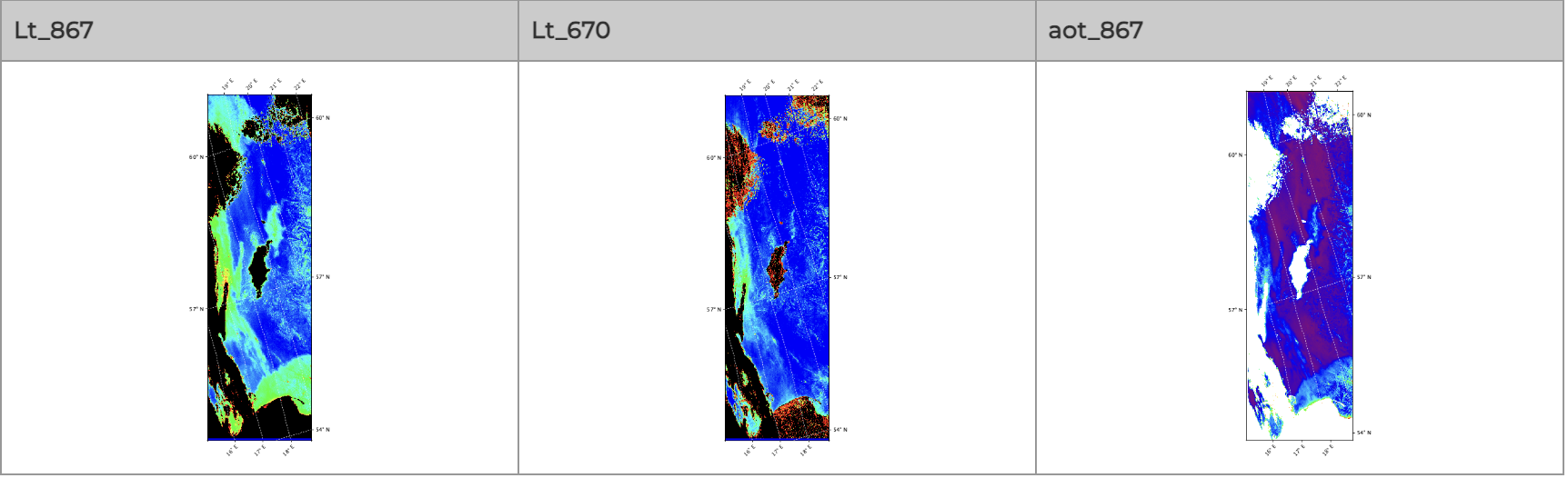
Ghosting Effect

The ghosting effect is most evident in the near-infrared (NIR) bands, so when these bands are used in the atmospheric correction as they are for the GW94 method, the ghosting will show up as an obvious artifact in the derived products.

Image
Image Caption

Credit: OB.DAAC

The HawkEye instrument has a ground resolution of about 120 meters, equivalent to an angular resolution of .0125 degree. However, the pointing for the Seahawk spacecraft cannot be determined at this level. The attitude sensors on the spacecraft are the fine Sun sensors (FSSs), three-axis magnetometers (TAMs) and rate gyros. The best information is provided by the FSSs, with an accuracy of about 0.1 degree. The TAMs are significantly less accurate, between 1 and 2 degrees, and the gyros have a noise level of about 0.1 degree/second.

In addition, the attitude data embedded with the images is limited to slightly longer than the image duration, about 2 minutes. The net effect of these factors is that while the spacecraft pointing relative to the Sun direction can be determined to better than 0.1 degree, the rotation about that direction will have a bias of typically 1 degree or more. Given the spacecraft orbit, the Sun direction is on average about 25 degrees from the orbit plane, so a rotation about that direction has components in all three pointing angles (roll, pitch and yaw). While roll and pitch errors can be corrected by shifting the image to align with coastlines, yaw errors result in a skew in the image that is not readily corrected.

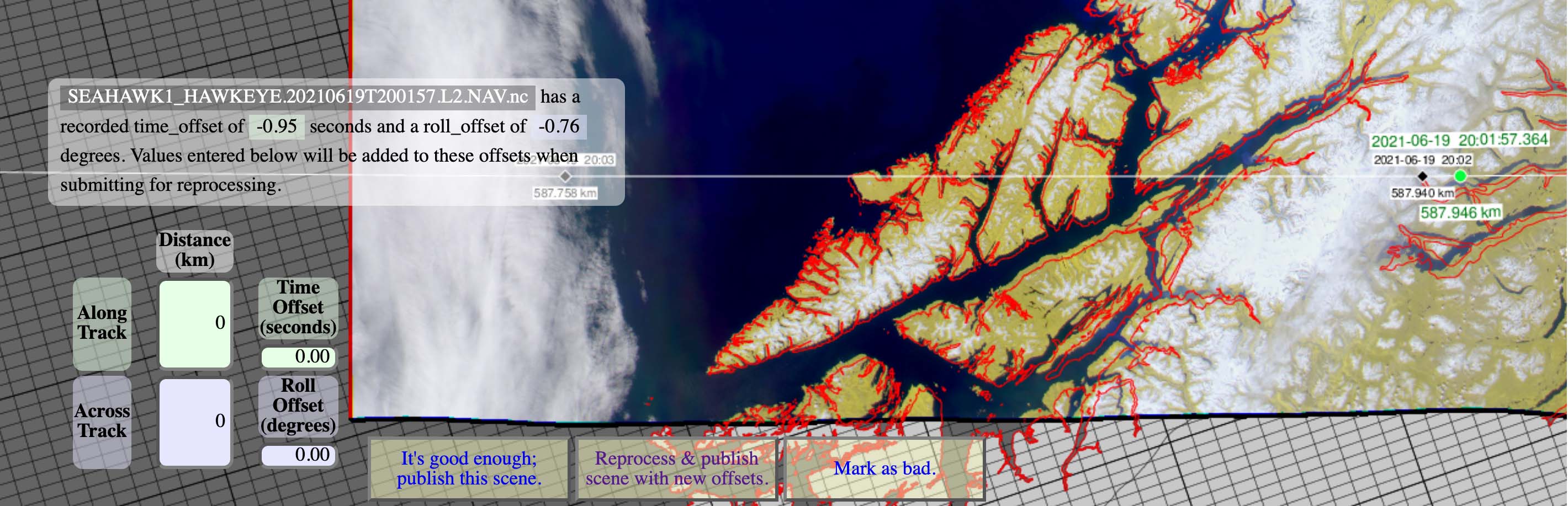
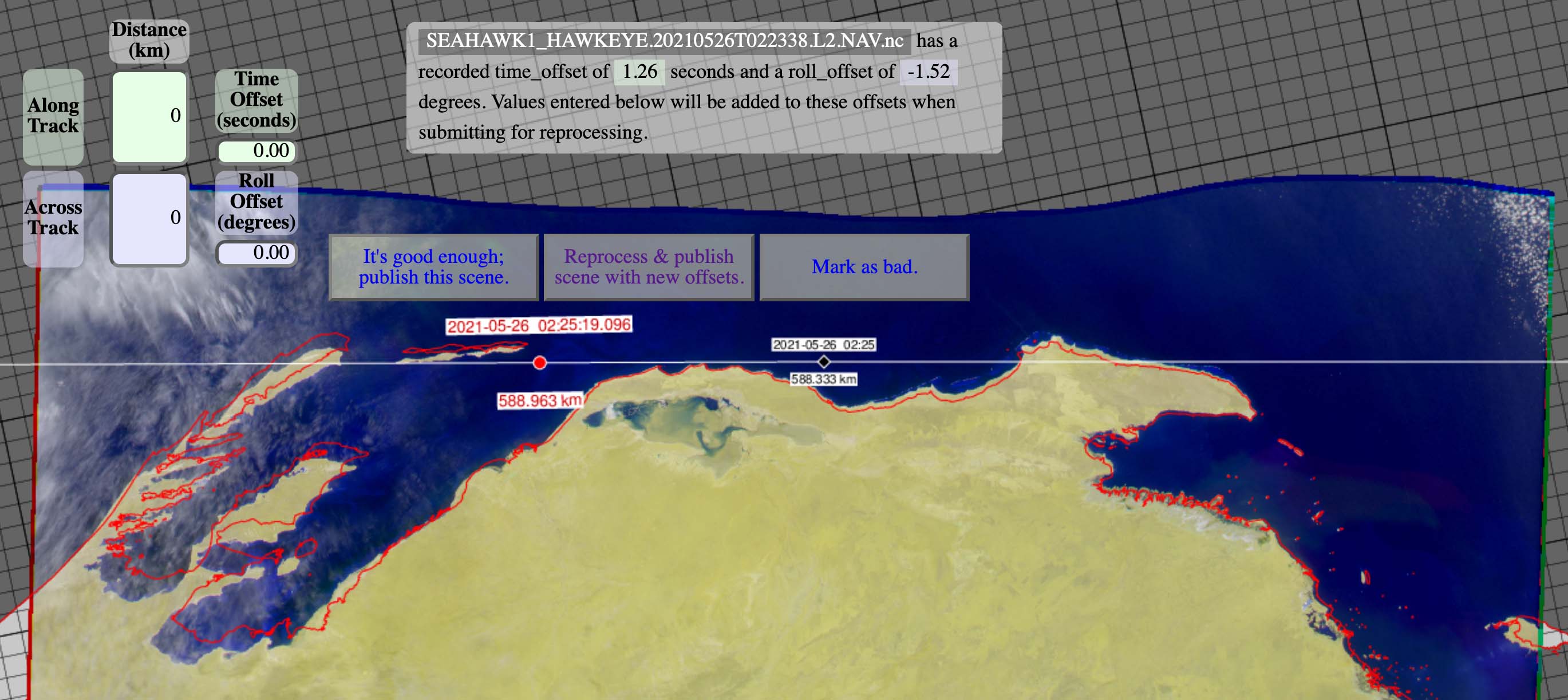
Because of the uncertainty in the ability to automatically compute an accurate geolocation for each of the HawkEye images using the onboard attitude information, we have decided to employ a method that we developed to correct similar geolocation issues that we found with the Hyperspectral Imager for the Coastal Ocean (HICO) data that our group also supports. Repurposing this web-based tool allows us to project each HawkEye image onto a world maps and then manually slide the image in both the along-track and across-track direction with the goal of trying to match as much of the coastline that is visible in the image with the projected coastline that the tool has drawn. Unfortunately, any residual yaw motion that the spacecraft experienced during the period is unable to be removed at this time.

The along-track offset that we compute is based on interpreting the offset as a time shift between the time reported in the image and the time needed to make the image line up with the map. The offset that we derive uses an average speed that the spacecraft travels of 7.6 km per second and approximately 10.26 km per degree of roll. For the 275 Hawkeye scenes that have been collected and manually geolocated since April 16, 2021, average along-track offset that needed to be applied as determined by time was -0.95 seconds or 7.22 km and the average across-track offset that needed to be applied as determined by roll -1.24 degree or 12.73 km. The calculated offsets are then used by the production system to renavigate the images and update the navigation stored in the distributed Level-1a files and when processing the images to Level-2 either for the products distributed by us or when processed by people using SeaDAS. This process produces images that while significantly better geolocated than the original, uncorrected images, still results is portions of the image where unresolved spacecraft motion is not accurately aligned with the computed coastline.

Below are screenshots of our web-based renavigation tool of the two recent HawkEye images showing the coast of Southeast Alaska near Juneau and the northwest coast of Australia. You can see in both cases that while there are parts of the images for which the alignment between the coastline observed in the images and that computed by the tool is quite good, that there are portions of the image where that is not the case. This is due to the fact that we are applying a single along-track and across track offset to entire image where in reality, there are probably numerous smaller corrections that would need to be made that are well below our current ability to accurately resolve them as was described in the opening section of this discussion. We are working on additional improvements to the geolocation and when we feel confident that we can verify that they are doing what we hope, we will reprocess the data set as appropriate.

Image
Image Caption

HawkEye image of Southeast Alaska taken on June 19, 2021. Credit: OB.DAAC

Image
Image Caption

HawkEye image of northwest Australia taken on May 26, 2021. Credit: OB.DAAC

Instrument Type

Spectrometer/Radiometer

Instrument Subtype

Imaging Spectrometer/Radiometer

Specifications

Resolution

Spatial

129 m

Spectral

8 bands (nm): 412, 447, 488, 510, 556, 670, 752, 867

Temporal

9-day repeat orbit

Related Data Centers/Projects

Frequently Asked Questions

Earthdata Forum

Our online forum provides a space for users to browse thousands of FAQs about research needs, data, and data applications. You can also submit new questions for our experts to answer.

Submit Questions to Earthdata Forumand View Expert Responses

Earthdata
Forum