Sea Ice is mainly found in the Arctic and Antarctic regions, and is a key part of polar ecosystems. Channels within sea ice can fill with salt water and provide habitats for primary producers like algae and plankton, forming the basis of a local ecosystem. Sea ice is also a major fact in sea level rise and salinity distributions, and presents a major obstacle for ships navigating far northern or southern waters. 

NASA's Gravity Recovery and Climate Experiment (GRACE) and GRACE-FO use minute variations in Earth’s gravitational field to measure the planet’s distribution of mass, and this can be used to identify sea ice. Missions like Landsat can also provide direct observations of sea ice.

Over time, these data help researchers track changes in polar environments, and provide a valuable gauge of global climate change. They’re also vital for accurate predictions of sea-level rise, and modeling long-term circulation patterns in the ocean.  

Get Sea Ice Data

Access a range of datasets and data tools to further your sea ice research.

Learn How to Use Sea Ice Data

Access a range of webinars, tutorials, data recipes, and data stories to enhance your knowledge of Earth Observation data.
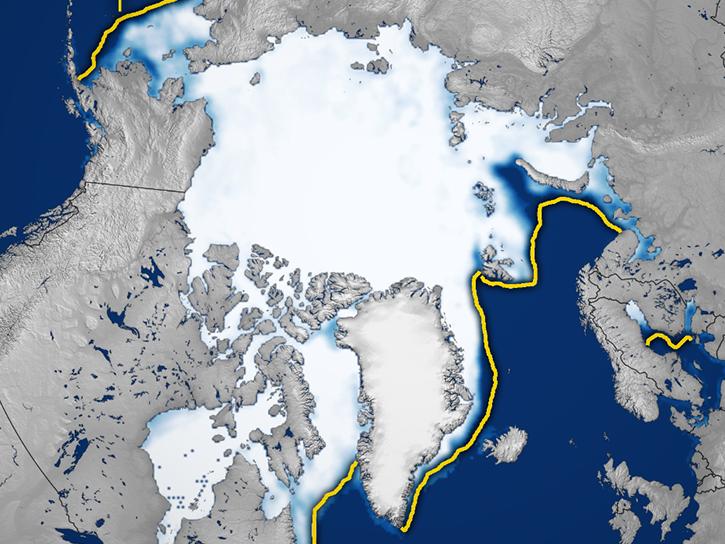
During the final leg of the NASA Multidisciplinary drifting Observatory for the Study of Arctic Climate (MOSAiC) expedition, the research vessel Polarstern reaches the northernmost point on Earth. Image Credit: NASA MOSAiC team
Laser Altimetry Applications for a Changing World: Working with ICESat-2 Sea Ice Data
Join us on Wed., Aug. 6, 2025, at 2 p.m. EDT (-04:00 UTC) for the fourth NASA ICESat-2 data training webinar. In this event, participants will learn about ICESat-2 sea ice datasets, services, and tools.
image of icebridge data
Explore, Discover, and Access Snow and Ice Data with NSIDC DAAC
Join us for a tour of enhanced data product landing pages, new user resources, data visualization tools, and a Jupyter Notebook tutorial to access cryospheric data at NASA's National Snow and Ice Data Center DAAC.
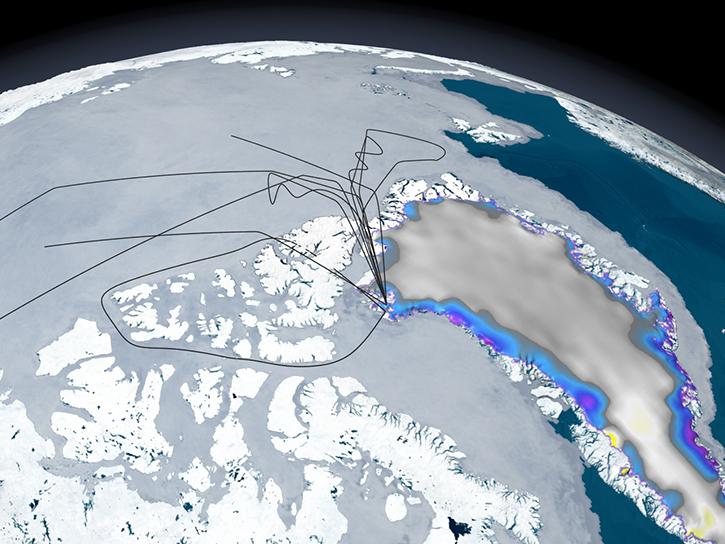
flight path of Operation Ice Bridge over Greenland in 2011
Operation IceBridge Come Discover a Decade of Polar Data
NASA’s Operation IceBridge airborne mission has flown over 700 flights through some of the most stunning regions of the Arctic and Antarctic. Join us to learn how to discover and access data that “bridges” the gap between the ICESat and ICESat-2 missions.
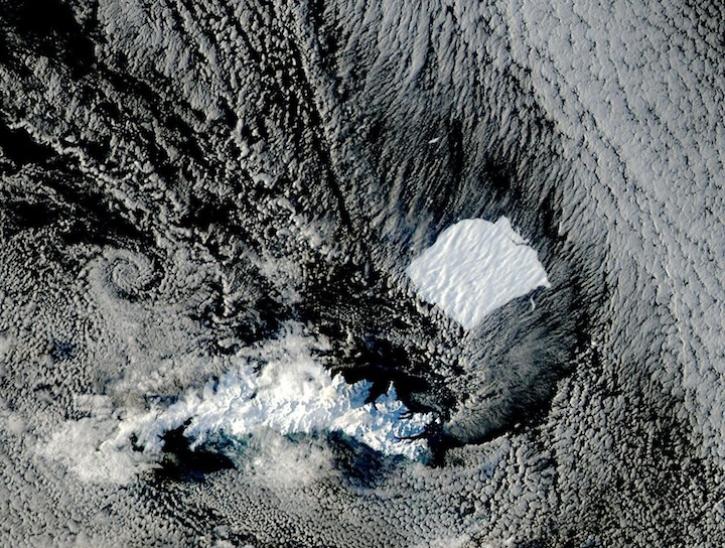
True-color corrected reflectance image of Iceberg A23A and iceberg A23F on 17 August 2025 from the MODIS instrument aboard the Aqua satellite
Antarctic Iceberg A23A Continues to Crumble
Worldview Image of the Week captured on August 17, 2025, by the MODIS instrument aboard the Aqua platform.
Discover and Visualize Sea Ice Data
NASA data help us understand Earth's changing systems in more detail than ever before, and visualizations bring these data to life, making Earth science concepts accessible, beautiful, and impactful.
Data visualization is a powerful tool for analysis, trend and pattern recognition, and communication. Our resources help you find world-class data visualizations to complement and enhance your research. We also have tools and tutorials to help you translate sea ice data into compelling visuals.
Image
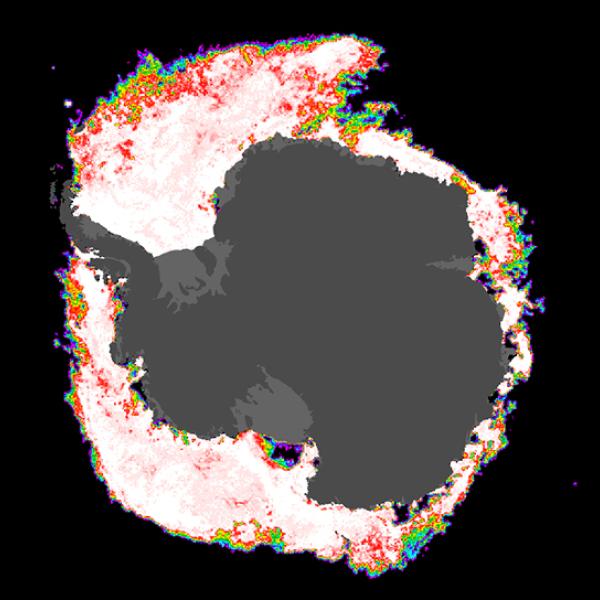
In this image of sea ice concentration around Antarctica, 12 km pixels are colored in different colors from black to white to indicate areas of 0-100% concentration.
This animation shows the percent of sea ice concentration in Antarctica for the past 12 years using data from the Advanced Microwave Scanning Radiometer 2 (AMSR2) instrument aboard the Japan Aerospace Exploration Agency (JAXA) Global Change Observation Mission-Water 1 (GCOM-W1) platform. Sea ice concentration describes the relative amount of area covered by ice, as compared to a reference area. The spatial resolution is 12 km.

Join Our Community of NASA Data Users

While NASA data are openly available without restriction, an Earthdata Login is required to download data and to use some tools with full functionality.

Learn About the Benefits of Earthdata Login

Frequently Asked Questions

Earthdata Forum

Our online forum provides a space for users to browse thousands of FAQs about research needs, data, and data applications. You can also submit new questions for our experts to answer.

Submit Questions to Earthdata Forumand View Expert Responses

Earthdata
Forum