Delivery of Suomi National Polar-orbiting Partnership (Suomi NPP) satellite data products will cease on November 1, 2026. Data users should transition now to alternative products from NOAA-21 and NOAA-20.
Suomi NPP data announcement
Filters

Image captured on 22 June 2019, by the MODIS instrument, aboard the Terra satellite.
Worldview Image of the Week
Sept. 11, 2020

Image captured on 23 March 2020, by the MODIS instrument, aboard the Terra satellite.
Worldview Image of the Week
Sept. 11, 2020
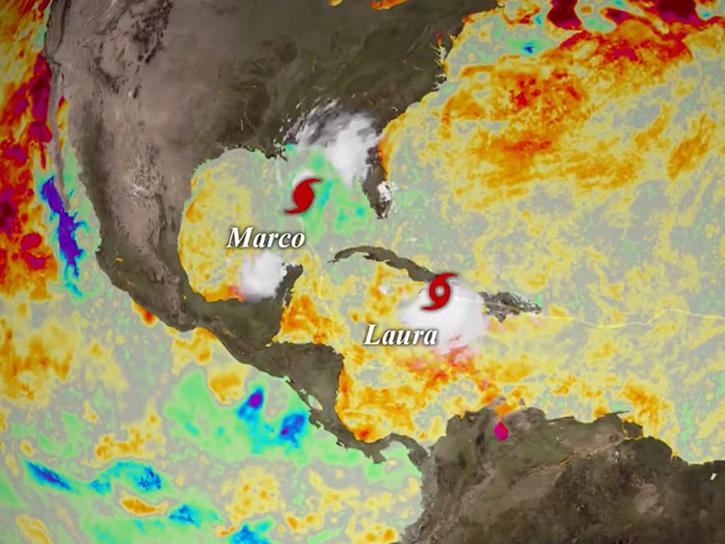
Explore sea surface temperature anomalies in the Gulf of America before, during, and after Tropical Cyclones Laura and Marco with NASA's MUR SST dataset.
Data in Action
Sept. 10, 2020

Image captured on 31 August 2020, by the VIIRS instrument, aboard the joint NASA/NOAA Suomi NPP satellite.
Worldview Image of the Week
Sept. 8, 2020
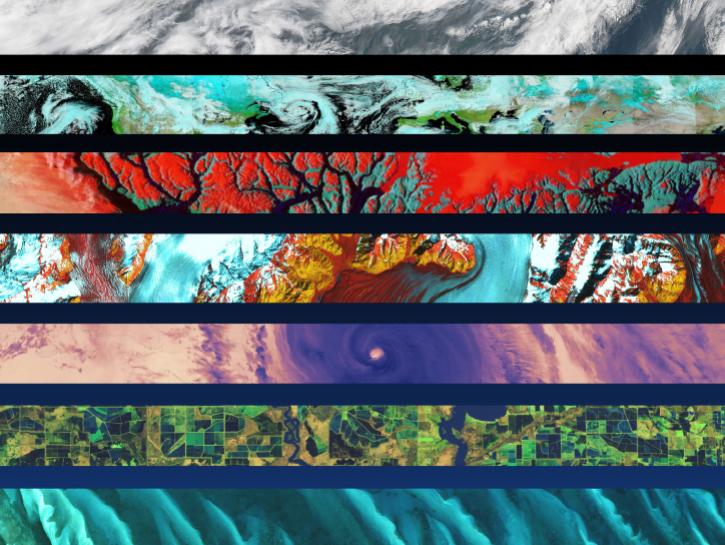
Cloud Browse functionalities include image and document download, multi-select capability, printing options, and an interactive viewer.
Tutorial
Sept. 4, 2020
NASA's Distributed Active Archive Centers continue to release Earth observation data despite global shutdowns during the COVID-19 pandemic.
News
Sept. 4, 2020

Image captured on 19 May 2018, by the VIIRS instrument, aboard the joint NOAA/NASA Suomi NPP satellite.
Worldview Image of the Week
Aug. 31, 2020

Image captured on 18 June 2017, by the MODIS instrument, aboard the Terra satellite.
Worldview Image of the Week
Aug. 31, 2020
SHOWING 8 OF 2400