Delivery of Suomi National Polar-orbiting Partnership (Suomi NPP) satellite data products will cease on November 1, 2026. Data users should transition now to alternative products from NOAA-21 and NOAA-20.
Suomi NPP data announcement
Filters
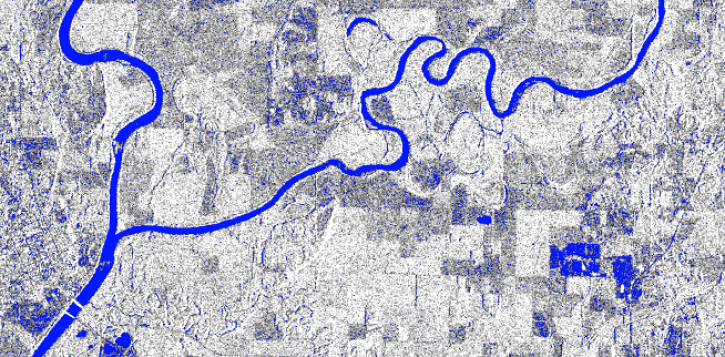
NASA’s Earth Science Division has selected 11 proposals for three-year awards through the 2019 Advancing Collaborative Connections for Earth System Science (ACCESS) Program solicitation. ACCESS is an Earth Science Data Systems (ESDS) competitive program that aims to improve and expand the use of NASA's Earth science data by leveraging modern techniques for managing and analyzing Earth science datasets. The selected proposals will develop technologies to effectively manage, discover, and use NASA’s quickly-growing archive of Earth observations.
Feature Article
April 9, 2021
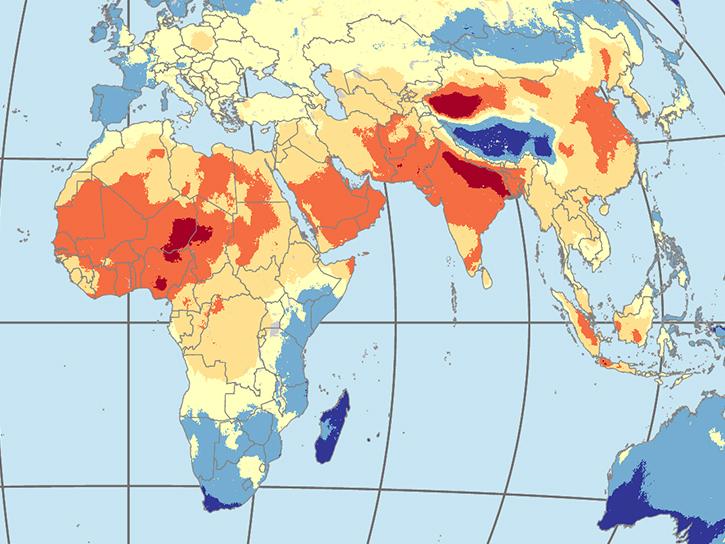
Two new datasets released by NASA's Socioeconomic Data and Applications Center provide key insights into human-environment interactions.
News
April 9, 2021
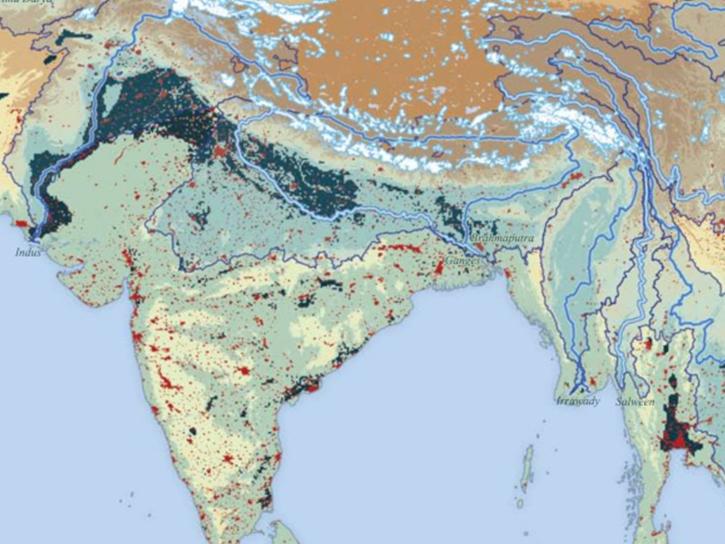
Learn how to produce global grids, how the grids incorporate remote sensing inputs, and how grids can be used in conjunction with other types of data.
News
April 7, 2021

Near real-time data products from the Ozone Mapping and Profiler Suite (OMPS) provide valuable information about atmospheric ozone and sulfur dioxide concentrations.
News
April 5, 2021
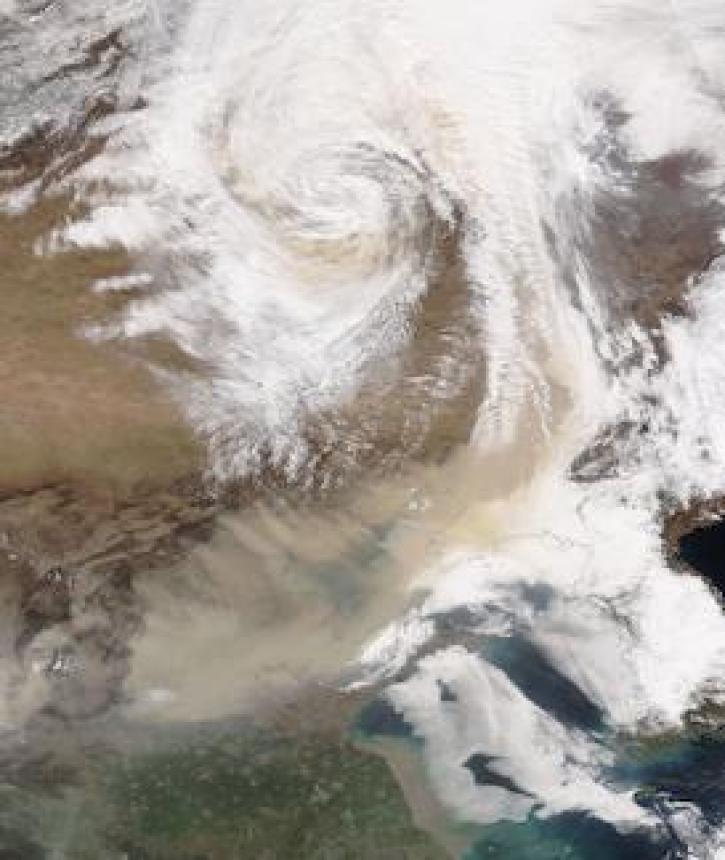
Image captured on 28 March 2021, by the VIIRS instrument, aboard the joint NASA/NOAA NOAA-20 satellite.
Worldview Image of the Week
April 5, 2021

We mourn the loss of Peter Fox, a leading proponent of the value of interdisciplinary scientific data stewardship.
News
April 2, 2021
This NASA-funded project supports researchers migrating workflows to the cloud using open, collaborative workflows.
Feature Article
April 1, 2021
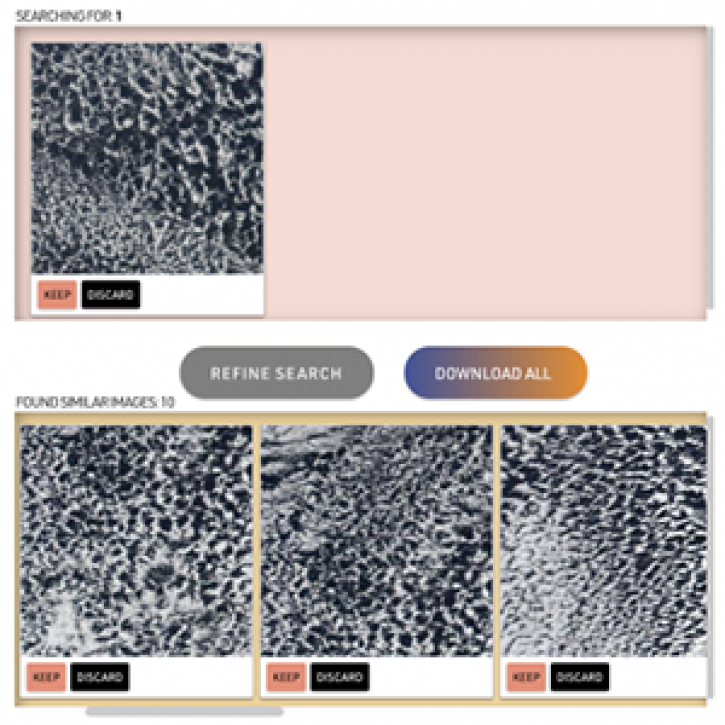
A partnership between NASA's IMPACT and SpaceML led to the development of an open-source framework that simplifies the discovery of satellite imagery in NASA Worldview.
Feature Article
April 1, 2021
SHOWING 8 OF 2400