Earth Observation Data Basics

The life cycle of Earth observation data is rich and complex, with many points of entry along the pipeline. From collection to visualization, we dive deep into the basics to demystify the incredible data in our catalog.

Remote Sensing

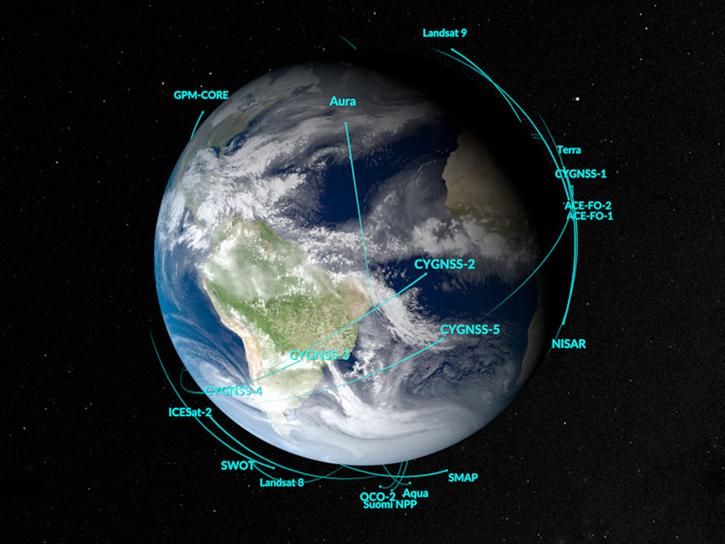
Remote sensing is the acquiring of information from a distance. NASA observes Earth and other planetary bodies via remote instruments on space-based platforms (e.g., satellites or spacecraft) and on aircraft that detect and record reflected or emitted energy. Remote instruments, which provide a global perspective and a wealth of data about Earth systems, enable data-informed decision making based on the current and future state of our planet.

For more information, check out the Fundamentals of Remote Sensing training from the Applied Remote Sensing Training (ARSET) program.
Get Data

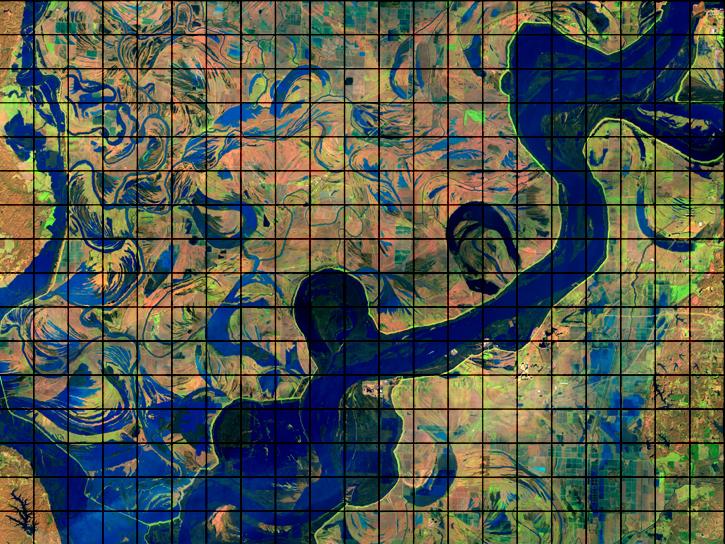
Explore the world’s largest repository of open-access Earth science data.

Remote Sensing Data Basics

Understanding Metadata

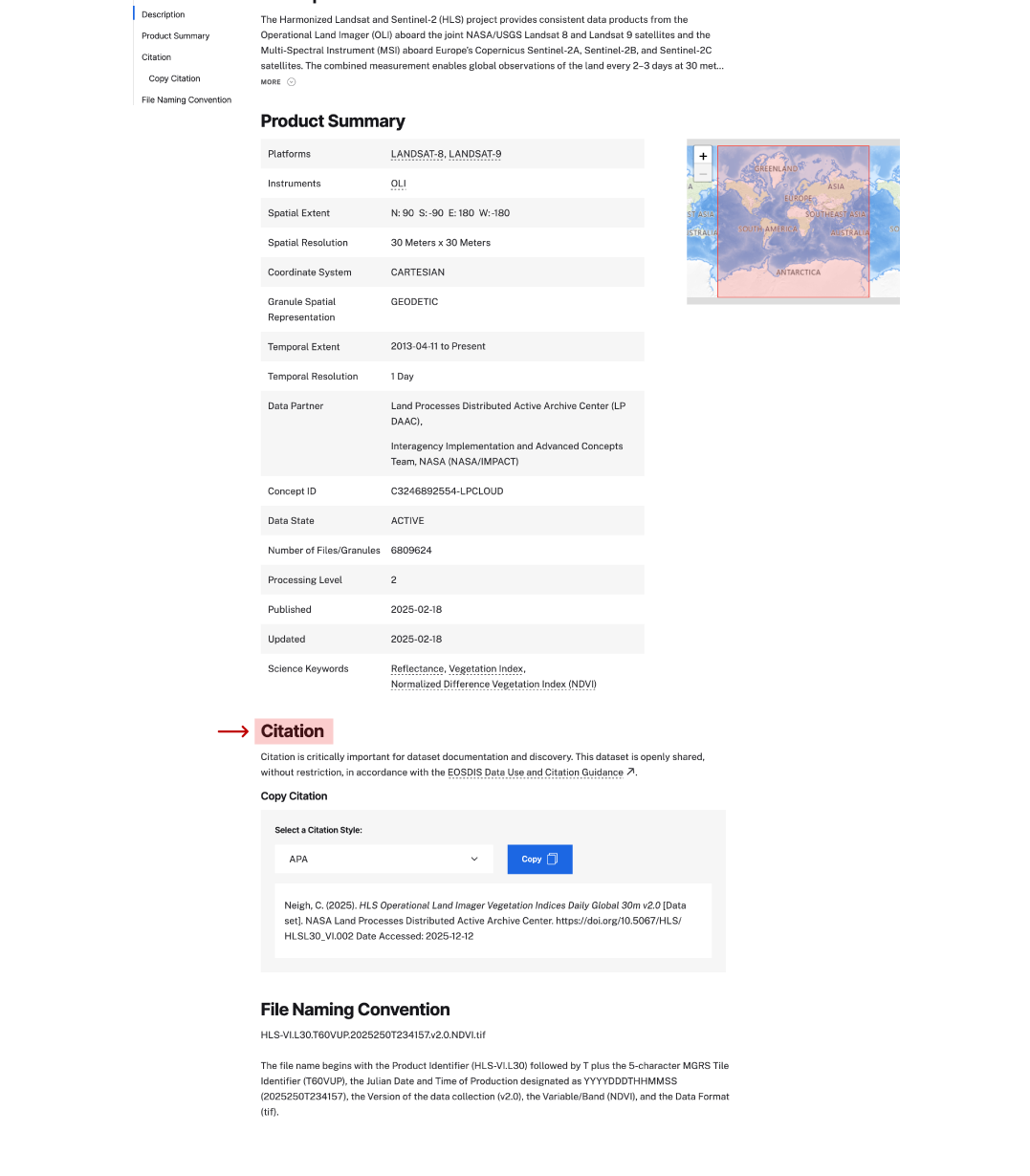
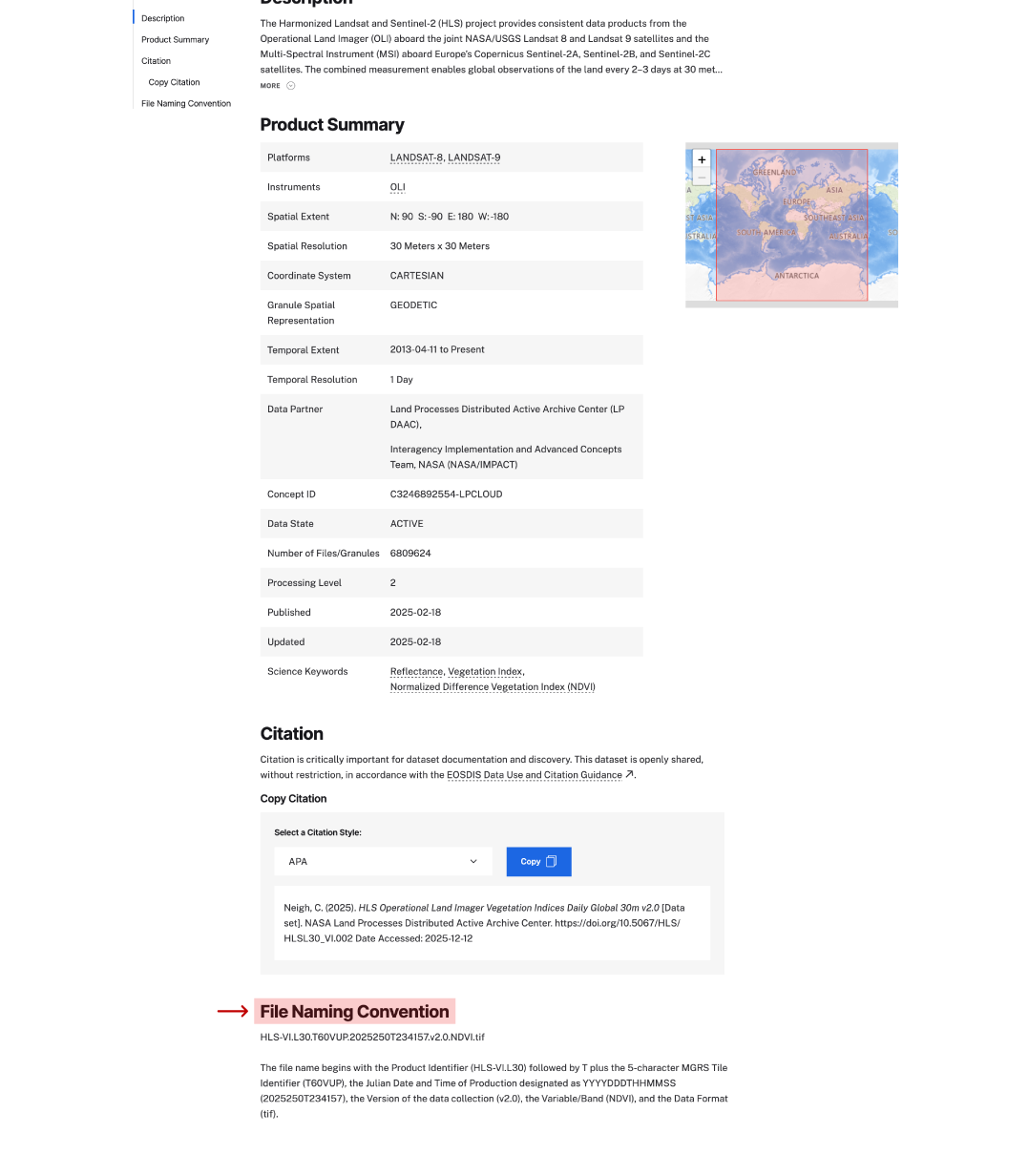
This interactive tool helps users navigate and understand essential metadata on our Earth science dataset landing pages. Through guided examples and hands-on exploration, learn critical context about our data to aid you in your own scientific discoveries.
Interactive

Parts of the Earthdata Dataset Landing Page

Explore
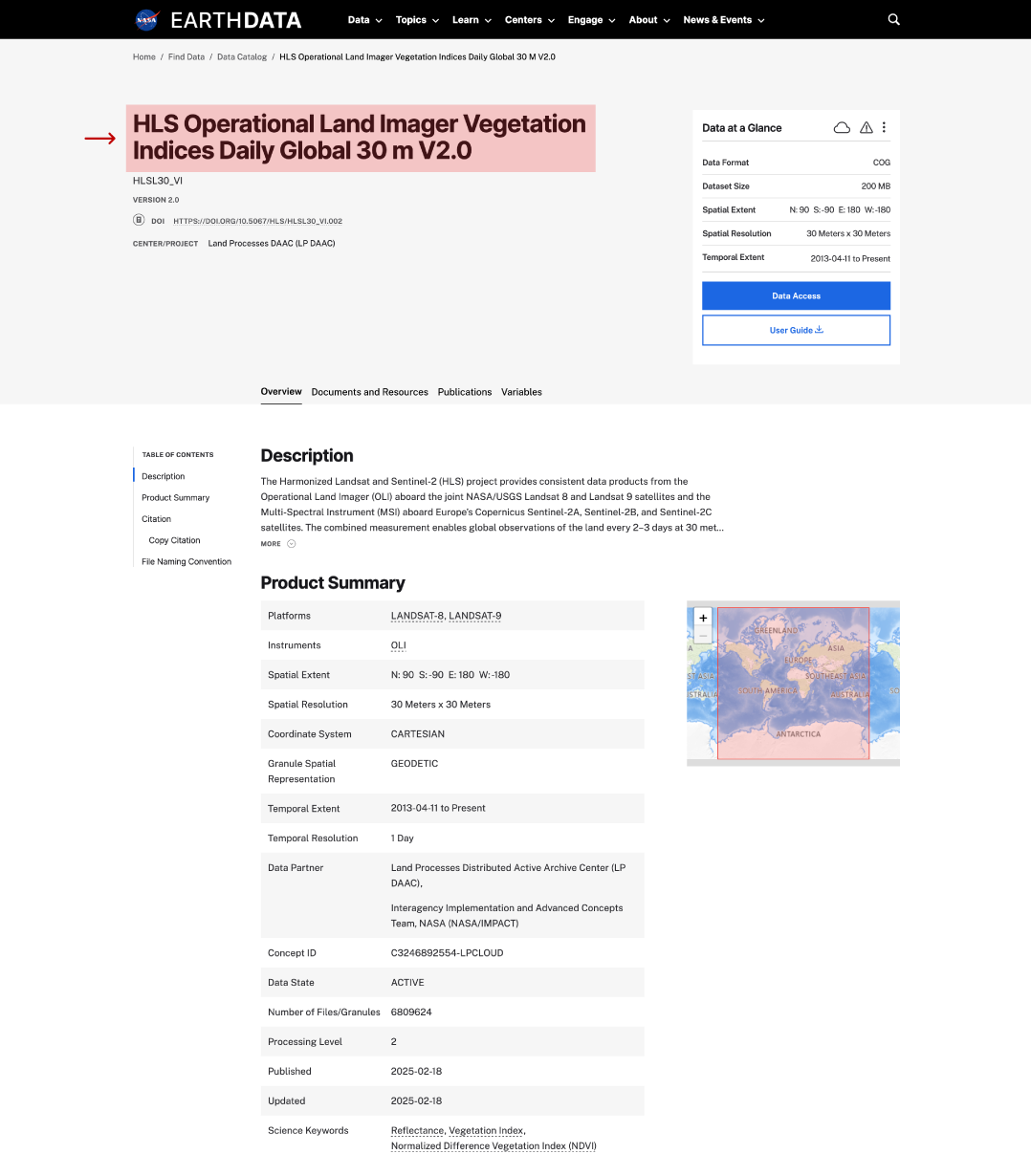
long name on dataset page
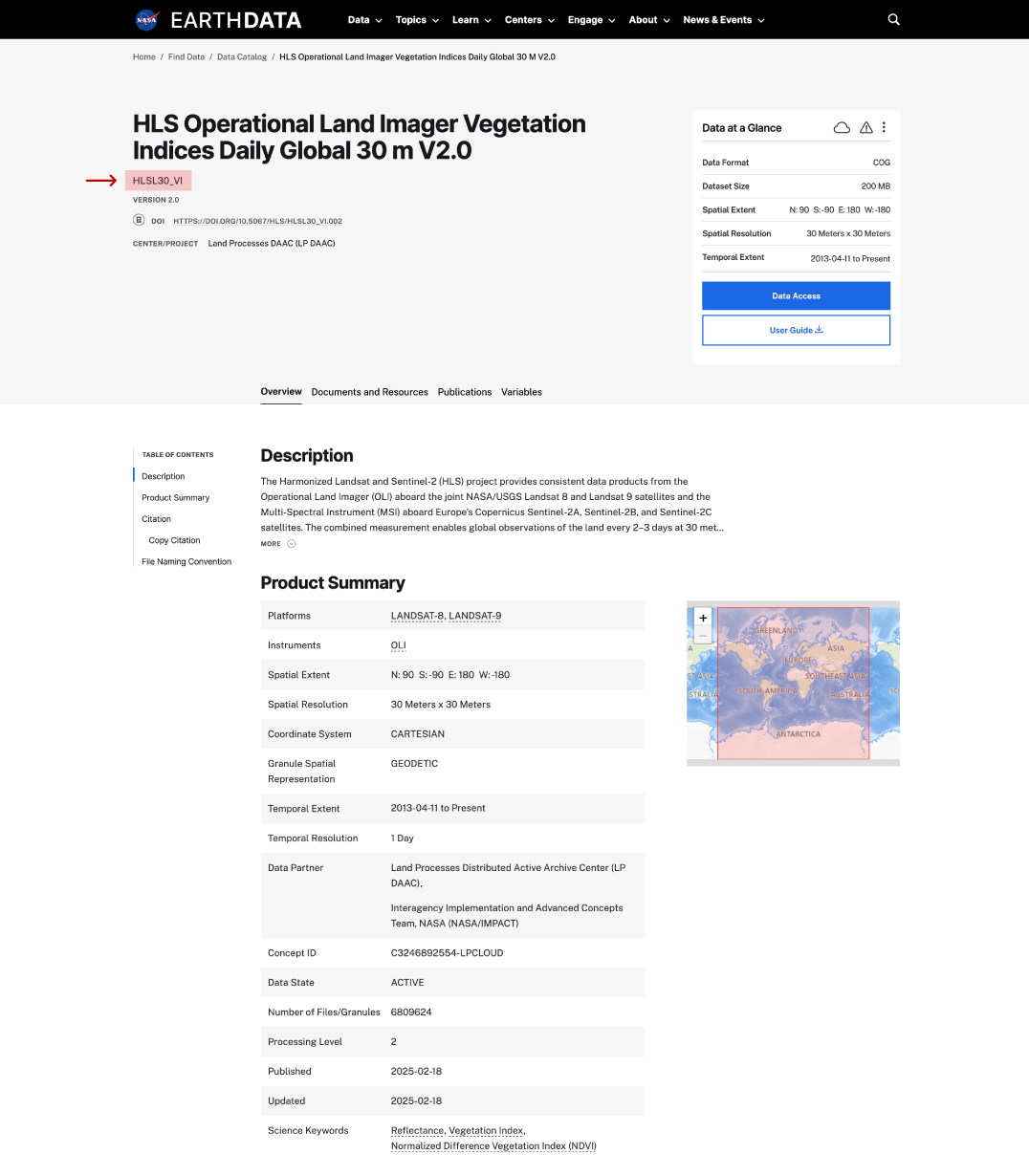
short name on dataset page
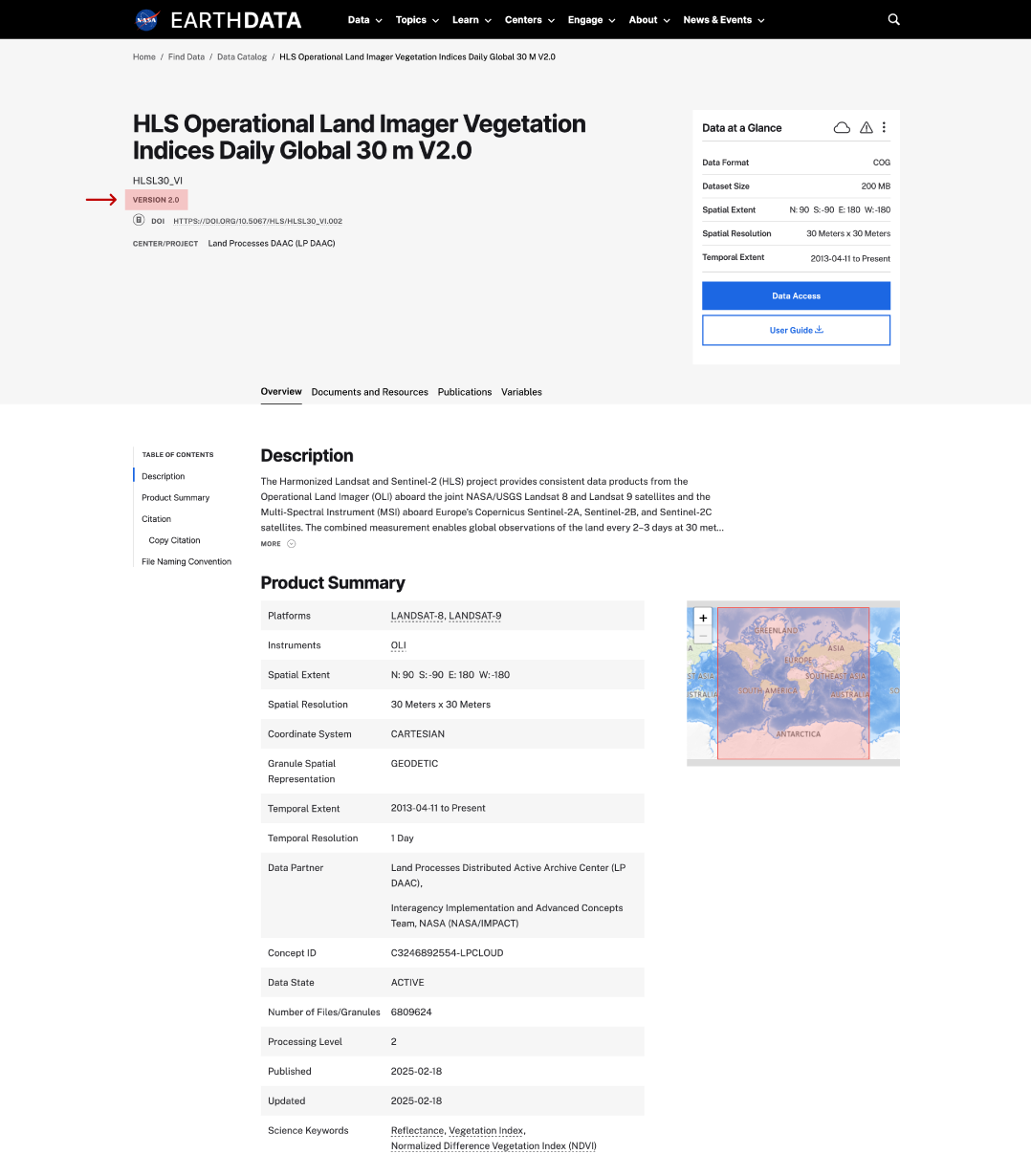
version on dataset page
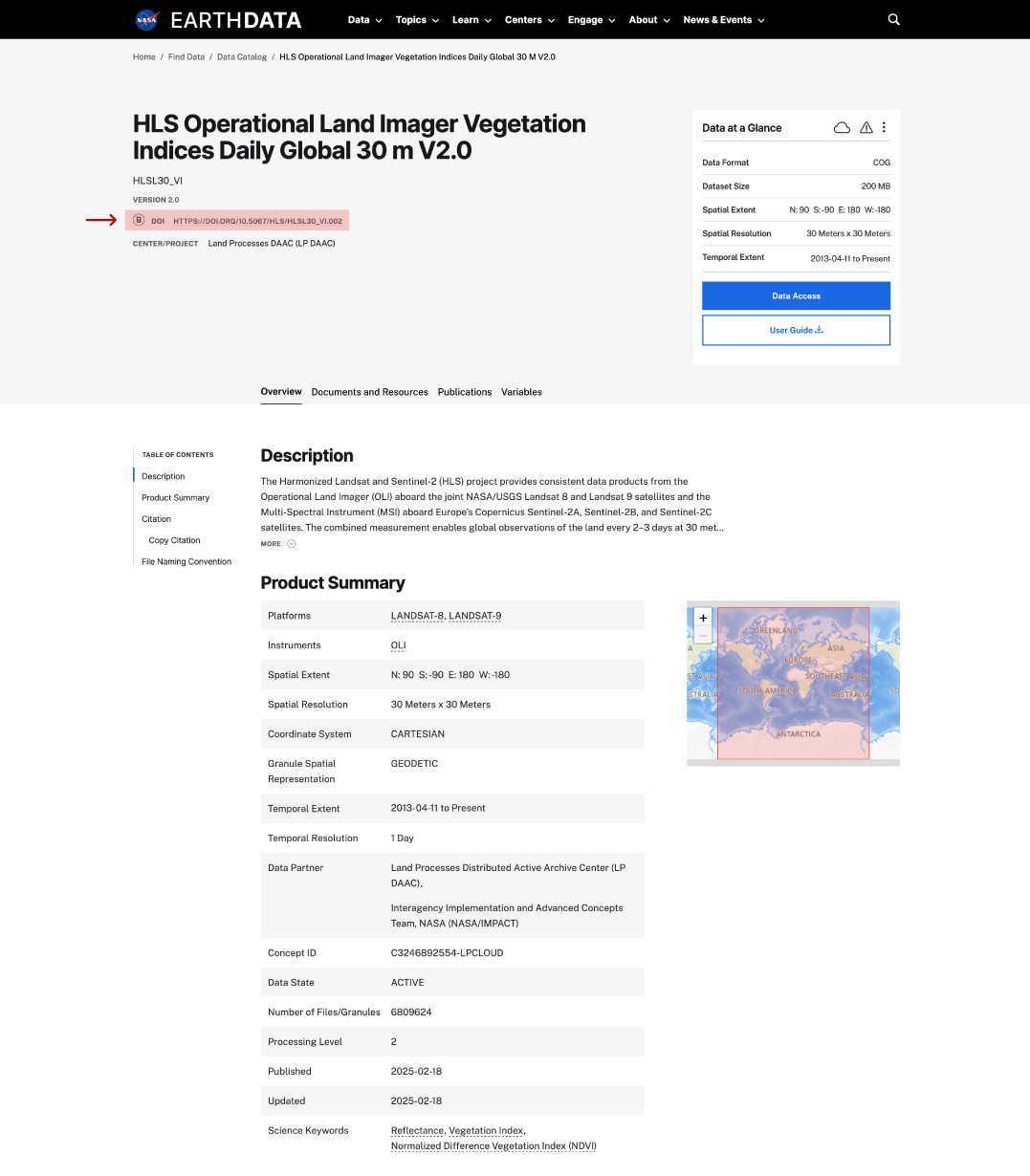
DOI on dataset page
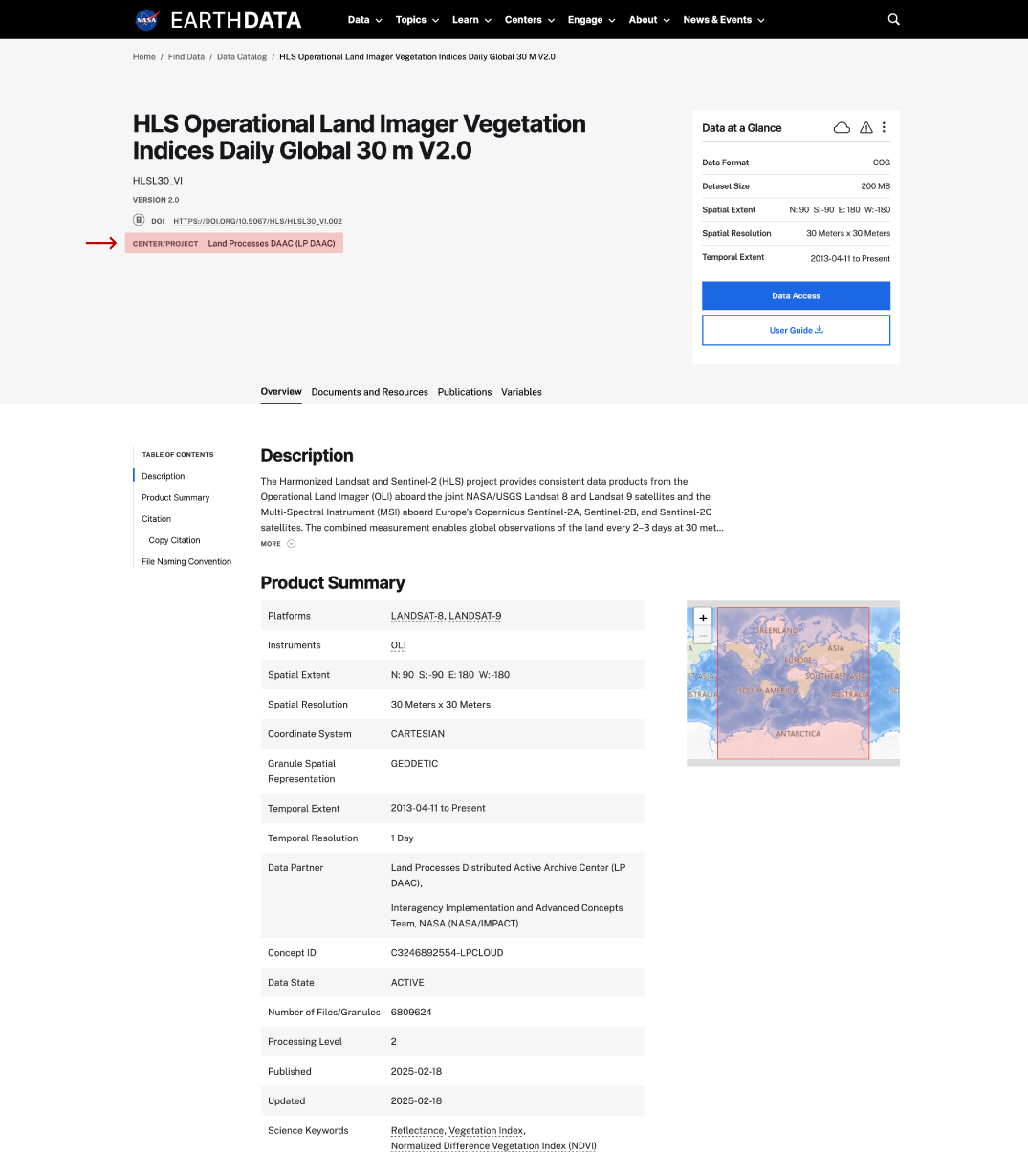
center/project on dataset page
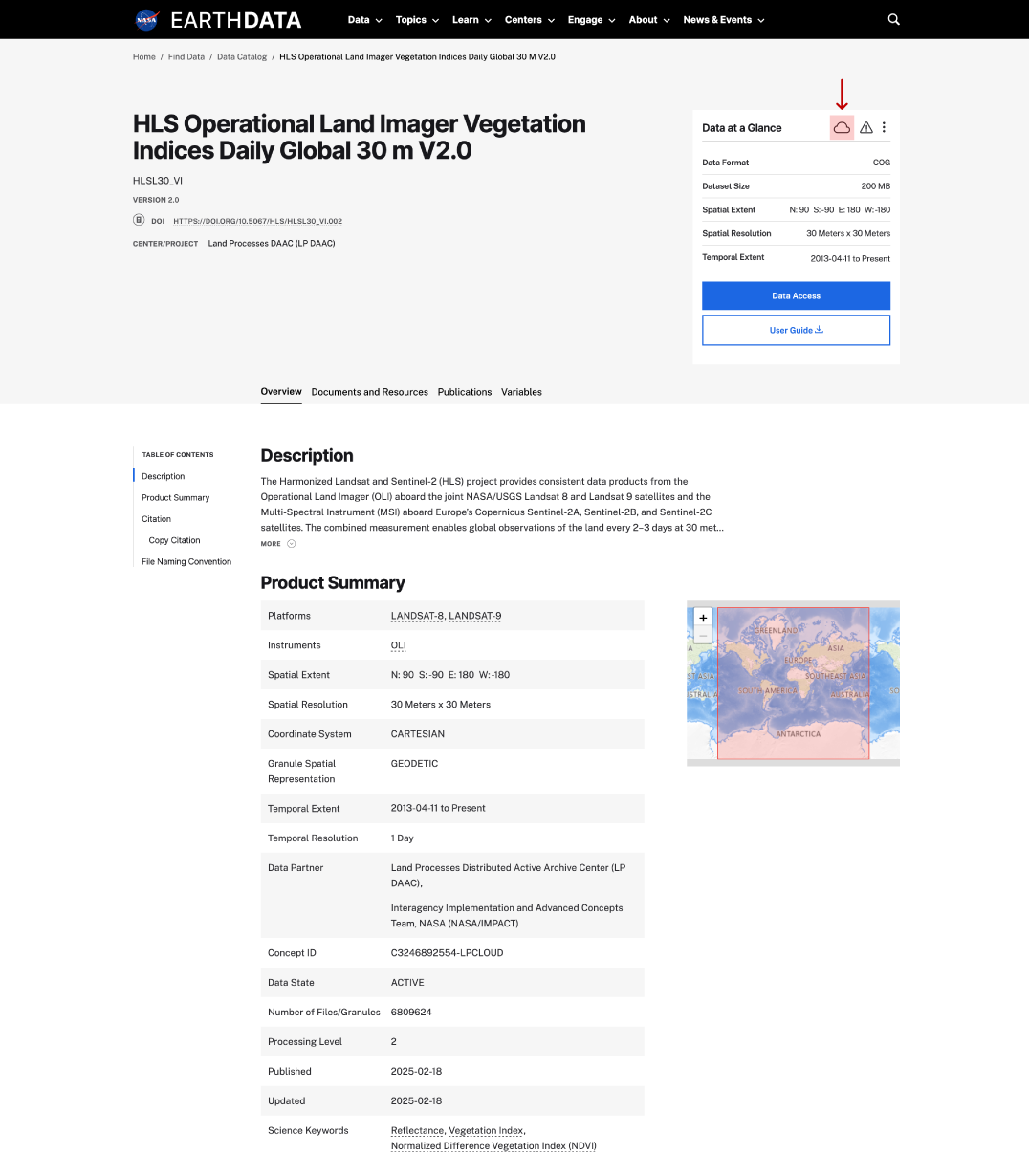
cloud icon on dataset page
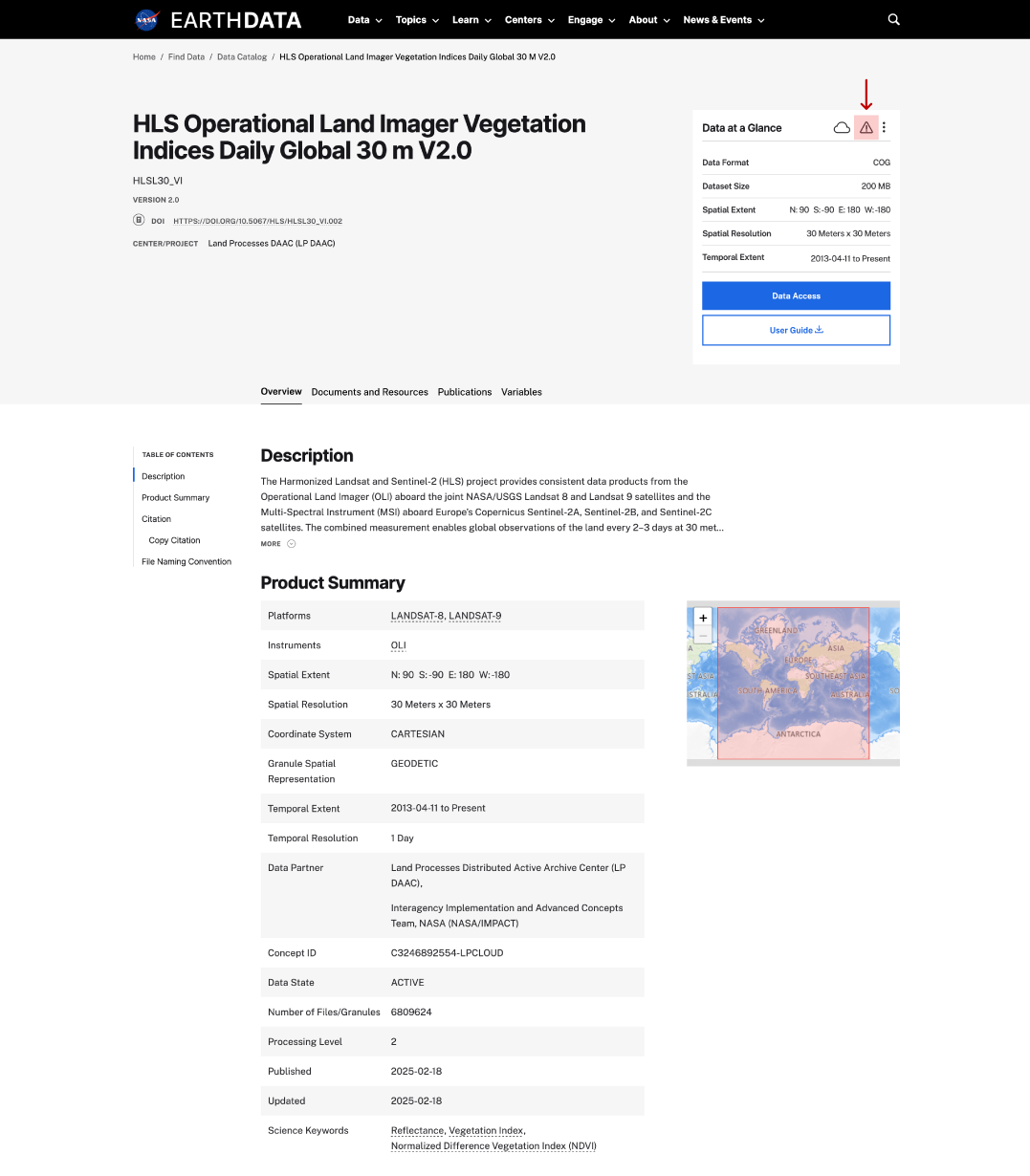
This is a screenshot of a dataset landing page showing the location of the alert icon.
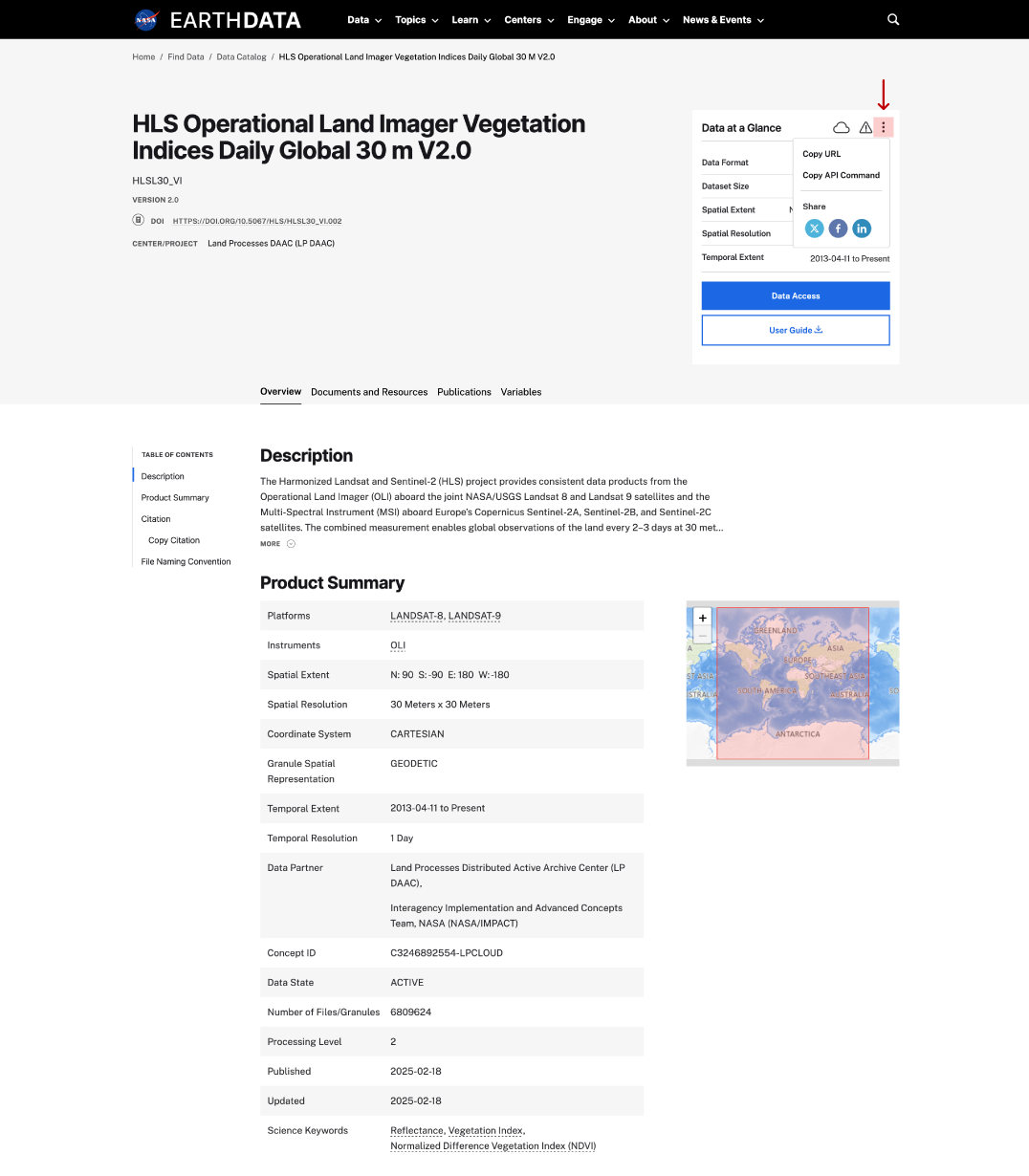
copy URL/API on dataset page
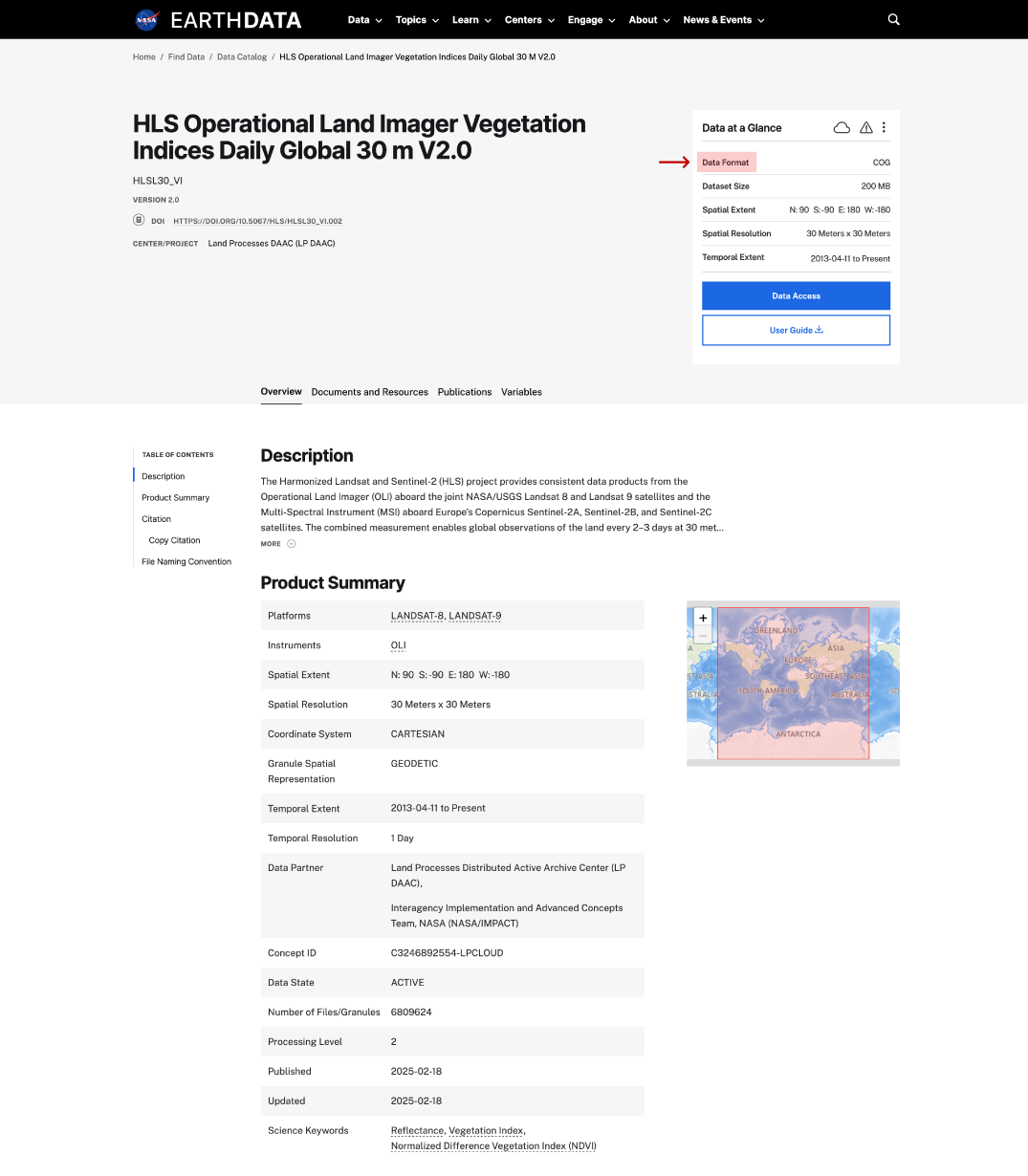
data format on dataset page
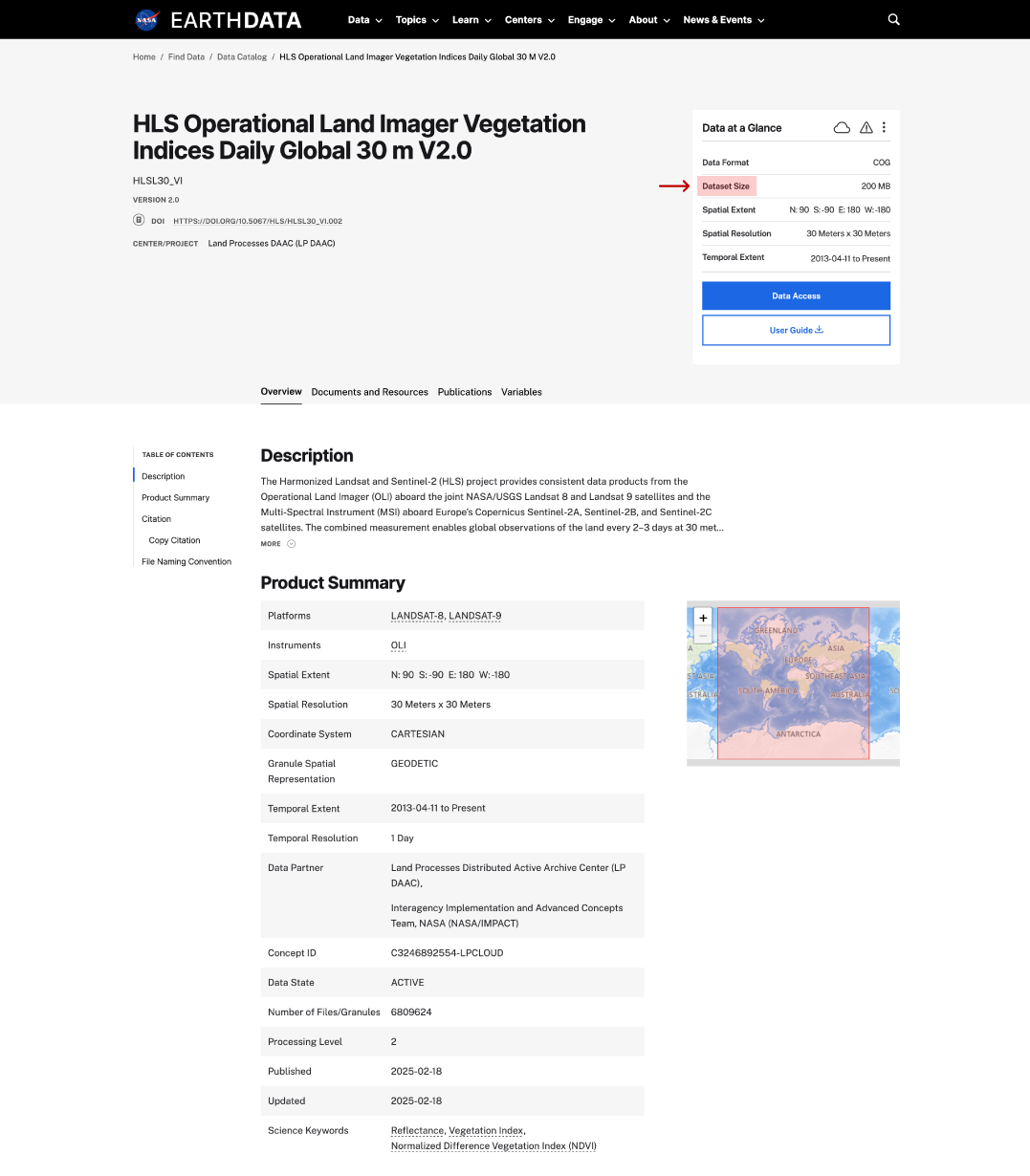
dataset size on dataset page
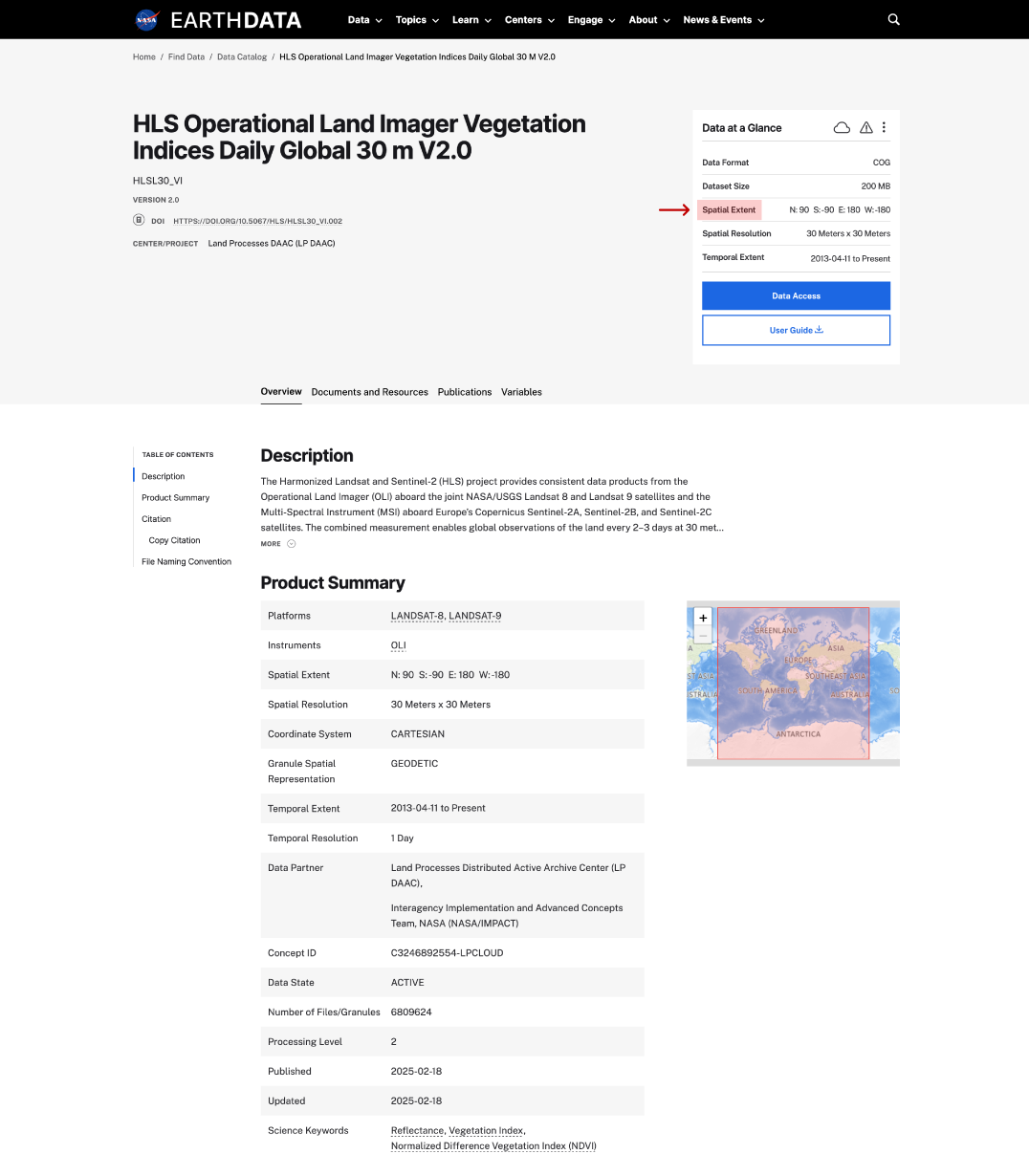
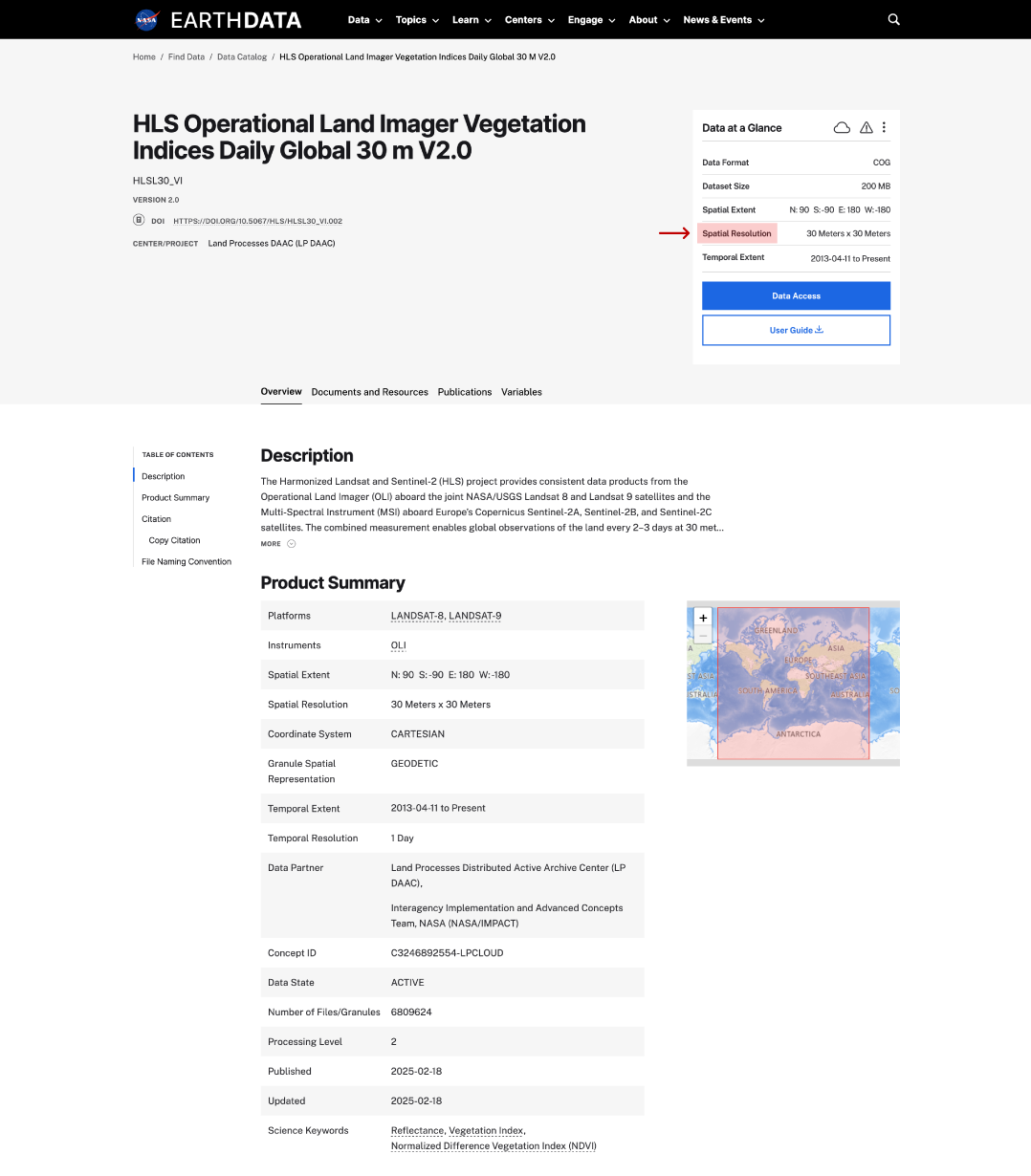
spatial extent on dataset page
spatial resolution on dataset page
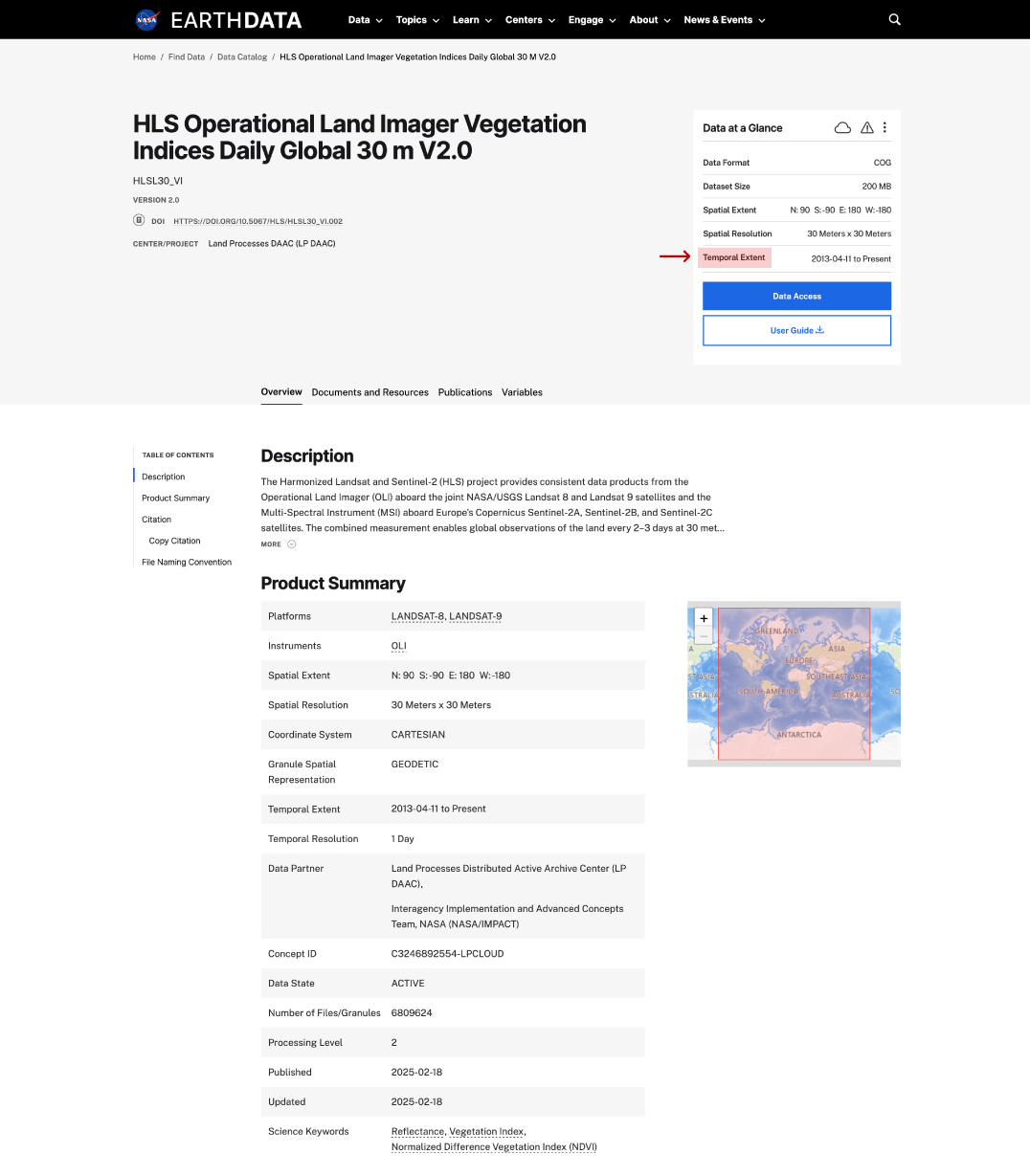
temporal extent on dataset page
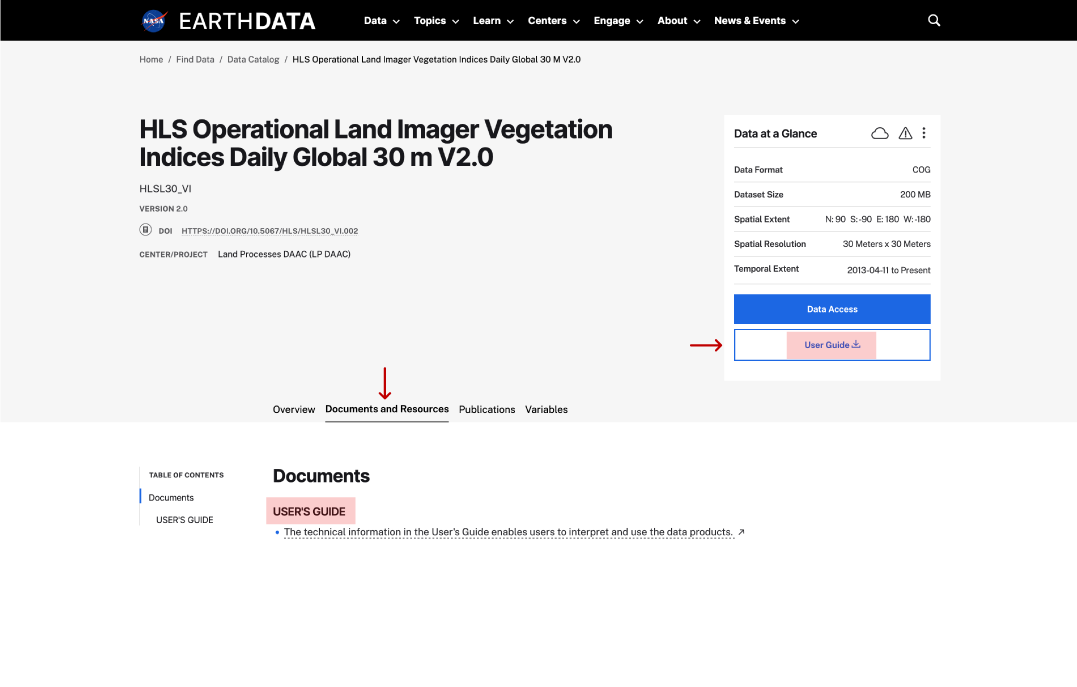
user guide on dataset page
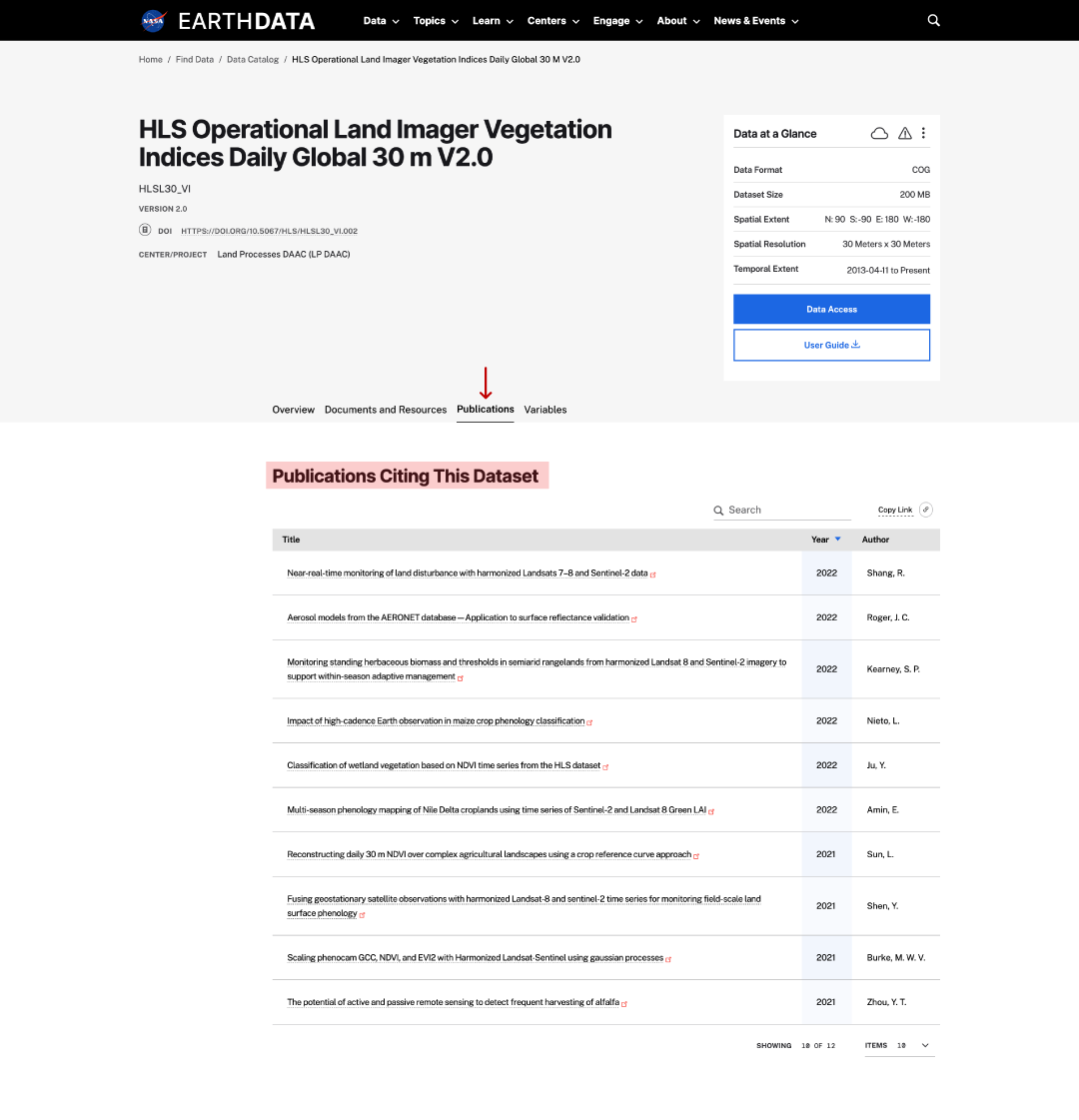
publications on dataset page
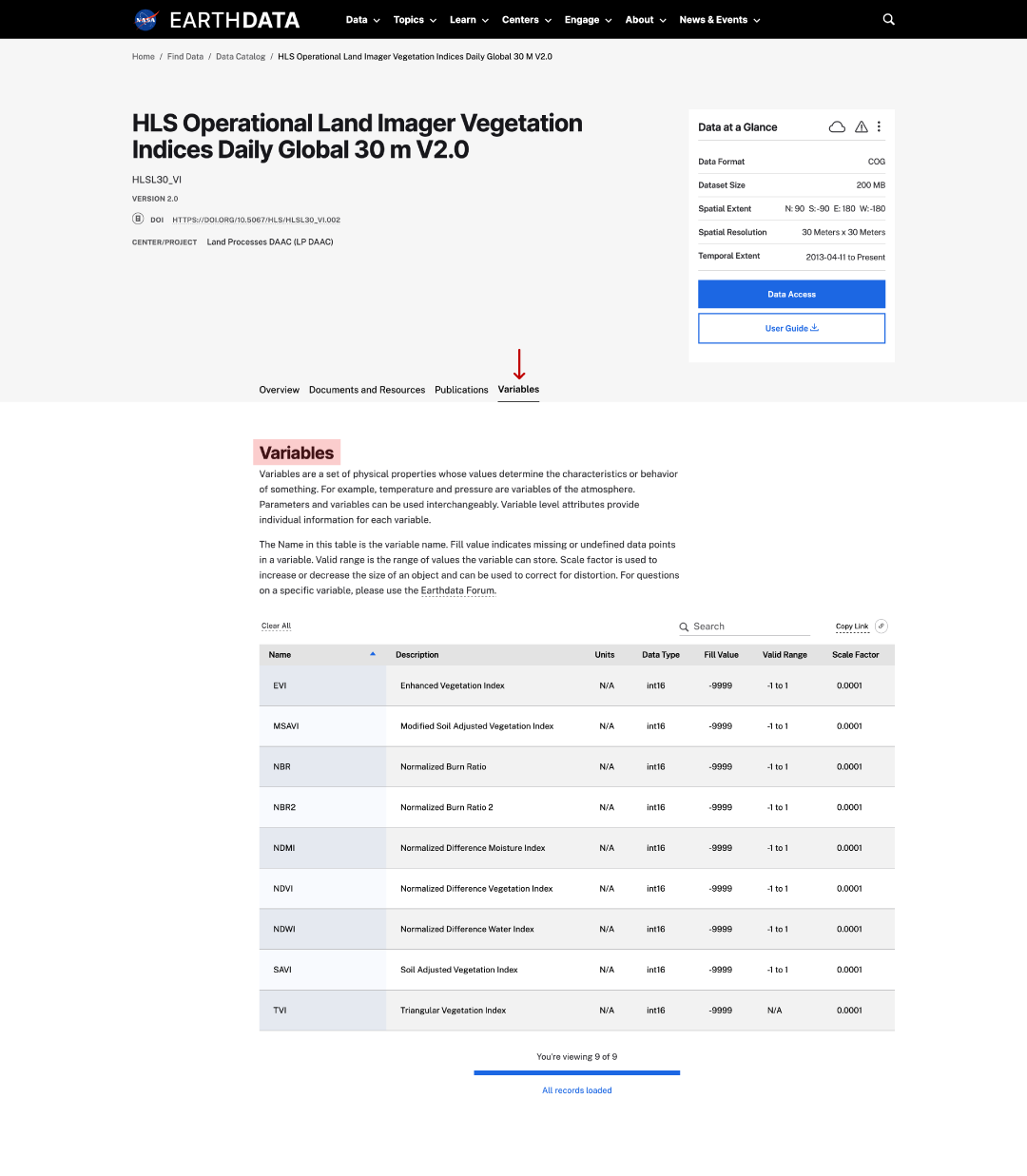
variables on dataset page
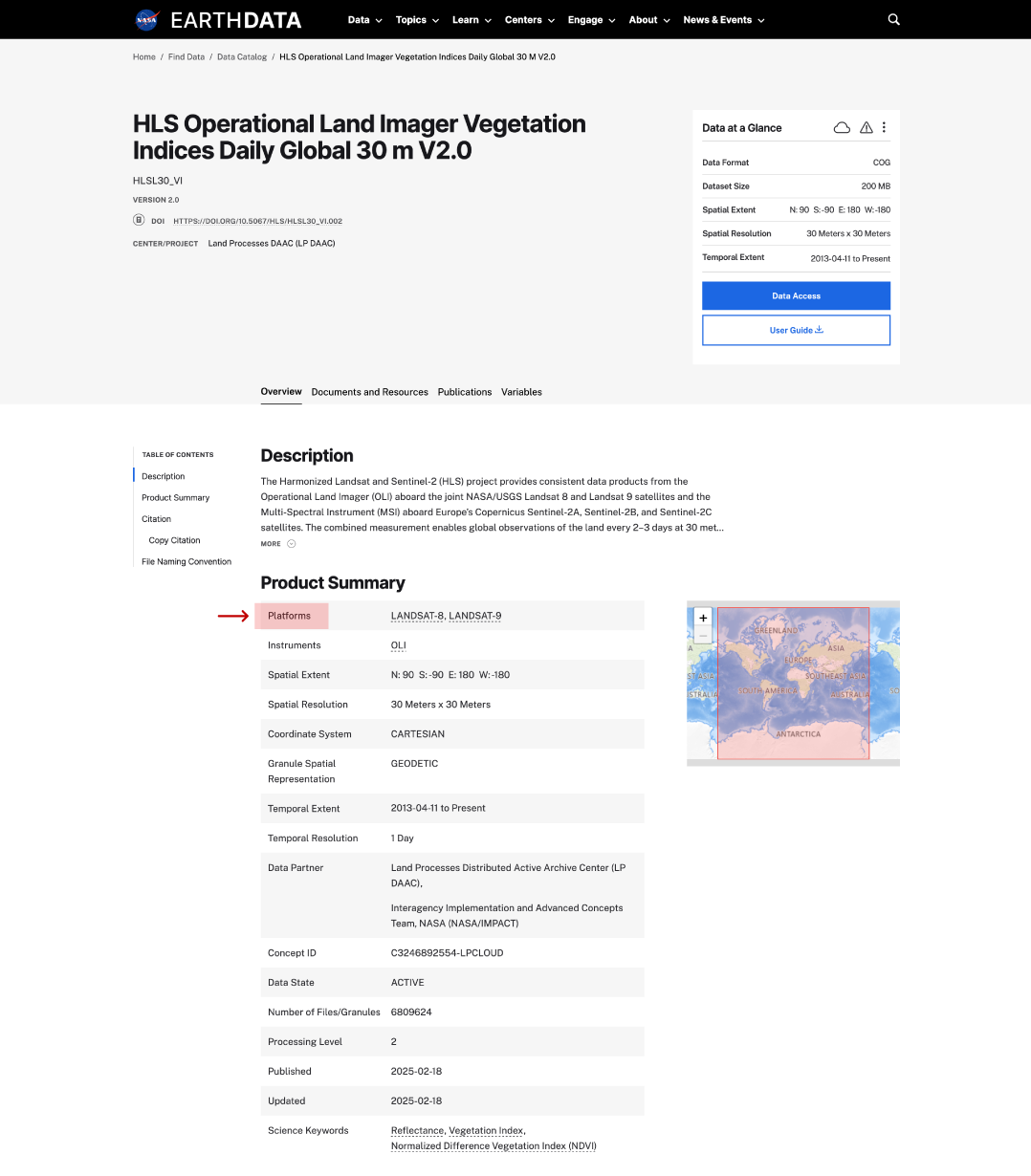
platforms on dataset page
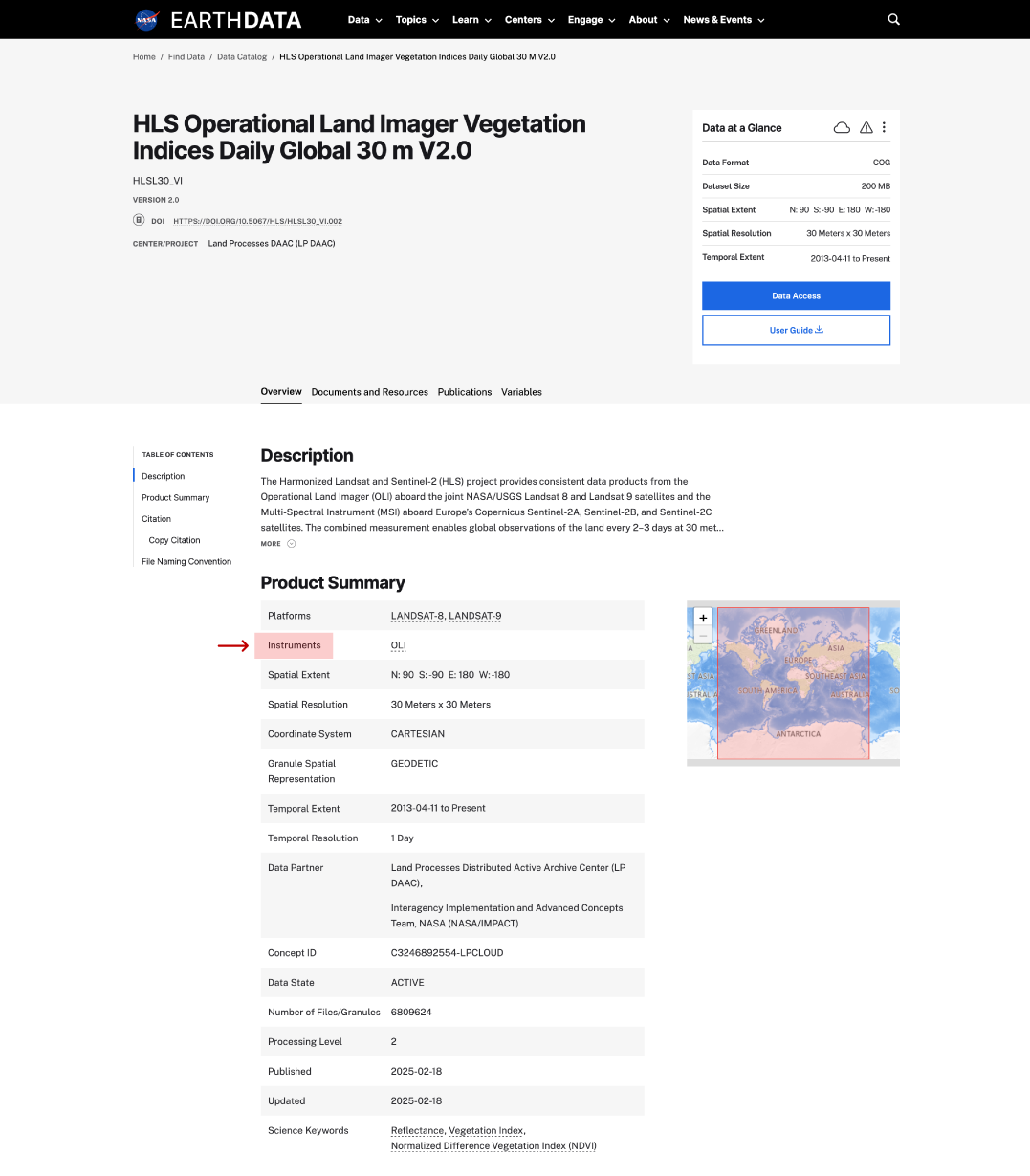
instruments on dataset page
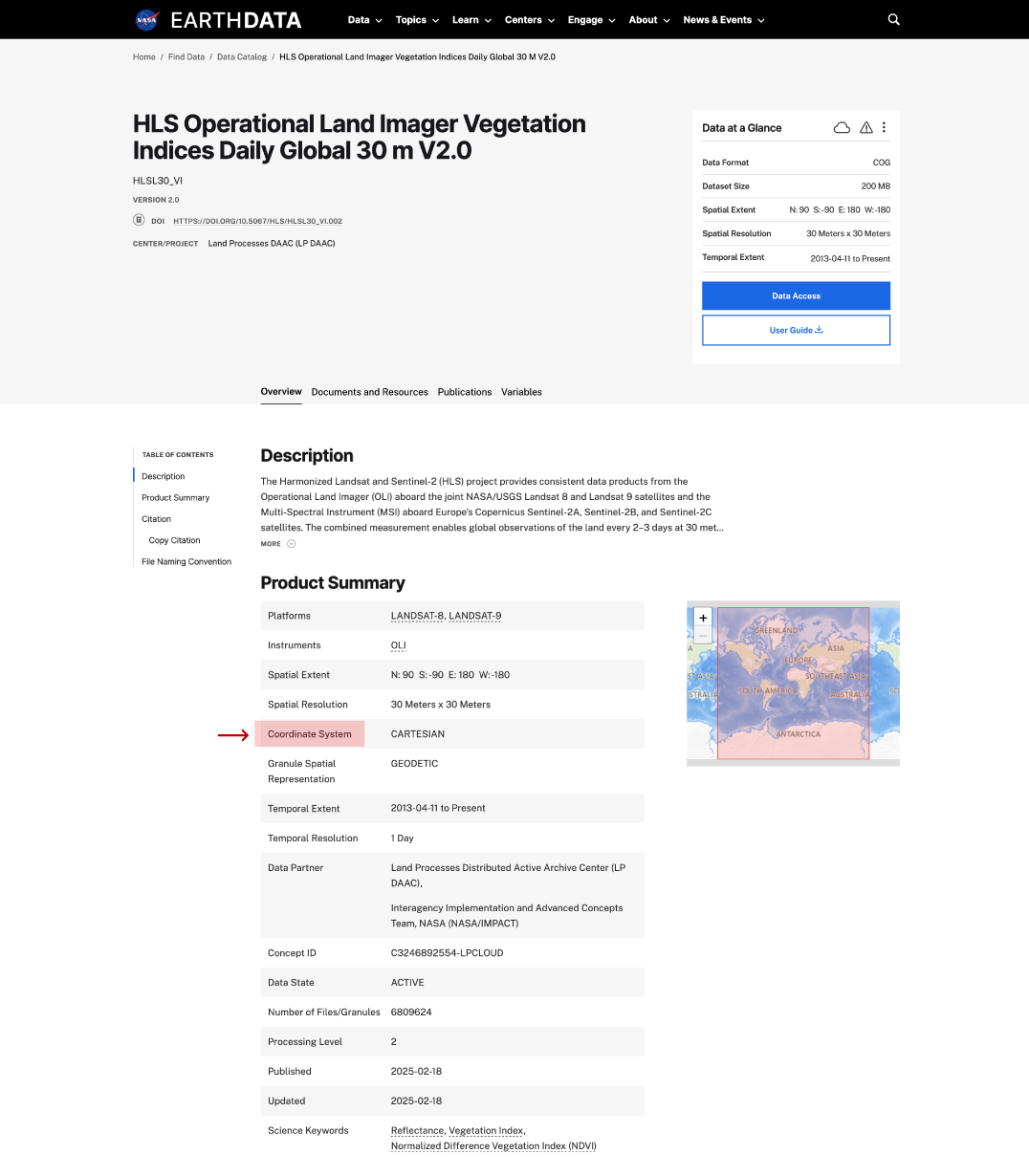
coordinate system on dataset page
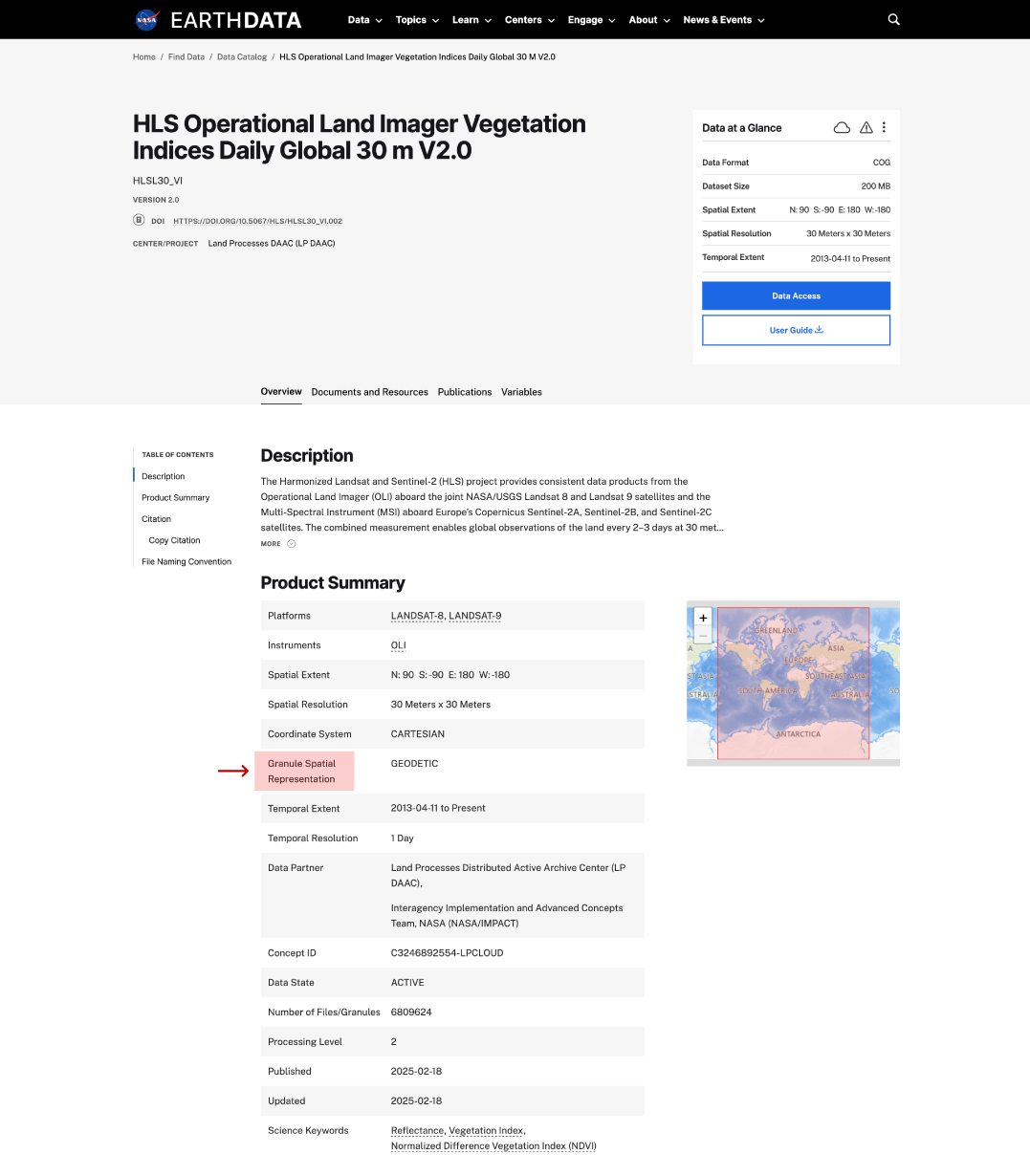
granule spatial representation on dataset page
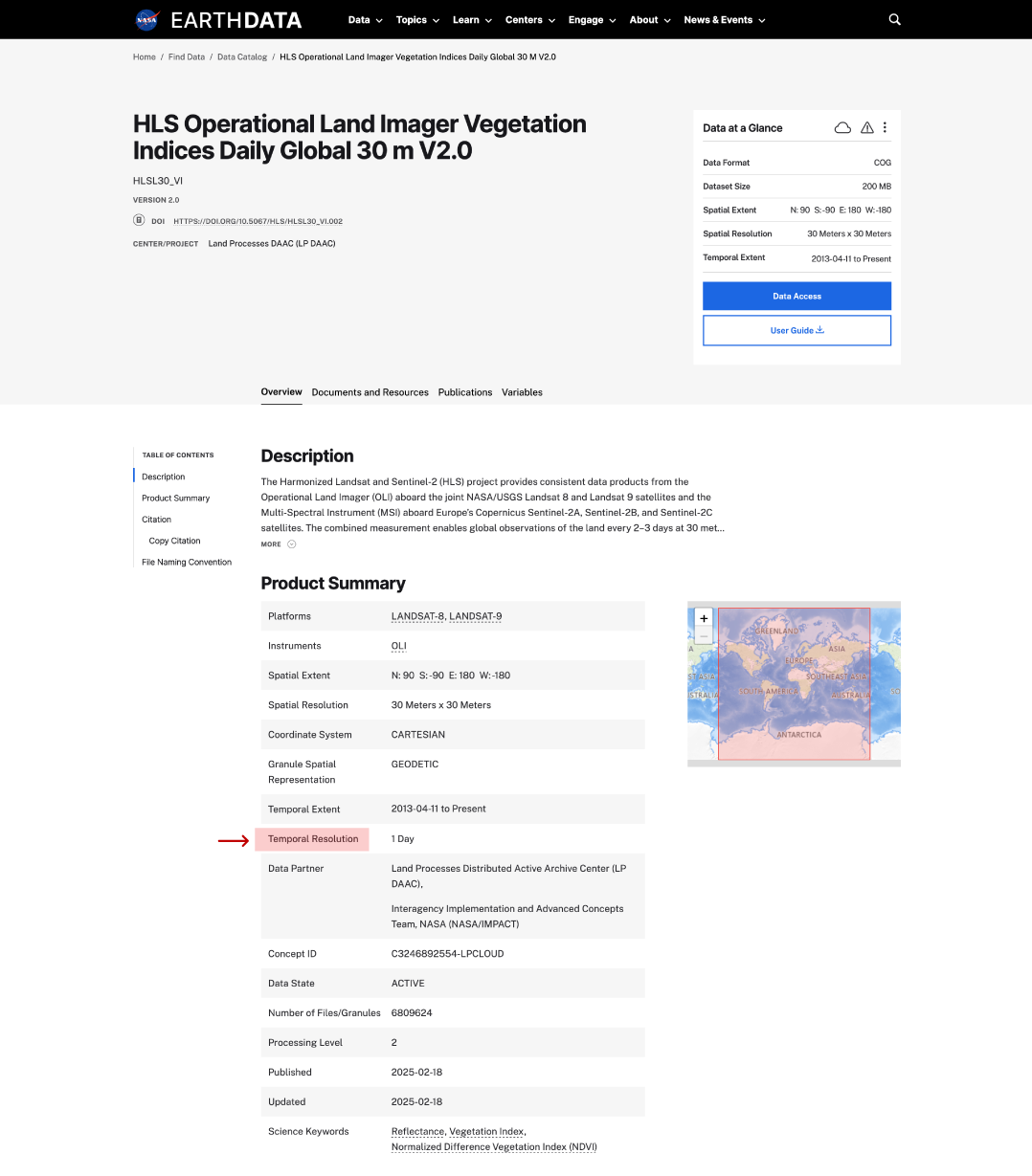
temporal resolution in dataset page
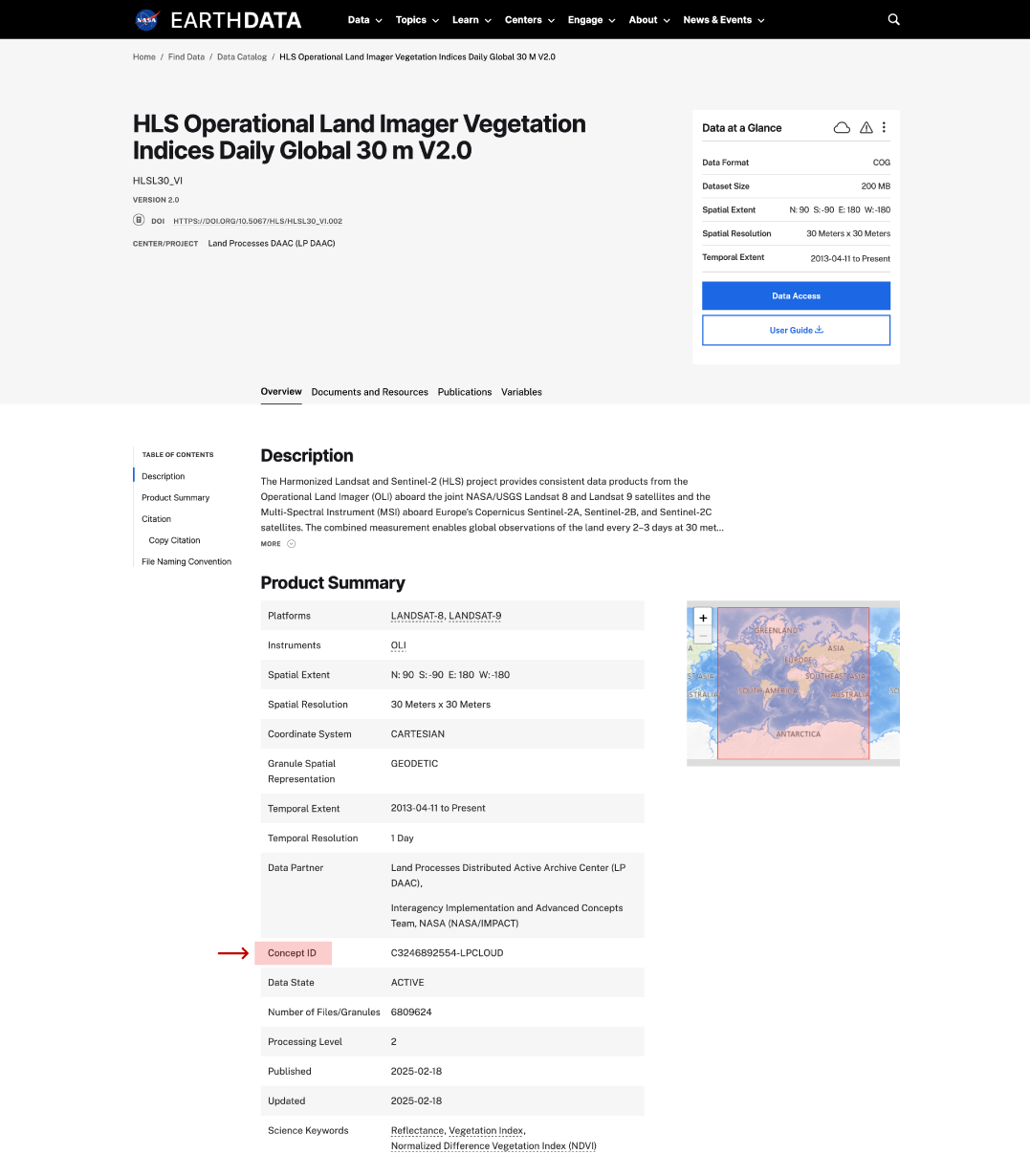
concept ID on dataset page
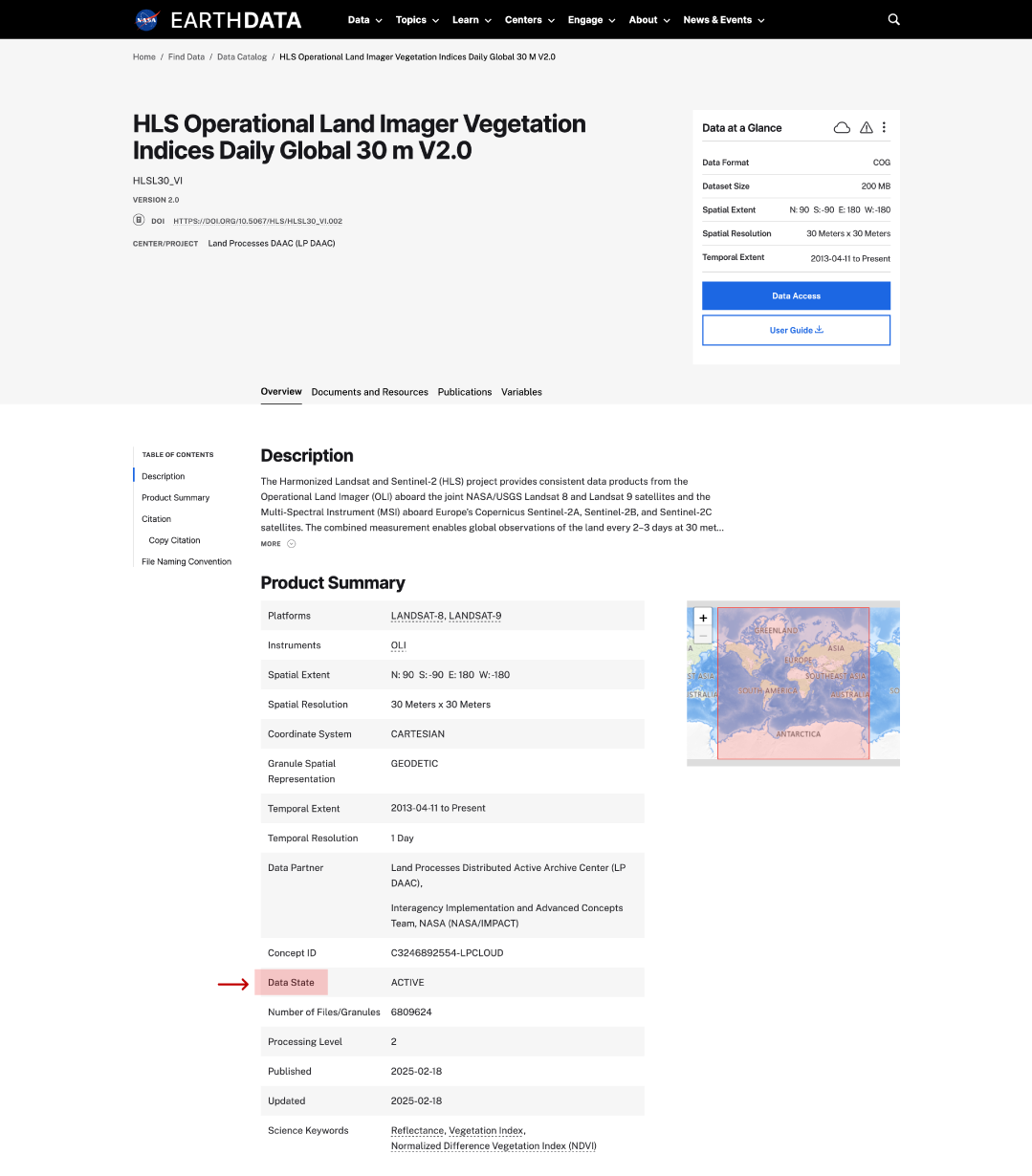
data state on dataset page
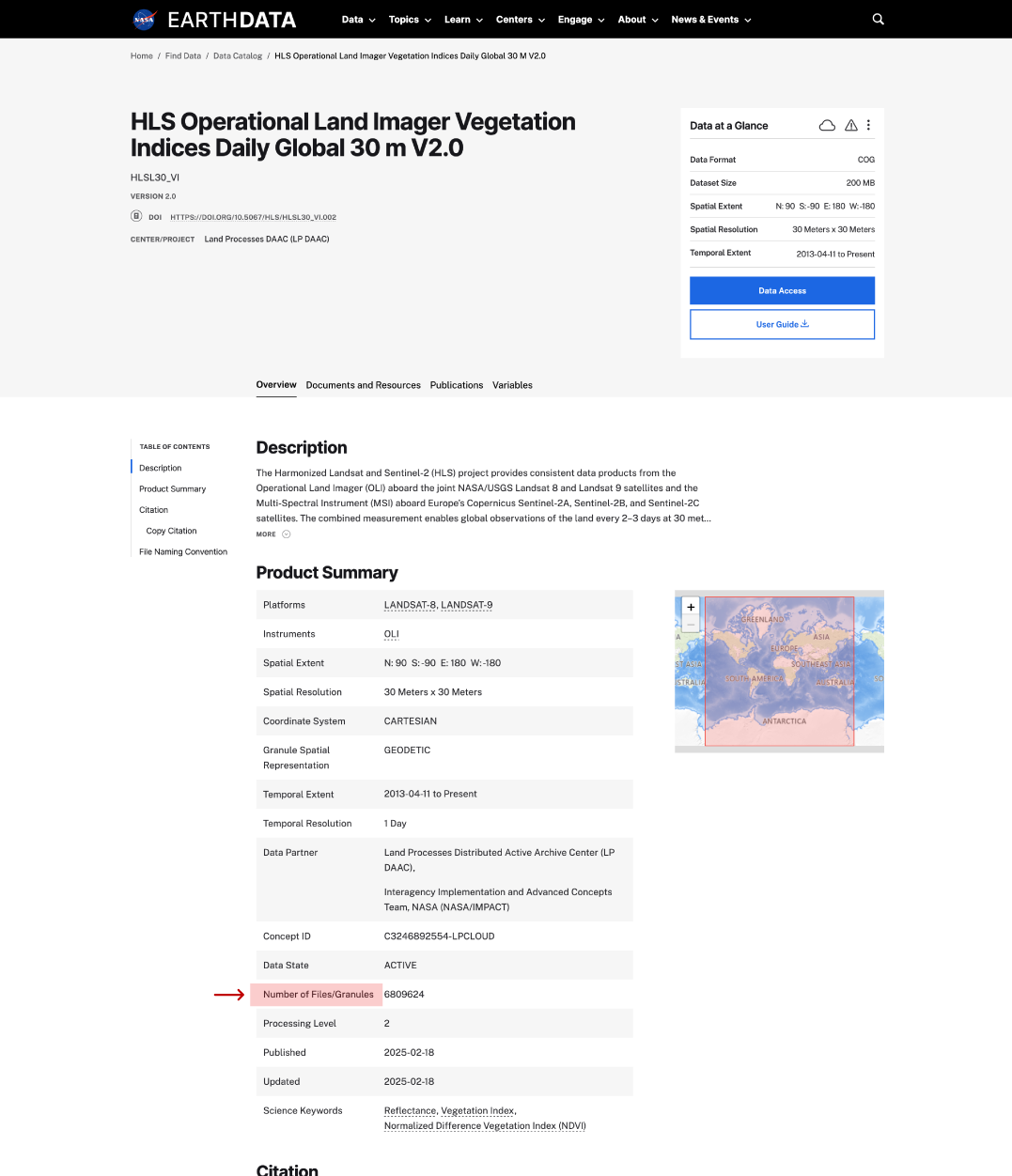
Number of files or granules
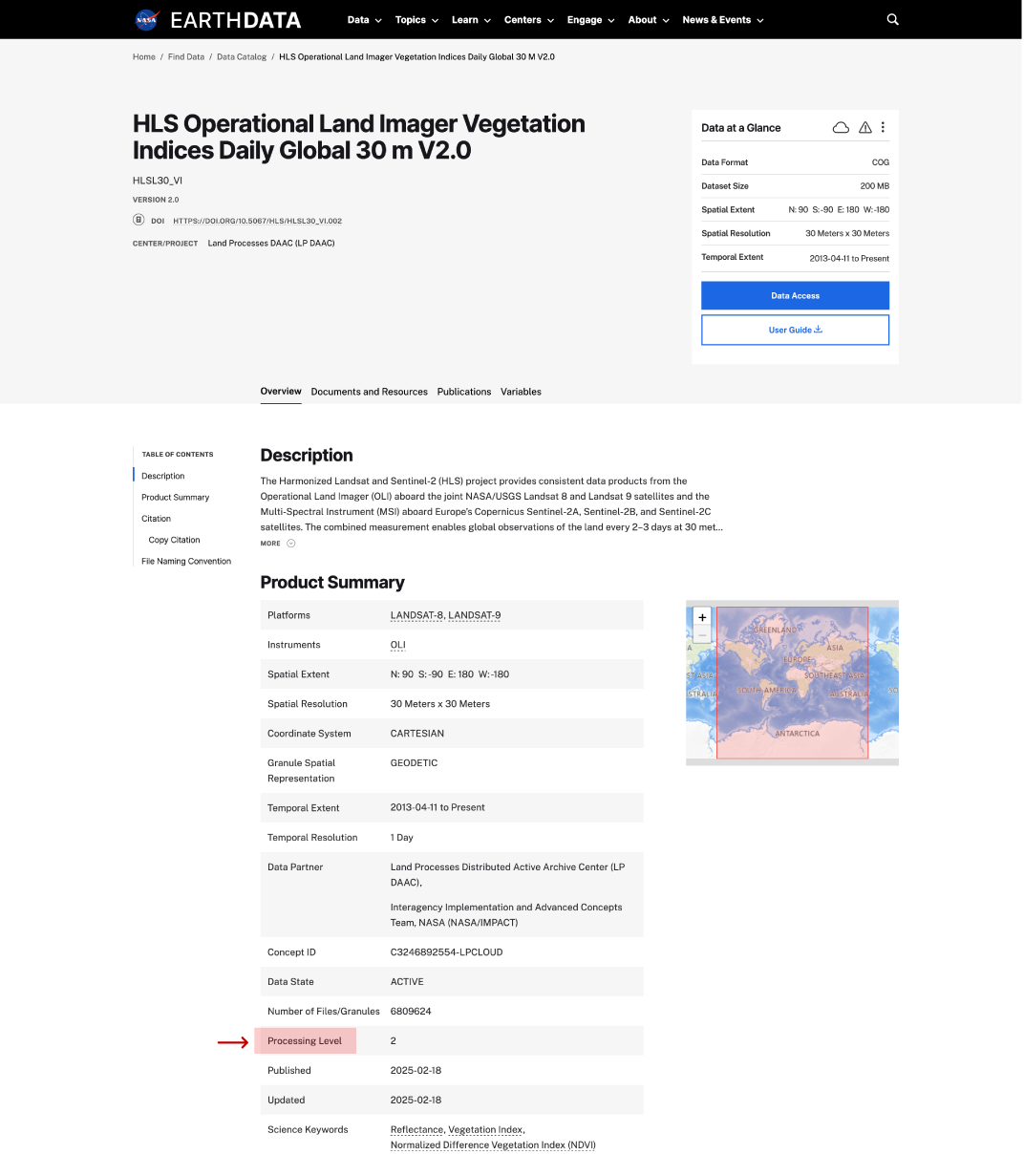
data processing level on dataset ppage
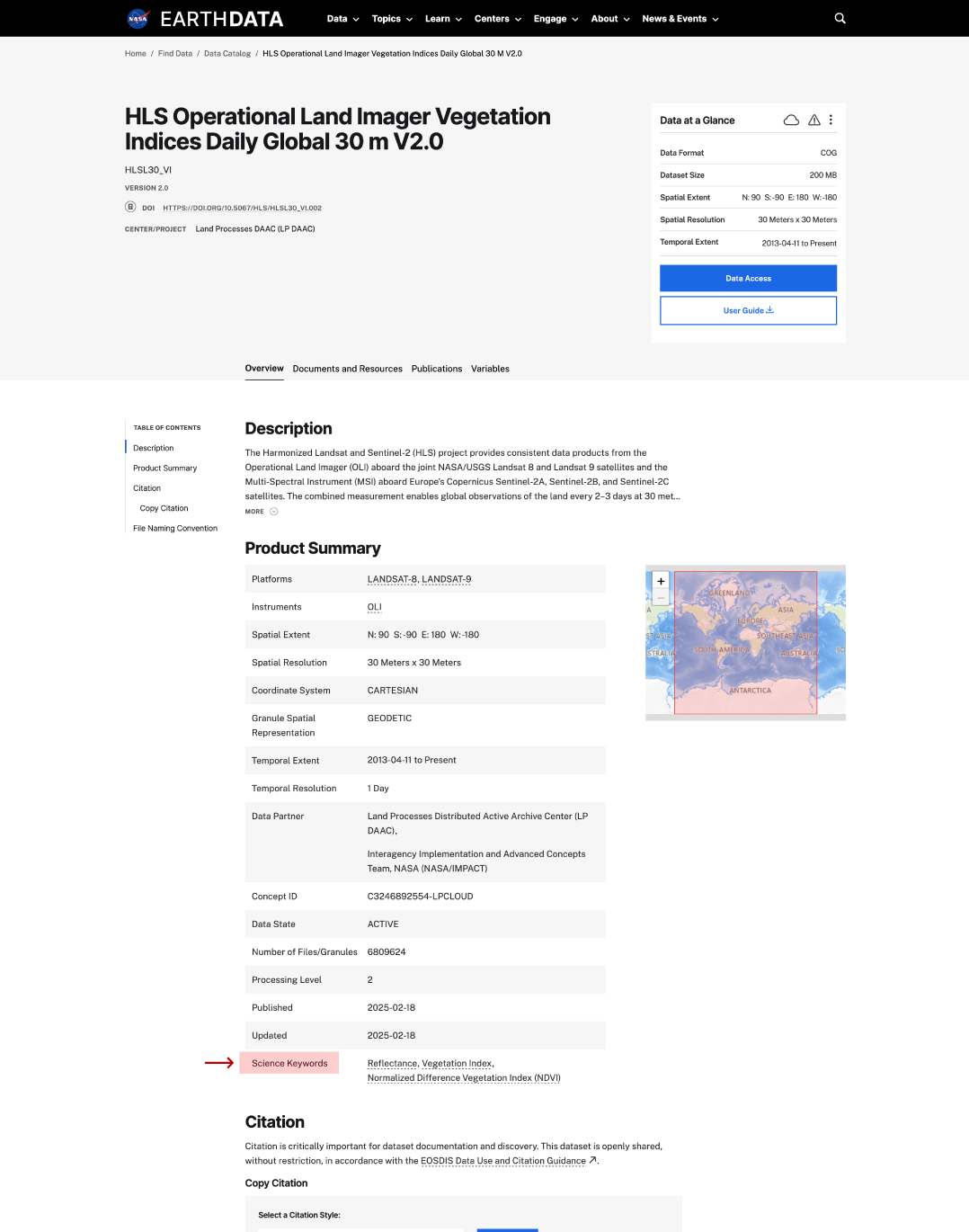
science keywords on dataset page
citation on dataset page
file naming convention on dataset page

Technology

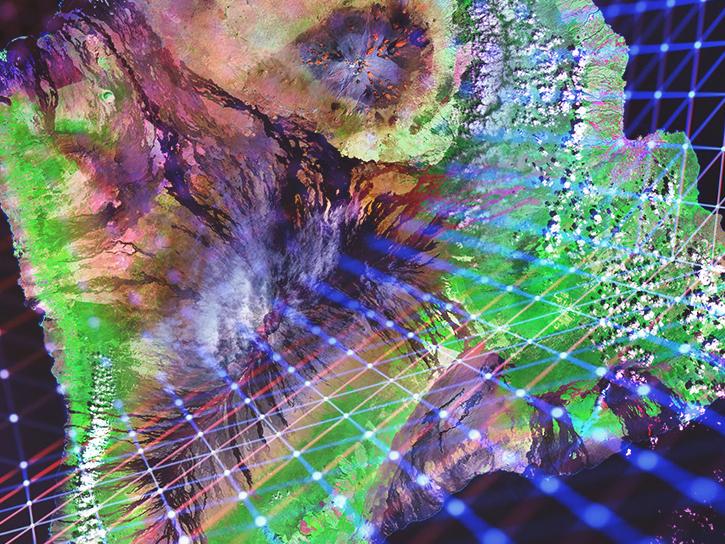
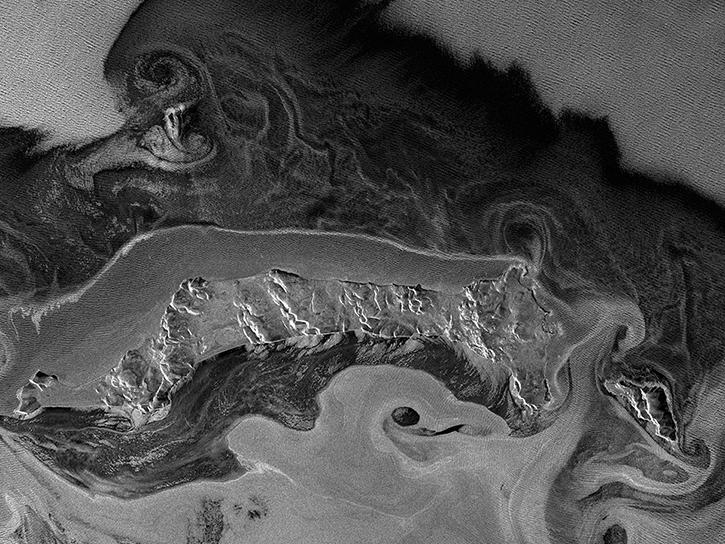
Innovations in artificial intelligence, climate models, and cloud computing are improving the ways users work with Earth science data, especially massive datasets like those expected from NISAR. NASA leverages modern computing approaches to optimize the quality of data collected and the speed at which users are able to drill down to the details they need to support on-the-ground science.

Image

Cloud Computing

Nearly all of NASA’s Earth science data is accessible through Earthdata Cloud, making access, analysis, and visualization more efficient and cost effective. We offer resources including Python libraries, tutorials, and data recipes to help users optimize working with data in the cloud.

Image

Earth Observation Data and Artificial Intelligence

The application of artificial intelligence (AI) to Earth science data makes it possible to search through large amounts of data to find relationships.

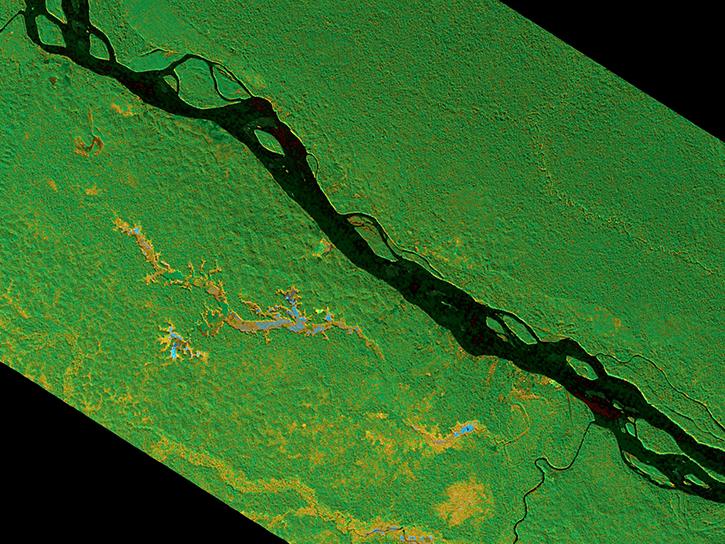
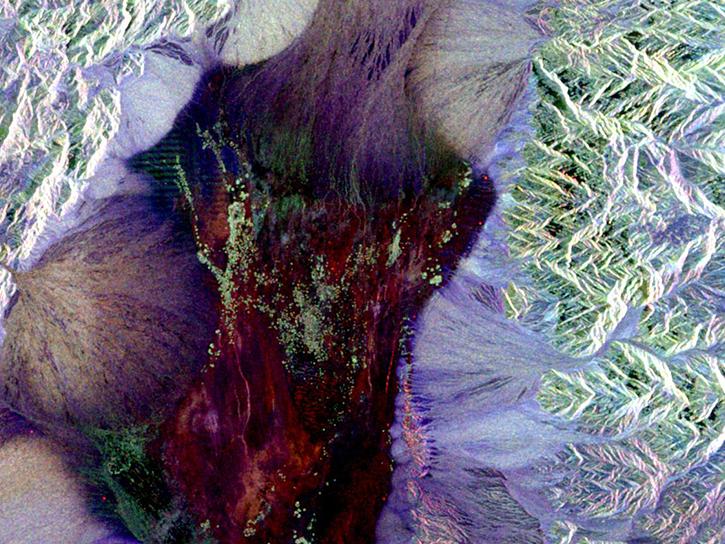
Synthetic Aperture Radar

Glossary of Terms

Reference the Earth Observation Data Basics Glossary to better understand terms related to the data provided by our program.
All
A B C D E F G H I J K L M N O P Q R S T U V W X Y Z
Data Format

A standard way that information is encoded for storage in a computer file (see more about data formats). An example is HDF5.

Data Format Control Documents (DFCD)

Data Format Control Documents (DFCDs), and other data format documents (e.g., Data Format Requirements Documents (DFRDs)), define the formats of data units that are transferred across an interface and the control codes used in the data formats.

Data Management

As defined for an OAIS entity that contains the services and functions for populating, maintaining, and accessing a wide variety of information. Some examples of this information are catalogs and inventories on what may be retrieved from Archival Storage, processing algorithms that may be run on retrieved data, Consumer access statistics, Consumer billing, Event Based Orders, security controls, and OAIS schedules, policies, and procedures.

Data Maturity Levels

Beta
Products intended to enable users to gain familiarity with the parameters and the data formats. 

Provisional
Product was defined to facilitate data exploration and process studies that do not require rigorous validation. These data are partially validated and improvements are continuing; quality may not be optimal since validation and quality assurance are ongoing. 

Validated
Products are high quality data that have been fully validated and quality checked, and that are deemed suitable for systematic studies such as climate change, as well as for shorter term, process studies.

Stage 1 Validation: Product accuracy is estimated using a small number of independent measurements obtained from selected locations and time periods and ground-truth/field program efforts. 

Stage 2 Validation: Product accuracy is estimated over a significant set of locations and time periods by comparison with reference in situ or other suitable reference data.

Stage 3 Validation: Product accuracy has been assessed. Uncertainties in the product and its associated structure are well quantified from comparison with reference in situ or other suitable reference data.

Stage 4 Validation: Validation results for stage 3 are systematically updated when new product versions are released and as the time-series expands.

Data Model

An Earth science metadata model, which supports the data standardization necessary for total system interoperability within a heterogeneous, open systems environment. The Data Model includes diagrams, which graphically illustrate the relationships of classes, the attributes contained within the classes, the characteristics of the relationships between classes, and the attribute specifications.

Data Processing Level

The level of processing that results in data products ranging from raw instrument data to refined analyses that use inputs from various sources. See also: Data Maturity Levels.

Data Producer

A person or group that directly collects/creates data to be submitted to a NASA DAAC for archiving and public distribution.

Data Product

A set of data files that can contain multiple parameters and that compose a logically meaningful group of related data.

Data Quality

See: Quality Indicator

Data Services

NASA ESDIS processes, archives, documents, and distributes data from NASA's past and current Earth-observing satellites and field measurement programs. Each DAAC serves a specific Earth system science discipline and provides users with data products, services, and data-handling tools unique to the center's specialty. User services include:

  • Assistance in selecting and obtaining data
  • Access to data-handling and visualization tools
  • Technical support and referrals
Data Set Documentation

Information describing the characteristics of a data set and its component granules, including format, source instrumentation, calibration, processing, algorithms, etc.

Data Set or Dataset
  1. A logically meaningful grouping or collection of similar or related data. Data having all of the same characteristics (source or class of source, processing level, resolution, etc.) but different independent variable ranges and/or responding to a specific need are normally considered part of a single data set. A data set is typically composed by products from several missions, gathered together to respond to the overall coverage or revisit requirements from a specific group of users. In the context of EO data preservation, a data set consists of the data records and their associated knowledge (information, tools).
     
  2. A broadly used term that can be used to describe any set of data. The official term “HDF5 dataset” describes a data array in an HDF5 file (equivalent to a NetCDF-4 variable in a NetCDF-4 file or an HDF-EOS field in an HDF-EOS file). An entire data collection is sometimes referred to as a dataset.
Data Set Series or Dataset Series

A major release of a data product, or of a set of closely related data products, which can be followed by minor releases within the same collection.

Data Structure

In Earth Science data products, a multi-dimensional container for geolocation and science data tailored for a specific type of instrument acquisition mode or spatial arrangement of the data (e.g., swath, grid, zonal mean, trajectory)

Data User Guide

A document, either on-line or hardcopy, containing the necessary information for the correct usage of the data.

Data Visualization

See: Visualization

Decommissioning Review (DR)

DRs evaluate the readiness of the program and its projects to conduct closeout activities, including final delivery of all remaining program/project deliverables and safe decommissioning/disposal of space flight systems and other program/project assets.

Density

The mass per unit volume of a substance. The oceanographic shorthand for density is "sigma-t".

Density is weight divided by the amount of space it occupies. Density can be expressed as kilograms per cubic meter (mass divided by volume). For instance, if a cubic meter (~264 gallons) of seawater weighs 1025 kg (~1 ton), it has a density of 1025 kg/m3.

Another way density is expressed is as sigma-t, which is density minus 1000. Seawater with a density of 1025 kg/m3 has a sigma-t of 25. Seawater density is directly related to the salinity and temperature of seawater.

Derived Products

Derived products are higher level products (level 1b through 4) where calibration and geo-location transformations have been applied to generate sensor units, and/or algorithms have been applied to generate gridded geophysical parameters.

Detailed Mission Requirements (DMR)

DMRs include Mission-Specific Requirements Documents (MSRDs) and mission requirement documents (e.g., Ground System Requirements Documents (GSRDs), and Mission Operations Requirements Documents (MORDs)). DMRs contain the results of the requirements identification and derivation activities and provide the basis for system design for individual missions.

Dichlorofluoromethane

Dichlorofluoromethane (CF2Cl2) is a halocarbon compound used in air conditioning systems as a refrigerant. One of two primary chlorofluorocarbons that photolyze at high altitudes to release chlorine atoms. An important factor in ozone depletion.

Directory

A collection of uniform descriptions that summarize the contents of a large number of data sets. It provides information suitable for making an initial determination of the existence and contents of each data set.

Discipline

A field of study such as oceanography, meteorology, geology, or marine biology.

Discovery

Successful identification and location of data products of interest. 

Any service that helps the user to identify and locate EO resource starting from his needs. 

See also: Search and Discovery.

Disposal Readiness Review (DRR)

DRRs evaluate the readiness of the project and the flight system for execution of the spacecraft disposal event.

Distributed Active Archive Center (DAAC)

EOSDIS is designed as a distributed system, with major facilities at Distributed Active Archive Centers (DAACs) located throughout the United States. These institutions are custodians of EOS mission data and ensure that data will be easily accessible to users. EOSDIS DAACs process, archive, document, and distribute data from NASA's past and current Earth-observing satellites and field measurement programs. Acting in concert, DAACs provide reliable, robust services to users whose needs may cross the traditional boundaries of a science discipline, while continuing to support the particular needs of users within the discipline communities. User services include:

  • Assistance in selecting and obtaining data
  • Access to data-handling and visualization tools
  • Technical support and referrals
Distributed Architecture

The allocation of ESDIS elements to various locations to take best advantage of each location's different institutional capabilities and science expertise.

See: EOSDIS

Dobson Unit (DU)

Unit of measurement of ozone amounts in atmospheric column, one Dobson Unit (DU) is equal to 2.69 x 10¹⁶ molecules per square centimeter. An equivalent amount of ozone, at pressure of 1 atmosphere, and temperature 273° K, would form a layer 0.001 cm thick. 

Named in honor of the British physicist G. M. B. Dobson.

Earth Central Angle (ECA)

 Earth central angle: the angular distance between two points on the surface measured from the center of the Earth.

Earth Observing System

A series of small- to intermediate-sized spacecraft that is the centerpiece of NASA's Earth Science Enterprise (ESE). Planned for launch beginning in 1999, each of the EOS spacecraft will carry a suite of instruments designed to study global climate change. ESE will use space-, aircraft-, and ground-based measurements to study our environment as an integrated system. Designing and implementing the ESE is, of necessity, an international effort. The ESE program involves the cooperation of the U.S., the European Space Agency (ESA), and the Japanese National Space Development Agency (NASDA). The ESE program is part of the U.S. interagency effort, the Global Change Research Program.
Definition from Earth Observatory

Earth Observing System Data and Information System (EOSDIS)

NASA's Earth Observing System Data and Information System (EOSDIS) is a key core capability in the Earth Science Data Systems (ESDS) Program. It provides end-to-end capabilities for managing NASA Earth science data from various sources—satellites, aircraft, field measurements, and various other programs. For the EOS satellite missions, EOSDIS provides capabilities for command and control, scheduling, data capture and initial (level 0) processing. These capabilities, constituting the EOSDIS Mission Operations, are managed by NASA's Earth Science Mission Operations (ESMO) Project. 
The remaining capabilities of EOSDIS constitute the EOSDIS Science Operations, which are managed by NASA's Earth Science Data and Information System (ESDIS) Project. These capabilities include: generation of higher level (levels 1-4) science data products for EOS missions; and archiving and distribution of data products from EOS and other satellite missions, as well as aircraft and field measurement campaigns. The EOSDIS science operations are performed within a distributed system which includes Science Investigator-led Processing Systems (SIPS) and distributed, discipline-specific, Earth science Distributed Active Archive Centers (DAACs). 

See: EOSDIS

Earth Radiation Budget

The condition of balance between incoming solar shortwave radiation and outgoing longwave radiation emitted by the Earth into space.

Earth Science Data and Information System (ESDIS) Project

NASA's Earth Science Data and Information System (ESDIS) Project is a part of NASA's Earth Science Projects Division under the Flight Projects Directorate at NASA's Goddard Space Flight Center. ESDIS manages the science systems of NASA's Earth Observing System Data and Information System (EOSDIS). 

See Earth Observing System Data and Information System (EOSDIS)

See: ESDIS

Earth Science Data Type (ESDT)

Each type of science data collected by an instrument aboard a satellite supported by the ECS is given a data type name to be stored or archived in the ECS inventory (e.g., MISR001.) ESDTs also define the Services which can be applied to the data and the metadata associated with the data. In addition, ESDTs are defined for all data referenced in the ECS inventory and this includes some non-satellite data, and some non-instrument data (e.g., science software archive packages, algorithm packages, pge tar files, and delivered algorithm packages).

Earth Science Mission Operations (ESMO)

NASA's Earth Science Mission Operations (ESMO) Project is responsible for spacecraft maintenance and operations for Earth Science missions conducted by NASA's Earth Science Projects Division at NASA's Goddard Space Flight Center. ESMO plays a significant role during the mission life cycle; from the formulation and approval phases through the implementation and evaluation phases, and eventual deactivation. 

The Project's role is to ensure the health and safety of the missions it manages by fulfilling the primary operational requirements for each mission, and providing the scientific community with high-quality data products in a timely manner. It also serves as a focal point for the mission on-orbit operations and the definition of support services required.

See: ESMO

Earthdata Cloud

Earthdata Cloud is the NASA-wide effort to archive and distribute Earth science data in cloud computing environment. The Earthdata Cloud is hosted at AWS-West.

EC2 Instance

Elastic Compute Cloud (EC2) is the service that provides computing power in the AWS cloud. Instance types may be customized by CPU, memory, storage, and networking to suit the needs of your application.

Electromagnetic Spectrum (EMS)

The entire range of electromagnetic radiation ranging from gamma rays, less than 0.03 nanometers, to radio waves, greater than or equal to 30 centimeters.

Endpoint

An endpoint is the URL of the entry point for an AWS web service. To connect programmatically to an AWS service, users require an endpoint.

Engineering Data

Data which describe the physical condition and operation of the platform and instruments on the platform. Parameters might include temperatures at specific points, filter(s) in use, switch settings, memory data, etc.

EOS Data and Information System (EOSDIS) Core System (ECS)

The infrastructure which provides NASA's Earth Observing System (EOS) and other U.S. and international scientists a broad range of desktop services from NASA's discipline-specific Distributed Active Archive Centers (DAACs). The ECS infrastructure also supports exchange of data and research results within the science community, across multiple agencies and internationally. ECS is the evolutionary base for accelerating the pace of Earth science research.

See: EOSDIS

Ephemeris

A tabular statement of the spatial coordinates of a celestial body or a spacecraft as a function of time.

Exosphere

Region of the atmosphere beyond 400 km that fades into interplanetary space.

File Format

A term that is used for both "Data Format" and "Product Format" whose meaning should be understood by its context. 

See: Data Format

FLDAS

FLDAS is the Famine Early Warning Systems Network (FEWS NET) Land Data Assimilation System.

The FLDAS is a custom instance of the NASA Land Information System (LIS) that has been adapted to work with domains, data streams, and monitoring and forecast requirements associated with food security assessment in data-sparse, developing country settings. More information about FLDAS is available.

Flight Readiness Review (FRR)

FRRs evaluate the readiness of the program and its projects, ground systems, personnel, and procedures for a safe and successful launch and flight/mission.

Fluorescence

The emission of radiation, especially of visible light, by a substance during exposure to external radiation, as light or x-rays.

Fluorescence for Earth remote sensing is synonymous with chlorophyll fluorescence, the emission of fluorescent light from the chlorophyll molecule found in phytoplankton. If absorbed light energy is not used for either the photochemical reactions involved in photosynthesis or lost as heat, a small amount of energy can be re-emitted as fluorescence. The amount of fluorescence provides an indication of the physiological state of oceanic phytoplankton.

Flux

The rate of energy transfer by electromagnetic radiation.

Footprint

Geographic area covered by an instrument's observation and its derived products.

Formaldehyde

Formaldehyde (HCHO or CH2O), a colorless, pungent, carcinogenic, and toxic gas which can irritate membranes and may increase risk of developing brain cancer. It is used chiefly as a disinfectant and preservative.

Formaldehyde is an indicator of anthropogenic pollution and biomass burning. In the atmosphere formaldehyde is produced when methane reacts with atmospheric hydroxyl (OH) in the troposphere. Formaldehyde is removed from the atmosphere by its photolysis (a major source of free radicals in the atmosphere) or by reaction with atmospheric hydroxyl (OH).

Join Our Community of NASA Data Users

While NASA data are openly available without restriction, an Earthdata Login is required to download data and to use some tools with full functionality.

Learn About the Benefits of Earthdata Login

Frequently Asked Questions

Earthdata Forum

Our online forum provides a space for users to browse thousands of FAQs about research needs, data, and data applications. You can also submit new questions for our experts to answer.

Submit Questions to Earthdata Forumand View Expert Responses

Earthdata
Forum