Introduction
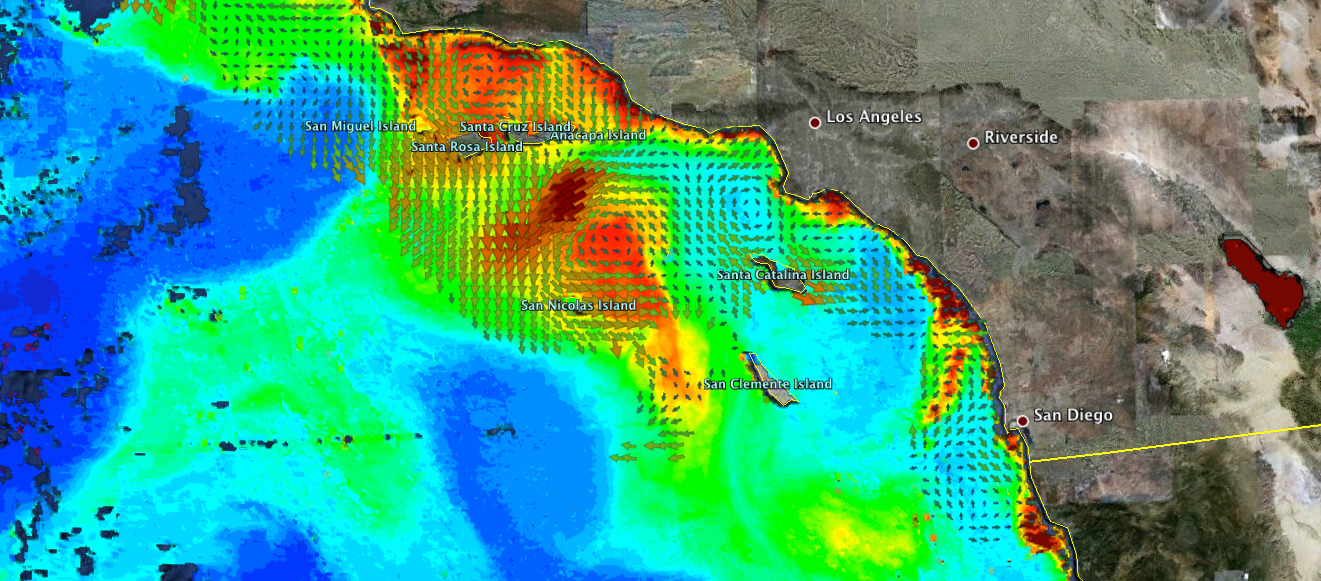
In late September 2011, local reports indicated the presence of intense algal blooms along the Southern California coastline. This was followed in early October by an unusual congregation of blue whales feeding near Los Angeles, including shipping lanes where the whales could be at serious risk. The continued presence of these whales indicated a readily available and concentrated food source of krill, small shrimp-like crustaceans.
Tracking Algal Blooms With MUR Data
An examination of Multi-Scale Ultra-High Resolution (MUR) satellite data available through NASA’s Physical Oceanography Distributed Active Archive Center (PO.DAAC) provides information on the oceanographic conditions that existed then and how the conditions may have been conducive to intense algal blooms.
Harmful algae blooms are fast growing, dense populations of phytoplankton. The populations can be so dense that in the process of natural decay, oxygen may be depleted from the water which can then harm fish and marine invertebrates. Some forms of phytoplankton produce toxins that are transferred through the food web where they affect marine animals. Red tide is a common name for dense blooms of certain algal species that have red-brown pigments.