N: 90 S: -90 E: 180 W: -180
Description
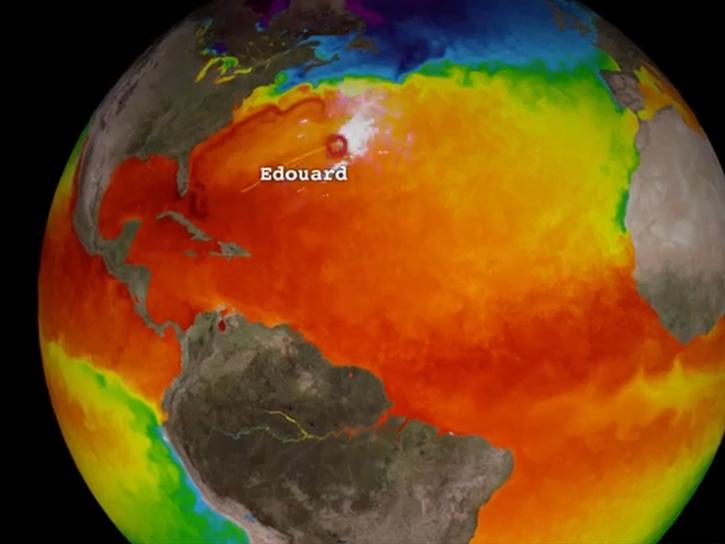
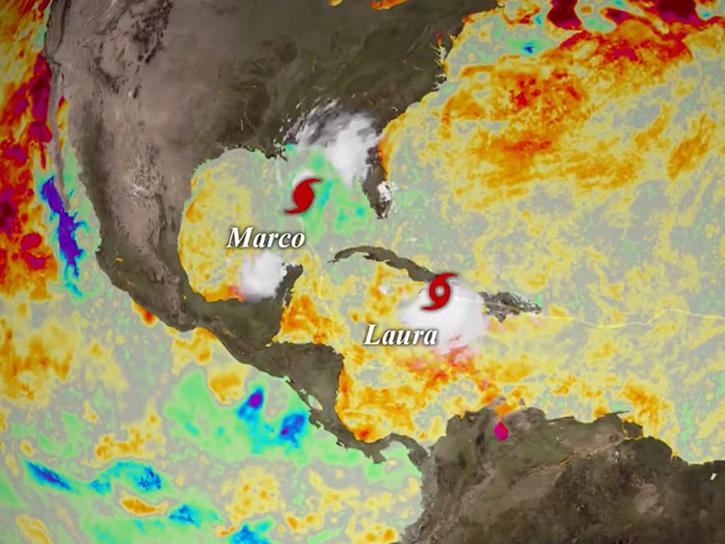
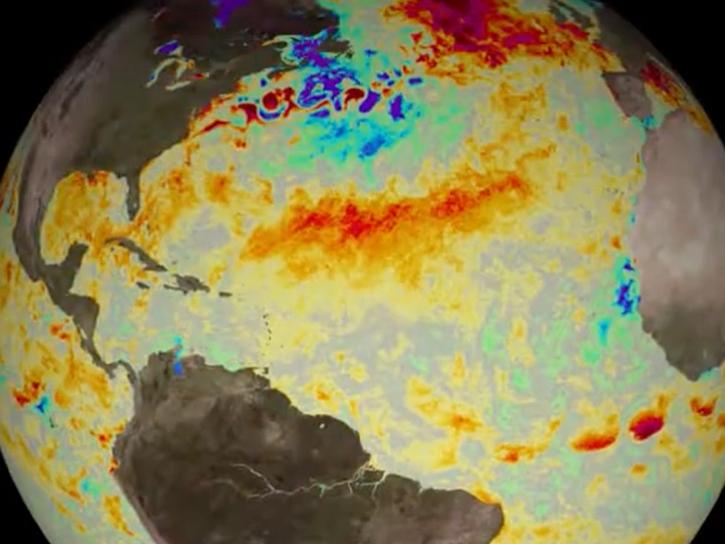
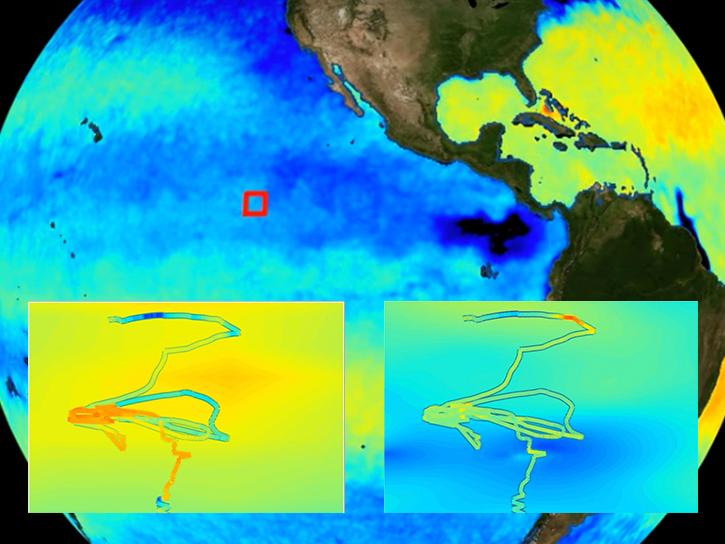
A Group for High Resolution Sea Surface Temperature (GHRSST) Level 4 sea surface temperature analysis produced as a retrospective dataset (four day latency) and near-real-time dataset (one day latency) at the JPL Physical Oceanography DAAC using wavelets as basis functions in an optimal interpolation approach on a global 0.01 degree grid. The version 4 Multiscale Ultrahigh Resolution (MUR) L4 analysis is based upon nighttime GHRSST L2P skin and subskin SST observations from several instruments including the NASA Advanced Microwave Scanning Radiometer-EOS (AMSR-E), the JAXA Advanced Microwave Scanning Radiometer 2 on GCOM-W1, the Moderate Resolution Imaging Spectroradiometers (MODIS) on the NASA Aqua and Terra platforms, the US Navy microwave WindSat radiometer, the Advanced Very High Resolution Radiometer (AVHRR) on several NOAA satellites, and in situ SST observations from the NOAA iQuam project. The ice concentration data are from the archives at the EUMETSAT Ocean and Sea Ice Satellite Application Facility (OSI SAF) High Latitude Processing Center and are also used for an improved SST parameterization for the high-latitudes. The dataset also contains additional variables for some granules including a SST anomaly derived from a MUR climatology and the temporal distance to the nearest IR measurement for each pixel.This dataset is funded by the NASA MEaSUREs program ( http://earthdata.nasa.gov/our-community/community-data-system-programs/measures-projects ), and created by a team led by Dr. Toshio M. Chin from JPL. It adheres to the GHRSST Data Processing Specification (GDS) version 2 format specifications. Use the file global metadata "history:" attribute to determine if a granule is near-realtime or retrospective.
Product Summary
Citation
Citation is critically important for dataset documentation and discovery. This dataset is openly shared, without restriction, in accordance with the EOSDIS Data Use and Citation Guidance.
Copy Citation
Documents
DATA CITATION GUIDELINES
GENERAL DOCUMENTATION
PUBLICATIONS
Dataset Resources
Variables
Variables are a set of physical properties whose values determine the characteristics or behavior of something. For example, temperature and pressure are variables of the atmosphere. Parameters and variables can be used interchangeably. Variable level attributes provide individual information for each variable.
The Name in this table is the variable name. Fill value indicates missing or undefined data points in a variable. Valid range is the range of values the variable can store. Scale factor is used to increase or decrease the size of an object and can be used to correct for distortion. For questions on a specific variable, please use the Earthdata Forum.
| Name Sort descending | Description | Units | Data Type | Fill Value | Valid Range | Scale Factor |
|---|---|---|---|---|---|---|
| analysed_sst | "Final" version using Multi-Resolution Variational Analysis (MRVA) method for interpolation | kelvin | short | -32768 | -32767 to 32767 | 0.001 |
| analysis_error | none | kelvin | short | -32768 | 0 to 32767 | 0.01 |
| lat | none | degrees_north | float | N/A | -90 to 90 | 1 |
| lon | none | degrees_east | float | N/A | -180 to 180 | 1 |
| mask | mask can be used to further filter the data. | N/A | byte | -128 | 1 to 31 | 1 |
| sea_ice_fraction | ice data interpolated by a nearest neighbor approach. | fraction (between 0 and 1) | byte | -128 | 0 to 100 | 0.01 |
| sst_anomaly | Anomaly reference to the day-of-year average between 2003 and 2014. This variable was added to granules in the MUR collection in July 2019. | kelvin | short | -32768 | -32767 to 32767 | 0.001 |
| time | Nominal time of analyzed fields | seconds since 1981-01-01 00:00:00 UTC | int | N/A | N/A | 1 |