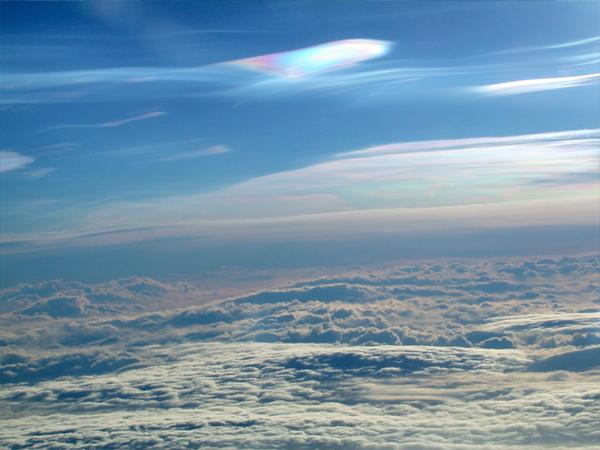
Subsonic Aircraft: Contrail & Clouds Effects Special Study (SUCCESS) was a NASA field study that investigated the relationships between subsonic aircraft and contrails, cirrus clouds, and atmospheric chemistry.
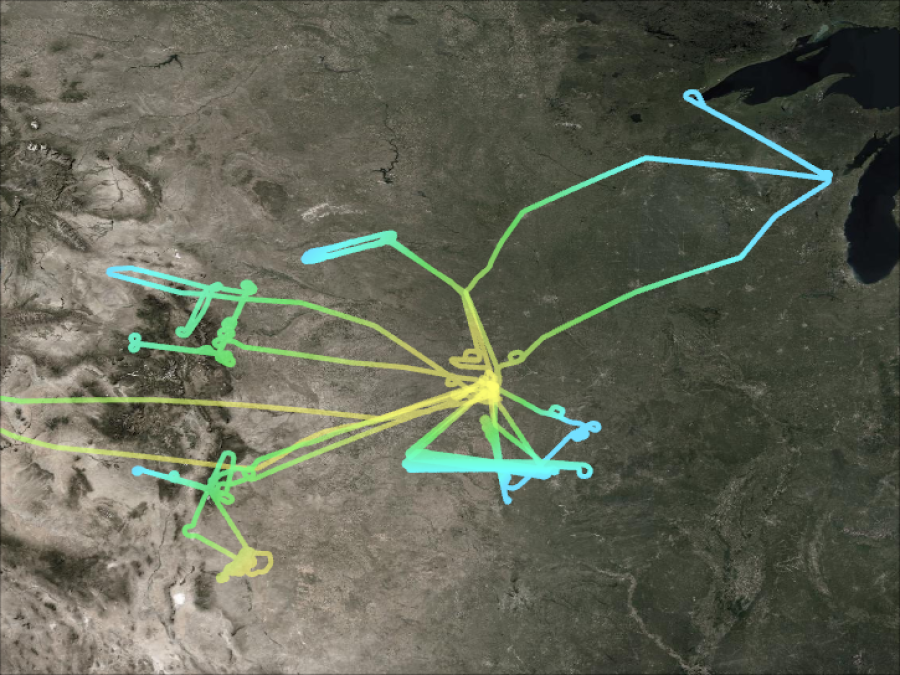
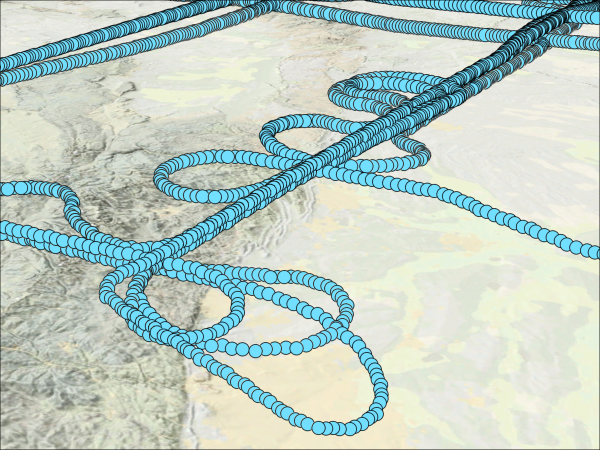
SUCCESS was conducted from April 8 through May 10, 1996, in Salina, Kansas. There was a five-day extension until May 15, 1996, at NASA Ames Research Center (ARC) in Moffett Field, California. The Rocky Mountains served as an additional location for the deployment of science flights intended to investigate wave clouds. Additional SUCCESS science flights were conducted over the Gulf of America to view remote sensing measurements in an oceanic context.
The primary science objective of SUCCESS was to improve the understanding of the radiative properties of cirrus clouds and contrails and their impact on Earth’s radiation budget. Furthermore, this study sought to discover the processes involved in cirrus cloud formation. Another science objective was to develop and test new instruments. SUCCESS also aimed to explore the impacts of subsonic aircraft on cloud processes such as cirrus cloud formation and to improve understanding of exhaust products from such aircraft.
The NASA DC-8, ER-2, T-39, and B-757 aircraft were the primary platforms used to conduct these studies. The DC-8 acted as a medium-altitude aircraft based at NASA ARC, and housed gaseous, particulate, radiative, and meteorological instruments to obtain in situ measurements. The ER-2 (also based at NASA ARC) served as a high-altitude aircraft, and those remote sensing measurements were used to analyze in situ data from the DC-8 and T-39. The T-39 aircraft, based at NASA Wallops Flight Facility, was used to measure in situ particles and gases, with a focus on sampling the exhaust from other aircraft. Lastly, the B-757 was used to study contrails and exhaust.
In addition to airborne measurements from NASA aircraft, SUCCESS used ground-based measurements from the Department of Energy (DOE), a collaborator on SUCCESS. The DOE also conducted flights using Egret and Twin Otter aircraft equipped with remote sensing instruments.
SUCCESS achieved some of the first extensive measurements of ice nuclei, cloud condensation nuclei, and condensation nuclei concentrations and compositions in the upper troposphere. Additionally, the testing and development of instruments during SUCCESS contributed to significant expansion of the suite of instruments available to the atmospheric science community for obtaining measurements of gas phase chemistry, aerosol chemistry, and microphysics.
The SUCCESS data housed by the ASDC are comprised of ground-based remote sensing measurements made by the University of Utah near the DOE Southern Great Plains CART site in Northern Oklahoma. These measurements were collected using a mobile remote sensing platform containing the dual-wavelength scanning polarization diversity LIDAR (PDL), co-aligned mid-infrared radiometer and video recorder, and all-sky video, and 35-mm photography. Of these instruments, the ASDC houses data from the PDL.