
The Photochemistry of Ozone Loss in the Arctic Region in Summer (POLARIS) mission was a joint effort of NASA and NOAA that occurred in 1997 and was designed to expand on the photochemical and transport processes that cause the summer polar decreases in the stratospheric ozone. The POLARIS campaign had the overarching goal of better understanding the change of stratospheric ozone levels from very high concentrations in the spring to very low concentrations in the autumn.
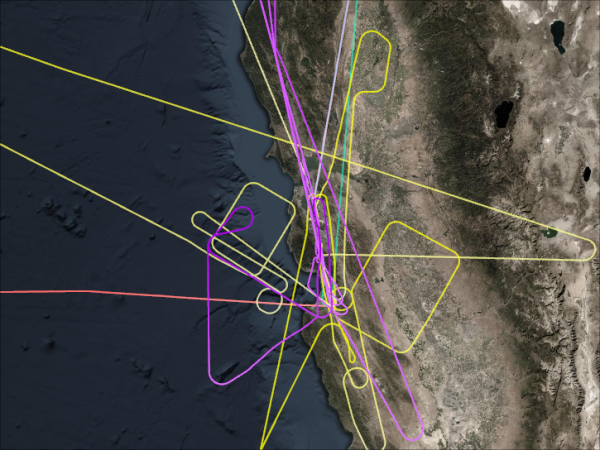
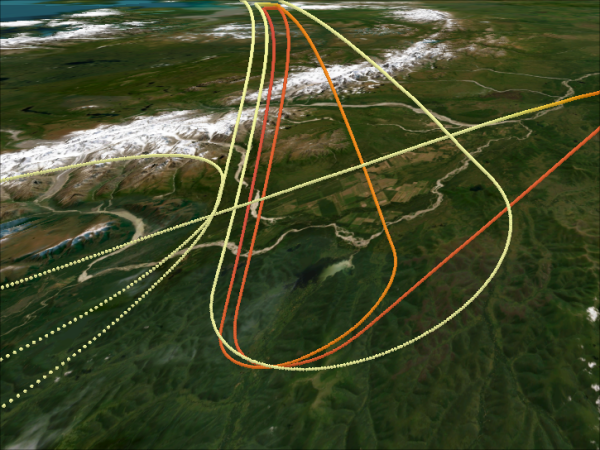
The NASA ER-2 high-altitude aircraft was the primary platform deployed along with balloons, satellites, and ground-sites. The POLARIS campaign was based in Fairbanks, Alaska with some flights being conducted from California and Hawaii. Flights were conducted between the summer solstice and fall equinox at mid- to high latitudes.
The data collected included meteorological variables; long-lived tracers in reference to summertime transport questions; select species with reactive nitrogen (NOy), halogen (Cly), and hydrogen (HOx) reservoirs; and aerosols. More specifically, the ER-2 utilized various techniques/instruments including Laser Absorption, Gas Chromatography, Non-dispersive IR, UV Photometry, Catalysis, and IR Absorption.
These techniques/instruments were used to collect data including N2O, CH4, CH3CCl3, CO2, O3, H2O, and NOy. Ground stations were responsible for collecting SO2 and O3, while balloons recorded pressure, temperature, wind speed, and wind directions. Satellites partnered with these platforms collected meteorological data and lidar imagery. The observations were used to constrain stratospheric computer models to evaluate ozone changes due to chemistry and transport. More information on POLARIS can be found in Newman et al. (1999).