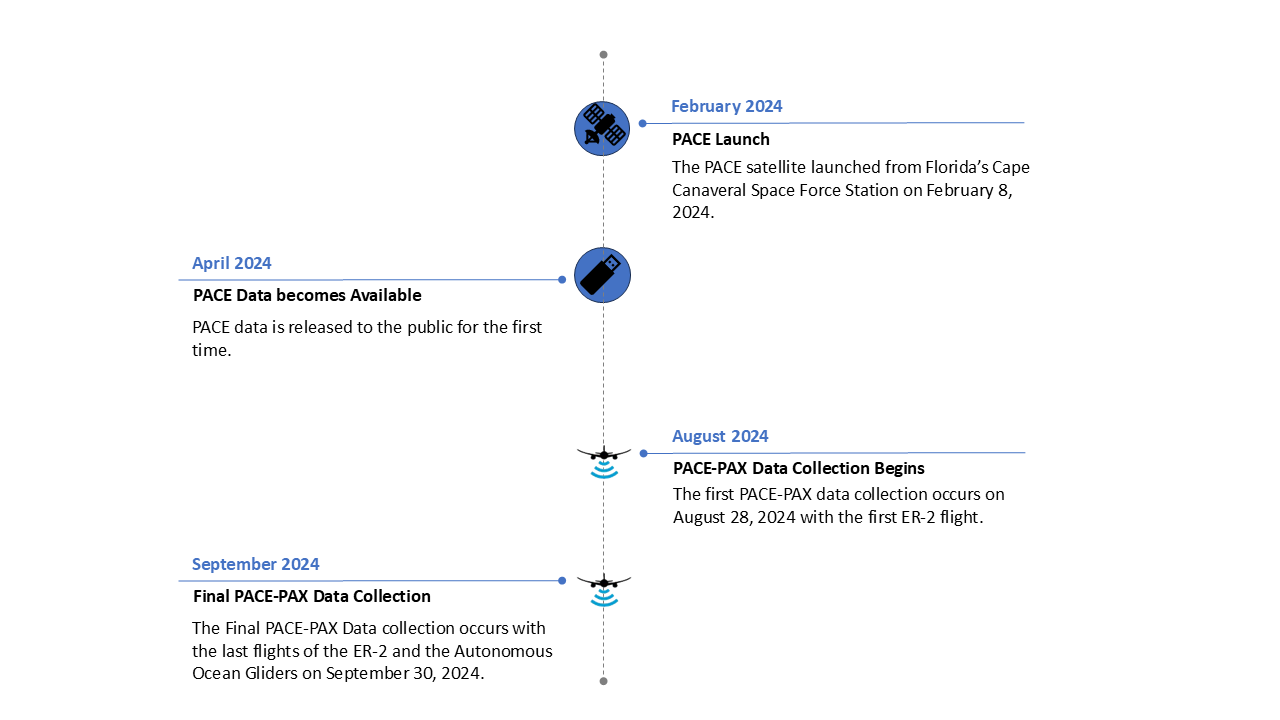
The Plankton, Aerosol, Cloud, ocean Ecosystem Postlaunch Airborne eXperiment (PACE-PAX) was a field campaign to gather data to support PACE mission validation. A secondary objective was help validate data from JAXA/ESA's Earth Cloud, Aerosol, and Radiation Explorer (EarthCARE) mission.
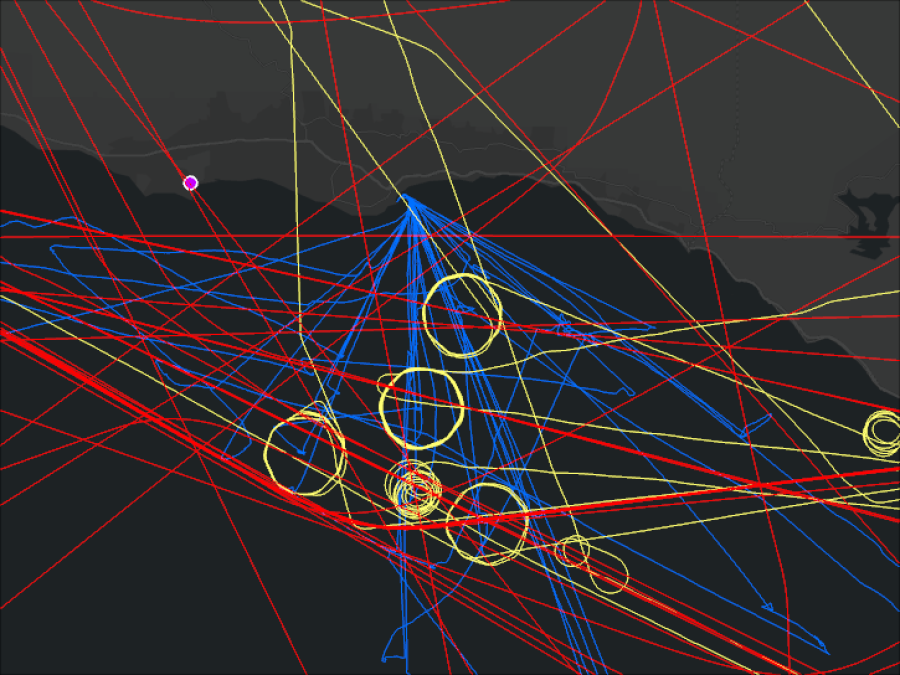
PACE-PAX was conducted in September 2024 in Southern and Central California and nearby coastal regions. The team flew 81 hours on the NASA ER-2 operating out of the NASA Armstrong Flight Research Center and 60 flight hours on the CIRPAS Twin Otter from Marina Municipal Airport. A NOAA vessel, the R/V Shearwater, operated 16 day trips out of Santa Barbara, while a privately owned sailboat, the R/V Blissfully, conducted nine sorties out of Long Beach. Numerous other entities — many of which were members of the PACE Validation Science Team (PVST) — cooperated to make coincident observations.
Ocean data are archived at the SeaWiFS Bio-optical Archive and Storage System (SeaBASS), DOI: 10.5067/SeaBASS/PACE-PAX/DATA001
The field campaign overview is: Knobelspiesse, K. D., Cetinić, I., Cairns, B., Leblanc, S. E., Ueyama, R., and the PACE-PAX team: The NASA Plankton, Aerosol, Cloud, ocean Ecosystem mission Postlaunch Airborne eXperiment (PACE-PAX), Earth Syst. Sci. Data Discuss. [preprint], https://doi.org/10.5194/essd-2026-541, in review, 2026.
Other related manuscripts are listed in the Publications section of this page.
The PACE-PAX mission website contains additional campaign documentation.
For more meteorology resources supporting PACE-PAX, please visit NASA Ames Airborne Science Meteorological Support for PACE-PAX.