Water occupies about 71% of Earth's surface, of which only 2.5% is freshwater in the form of lakes, reservoirs, and rivers. Hydrologic observations of rivers, lakes, and reservoirs are extremely important given humanity's reliance on freshwater for survival, and are of major importance to understand the global water cycle. Existing stream gauge systems are limited in many areas — especially remote and politically unstable environments where people are often most vulnerable to floods and droughts. Remote sensing techniques such as altimetry and interferometry enable measurements of surface water to understand the global water cycle on land as well as provide a global inventory of water resources. 

Altimetric missions such as TOPEX/Poseidon and the Jason-series enable monitoring of major inland waters. However, systematic, global monitoring of inland waters with altimeters has limitations as they provide measurements directly at the satellite’s nadir view, greatly restricting spatial sampling. Nadir altimeters miss more than 60% of lakes, thus only measuring a small fraction of the global lake storage change. The utilization of interferometry, such as the Surface Water and Ocean Topography (SWOT) mission, provides high-resolution observations over nearly all surface water bodies (e.g., lakes, rivers, reservoirs). Contrary to nadir altimetry, SWOT measures 65% of the global lake/reservoir storage change, providing the very first comprehensive view of Earth's surface inland water bodies from space. 

SWOT's observations allow scientists to determine changing volumes of inland water across the globe at an unprecedented resolution. Hydrologists use the data to calculate the rate of water gained or lost in lakes, reservoirs, as well as discharge variations in rivers, globally. All of this helps us better understand and manage water resources, and ensure that people have access to clean freshwater for irrigation, drinking, and sanitation. 

Get Total Surface Water Data

Access a range of datasets and data tools to further your total surface water research.

Remote video URL

Learn How to Use Total Surface Water Data

Access a range of webinars, tutorials, data recipes, and data stories to enhance your knowledge of Earth Observation data.
Dr. Shailen Desai, NASA’s Measurement System Engineer for the Surface Water and Ocean Topography (SWOT) mission
Data User: Dr. Shailen Desai
New instruments such as the Ka-band Radar Interferometer present NASA Engineers with calibration and validation challenges.
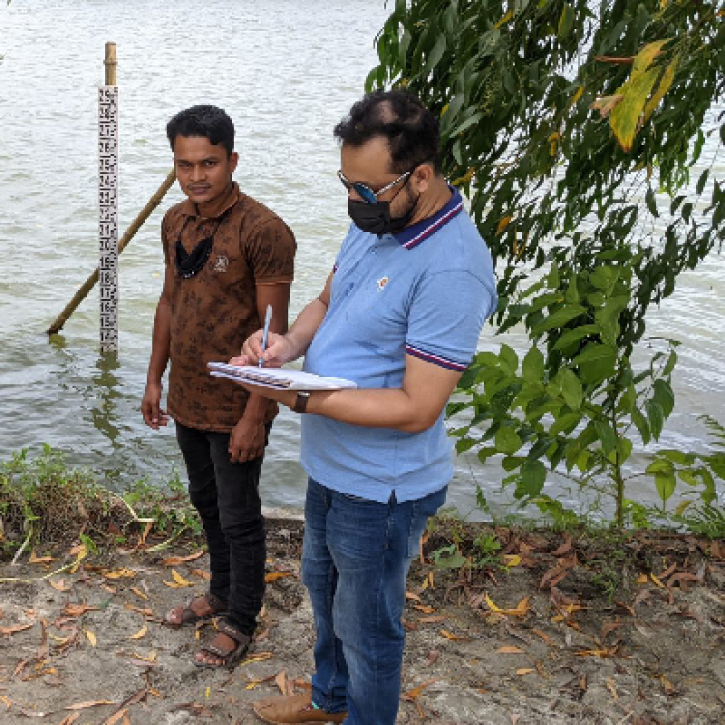
Two citizen scientists standing on the shore of a lake collecting water height data from a gauge in the background.
Satellites and Citizen Scientists Help Track Water in Bangladesh
NASA satellite data and citizen scientists are giving the Bangladesh government a better understanding of the country's surface water storage.
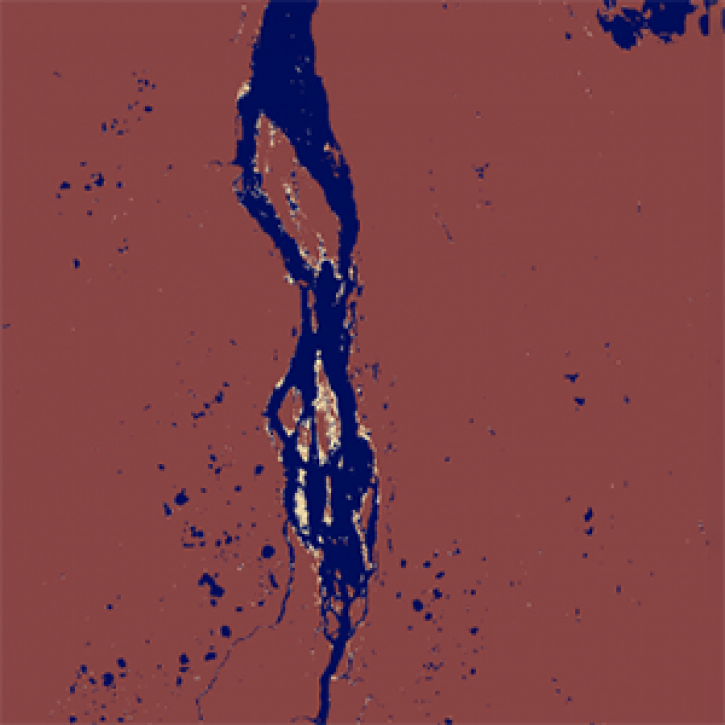
Image of a portion of the Churchill River, Manitoba, Canada
Updated Dataset for Boreal and Tundra Surface Water Extent
The dataset, which is part of NASA’s Arctic Boreal Vulnerability Experiment (ABoVE), enables comparisons of changes in surface water extent spanning 20 years.
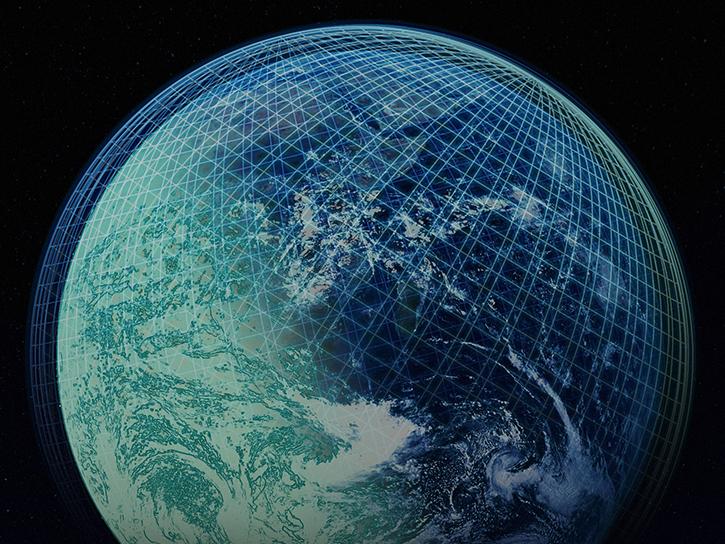
image of OPERA mapping over Earth
Fifth OPERA Stakeholder Engagement Workshop
NASA Jet Propulsion Laboratory's Observational Products for End-Users from Remote Sensing Analysis (OPERA) project is hosting a half-day virtual workshop on Thu Sept. 11, 2025, to offer product updates, previews, and more.
Discover and Visualize Total Surface Water Data
NASA data help us understand Earth's changing systems in more detail than ever before, and visualizations bring these data to life, making Earth science concepts accessible, beautiful, and impactful.
Data visualization is a powerful tool for analysis, trend and pattern recognition, and communication. Our resources help you find world-class data visualizations to complement and enhance your research. We also have tools and tutorials to help you translate total surface water data into compelling visuals.
Image
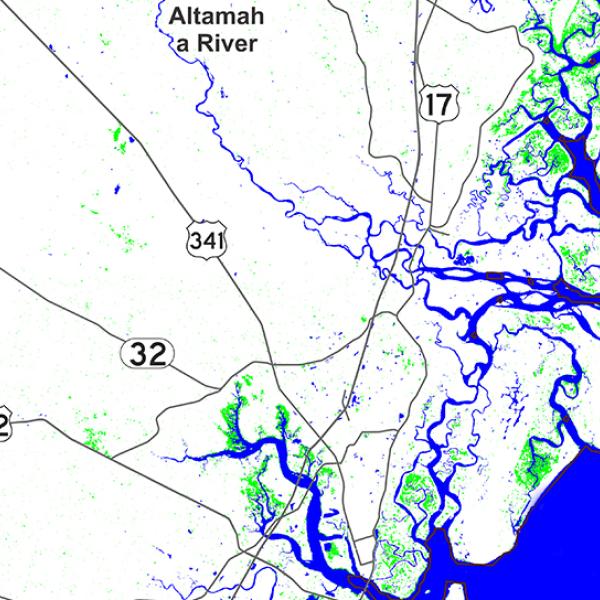
The rectangular image is a map of the St. Simons Island area of coastal Georgia. Land is colored white, roadways are black, inundated vegetation area are green, and water is colored blue. The Atlantic Ocean is in the lower-right of the image and its blue shaded area extends into waterways along the coast.
This is a map created using the NASA Observational Products for End-Users from Remote Sensing Analysis (OPERA) project's Sentinel-1 Dynamic Surface Water Extent product. Credit: NASA/NASA's Jet Propulsion Laboratory (JPL)-Caltech.

Join Our Community of NASA Data Users

While NASA data are openly available without restriction, an Earthdata Login is required to download data and to use some tools with full functionality.

Learn About the Benefits of Earthdata Login

Frequently Asked Questions

Earthdata Forum

Our online forum provides a space for users to browse thousands of FAQs about research needs, data, and data applications. You can also submit new questions for our experts to answer.

Submit Questions to Earthdata Forumand View Expert Responses

Earthdata
Forum