America’s farmed, forested, and rural lands supply us with food, water, and other natural resources. The water flowing across the terrain affects the health and productivity of those lands and the people living on them.
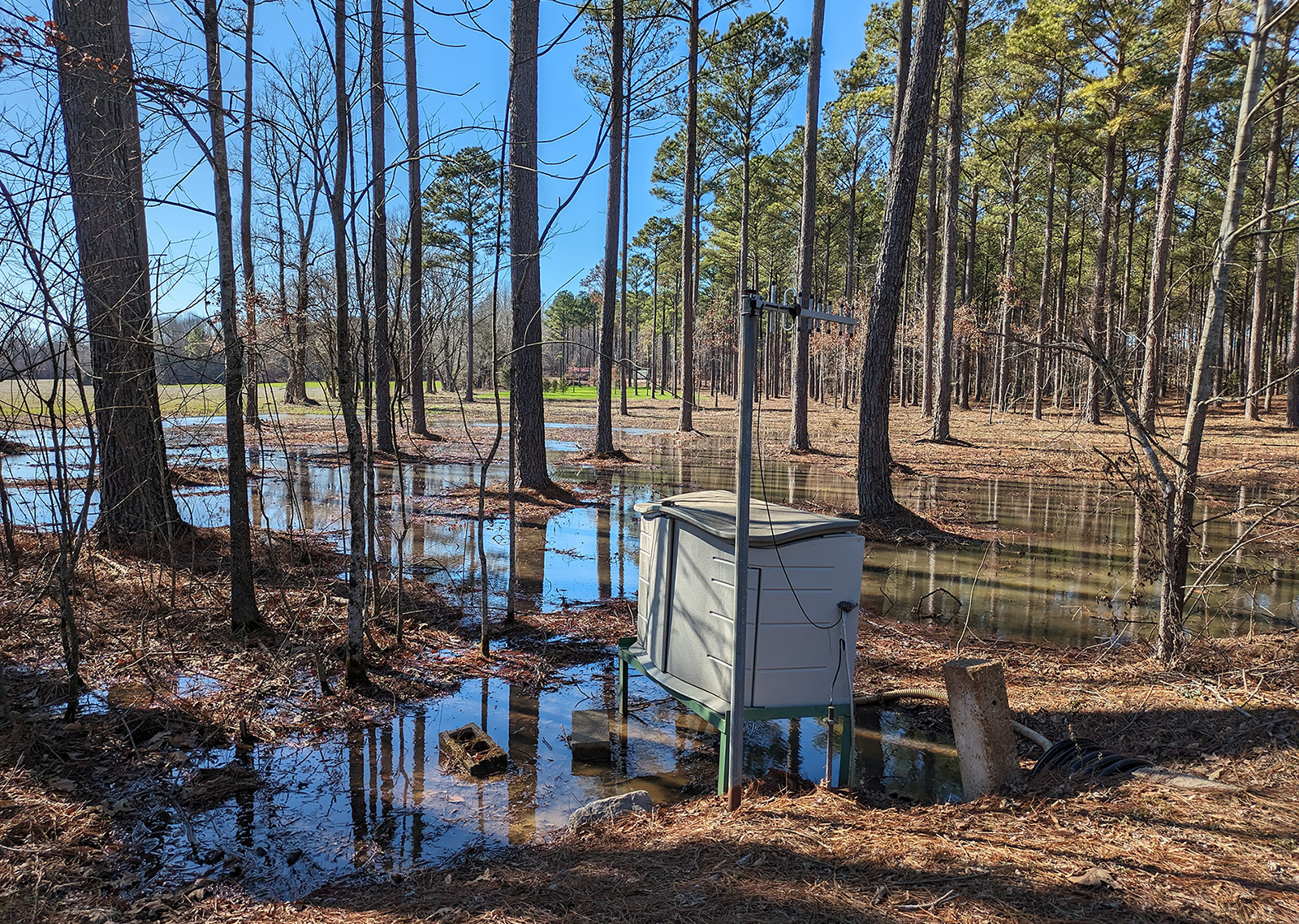
Tracking the flow of water across and through these vital watersheds would provide farmers and land managers with essential information for caring for fields and nearby communities. But the vast size or distant locations of some watersheds can make them difficult to outfit with ground-based sensors. A NASA-funded project aims to bridge that data gap by using measurements from satellites above to model moisture and other conditions on the ground.
The project, led by researchers at the University of Mississippi, focuses on adding NASA's remotely sensed data to the web-based Agricultural Integrated Management System (AIMS), which was developed in collaboration with the U.S. Department of Agriculture’s (USDA) National Sedimentation Laboratory. AIMS is a system that uses satellite and other data to generate water flow models and environmental analyses. The platform can create simulations of runoff, sediment, and agricultural pollution loadings for any watershed in the country.
“AIMS enables users to quickly run simulations, evaluate land management scenarios, and assess water quality impacts without the need for complex data preparation or specialized computing resources,” said Mohammad Al-Hamdan, director of the National Center for Computational Hydroscience and Engineering (NCCHE). Al-Hamdan is a co-principal investigator of the project along with NCCHE researcher Xiaobo Chao.
“The effort enhances AIMS by integrating remote sensing data with advanced watershed and water quality models, helping connect upstream land use with downstream water quality and improve management decisions,” said Chao.
The team’s work recently culminated in the release of AIMS 3.0, which now includes measurements from the North American Land Data Assimilation System, Phase 2 (NLDAS-2) dataset co-developed by NASA. Incorporating the agency’s NLDAS-2 into AIMS makes it a powerful tool for watershed simulation anywhere in the contiguous United States, especially in regions where local climate observations are sparse or unavailable.
"Our goal is to put NASA's Earth observations directly into the hands of the decision-makers who need them most," said Erin Urquhart, program manager of NASA’s Water Resources Program. "AIMS 3.0 demonstrates the power of this approach, proving that NASA's remote sensing data can reliably complement on-the-ground sensors to track runoff, manage agricultural impacts, and protect downstream water quality across the nation."
Land-Surface Data Everywhere
NLDAS-2 is a near real-time land-surface modeling dataset that can be used for a variety of work, including drought and watershed monitoring, water resource planning, and agriculture. NLDAS-2 data are based on the North American Regional Reanalysis dataset, which ingests observational data from a variety of sources to produce a long-term picture of weather across North America.
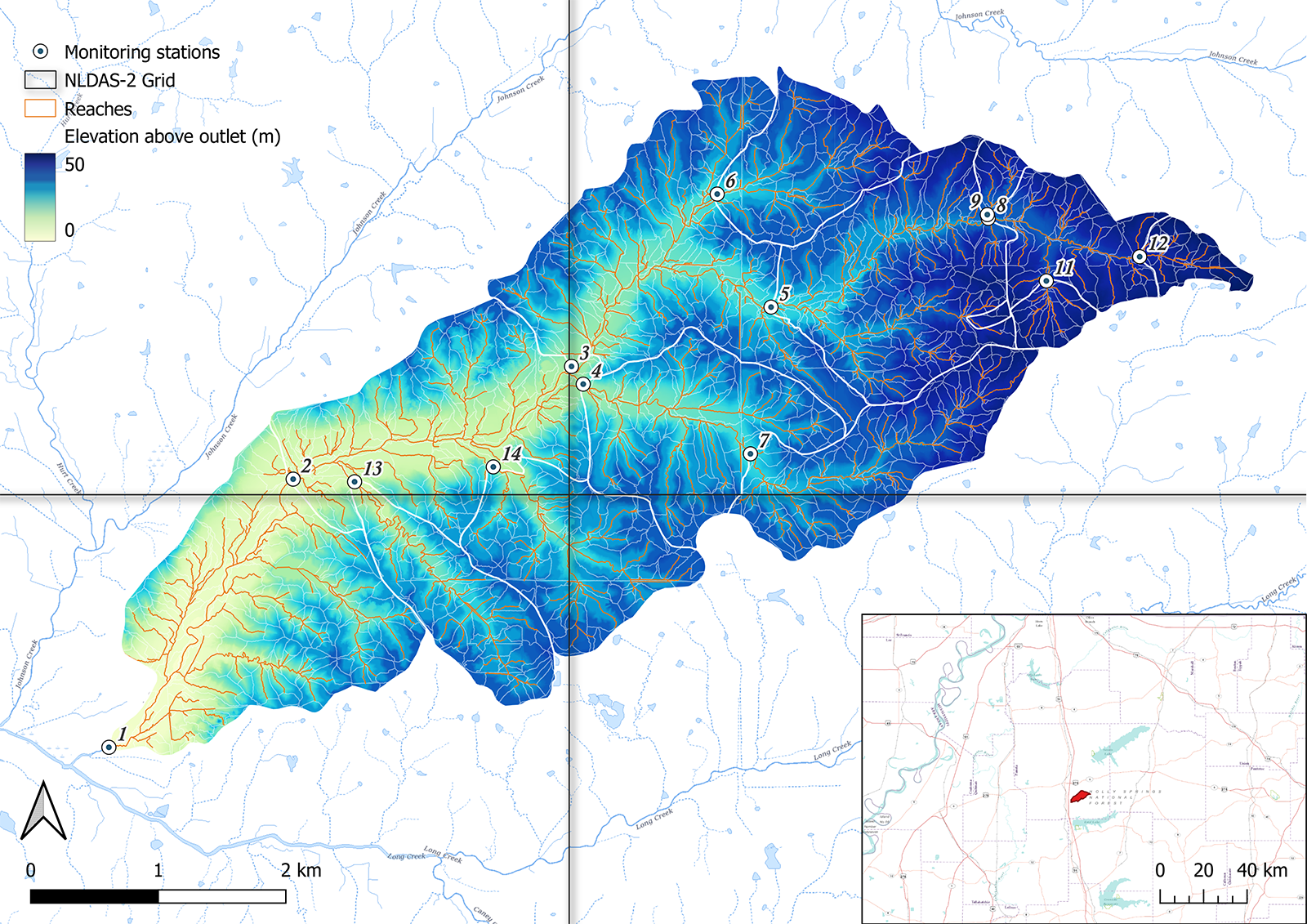
The NLDAS-2 dataset includes various environmental measurements such as precipitation, temperature, humidity, wind, solar radiation, and potential evapotranspiration. The data cover January 1979 to the present and are plotted on a 1/8th-degree (12-km grid) with an hourly timestep over central North America (25 to 53-degrees North).
"NLDAS-2 is a valuable data product providing powerful insight into the water cycle that we’ve never had before," said Brad Doorn, a remote sensing expert at Penn State University and former manager of NASA's water resources and agriculture research programs. "It allows farmers, governments, and land managers around the world to understand what’s happening on the ground now and into the future to help them make decisions about their practices and planning."