One aspect of such surveys is classification and mapping of vegetation. Knowing what types of vegetation are found across the rangelands helps land managers make decisions about where and when to let livestock roam, how to prevent wildfires, how to manage invasive species, and other matters.
USGS scientists employ various survey methods, including satellite observations, to map rangelands. One of their primary tools is the USGS/NASA Landsat series of satellites, which are equipped with multi-band sensors that offer broad, regular land coverage, strong vegetation detection, and a deep archive going back more than 50 years. But there are also known challenges and limits to Landsat's sensors, which can make it hard to precisely identify certain types of vegetation, especially in complex terrain or geology.
To see if they could improve their land cover maps, USGS researchers recently tested the combination of NASA imaging spectroscopy data and a key USGS vegetation mapping product. Imaging spectroscopy sensors—also called hyperspectral sensors—observe Earth's surface through many more spectral intervals of light than multi-band sensors. This means they can distinguish more subtle differences in vegetation, potentially increasing the accuracy of maps.
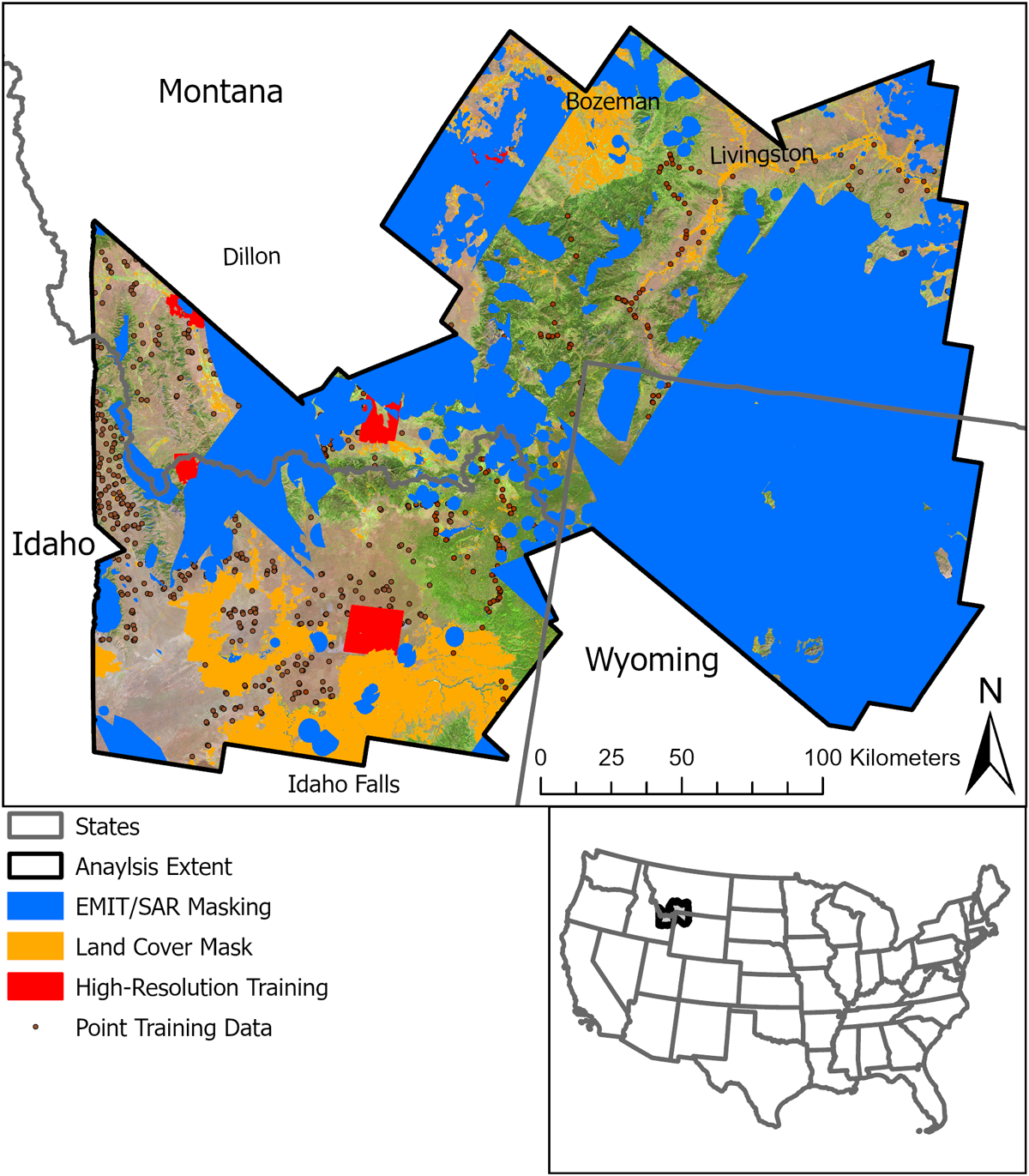
For the study, the researchers integrated imaging spectroscopy data from NASA’s Earth Surface Mineral Dust Source Investigation (EMIT) sensor with USGS’s Rangeland Condition Monitoring, Assessment, and Projection (RCMAP) model. They found that hyperspectral data improved mapping accuracy by at least one third in the study area.
“Imaging spectroscopy data can significantly improve vegetation classifications that can help refine assessments of wildfire-prone areas, invasive species encroachment, and rangeland ecosystem health,” said Cole Krehbiel, a USGS scientist and leader of NASA’s Land Processes Distributed Active Archive Center (LP DAAC), which archives and distributes EMIT data. “This study shows the data have broad ecological and land-management value, and could shape the next generation of ecosystem monitoring.”
Testing RCMAP With Imaging Spectroscopy Data
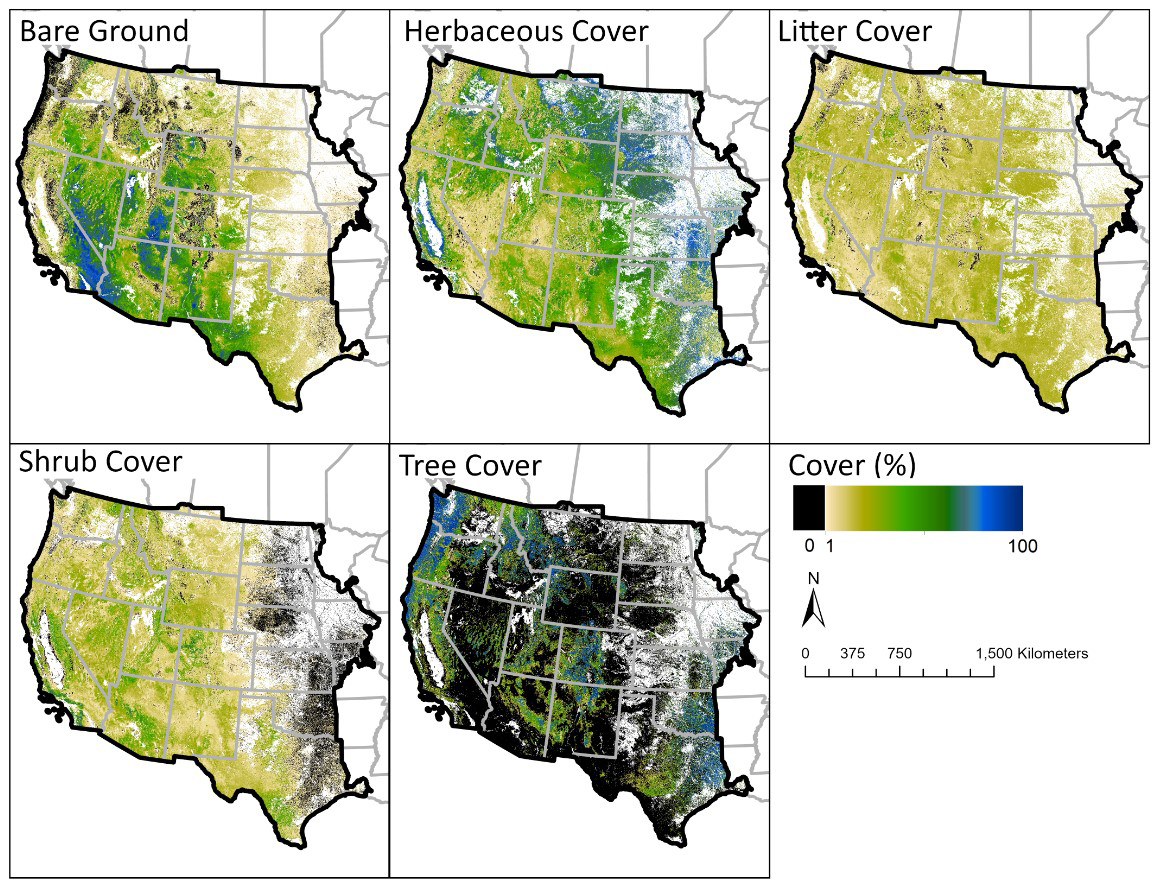
The current version of RCMAP uses artificial intelligence to analyze Landsat imagery and then identify and map shrubs, grasses and forbs, dead plant litter, trees, sagebrush, or bare ground across rangelands.