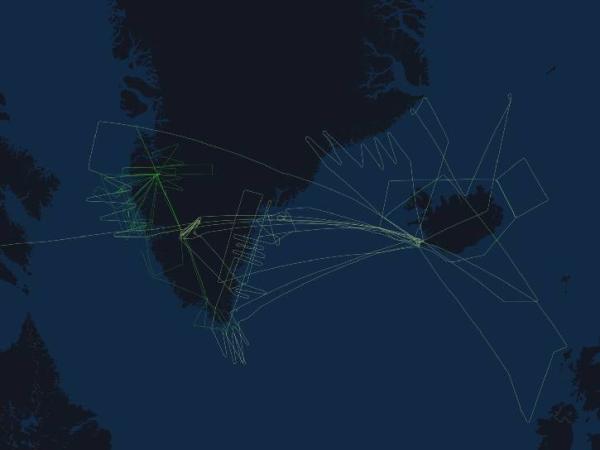
Beginning in the fall of 2014, NASA sponsored two airborne field campaigns, collectively called Polar Winds, which designed to primarily utilize the Doppler Aerosol WiNd (DAWN) lidar to collect airborne wind measurements of the Arctic atmosphere, specifically over and off the coasts of Greenland. The primary objective of the Polar Winds campaigns were to take airborne wind and aerosol measurements of the Arctic atmosphere and Planetary Boundary Layer (PBL).
Polar Winds conducted a series of science experiments focusing on the measurement and analyses of lower tropospheric winds and aerosols associated with coastal katabatic flows, barrier winds, the Greenland Tip Jet, boundary layer circulations such as rolls and OLEs (Organized Large Eddies), and near surface winds over open water, transitional ice zones and the Greenland Ice Cap. Polar Winds also focused on satellite calibration and validation (cal/val) by conducting underflights of existing remote sensing instruments, along with practicing underflying the future Aeolus Airborne Demonstrator for the Direct-Detection Doppler Wind Lidar (ALADIN) that was launched on 22 August 2018.
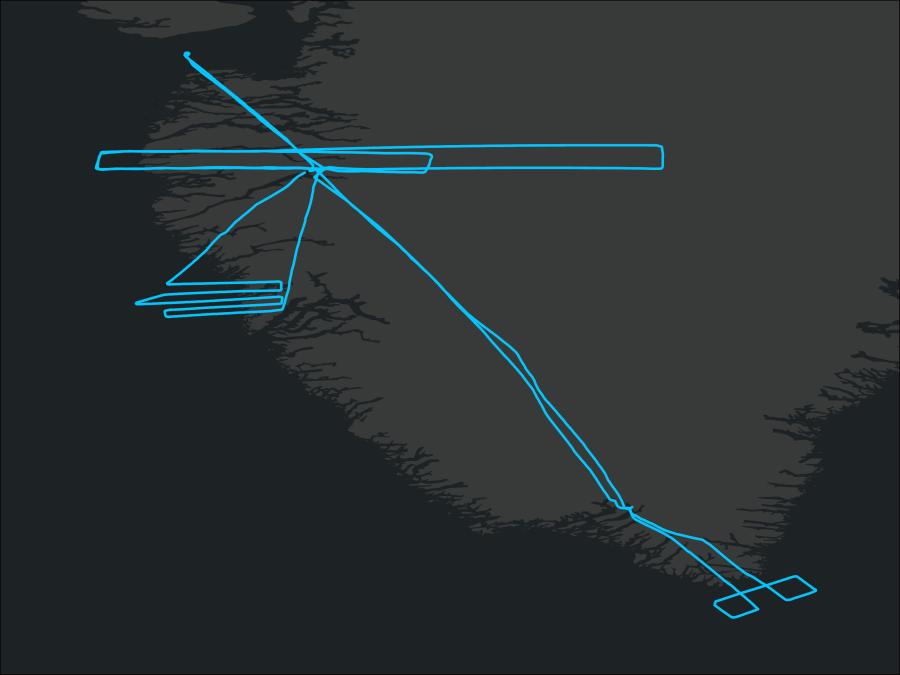
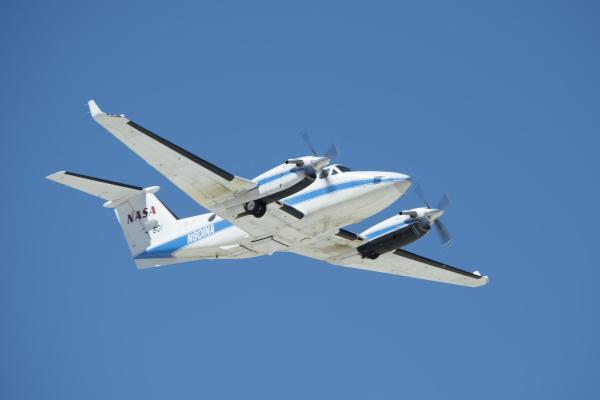
Polar Winds I was based in Kangerlussuaq, Greenland and flew DAWN on board the NASA King Air Utility Cargo 12B (UC-12B) from October 29 - November 13, 2014. Fourteen science flights were completed during Polar Winds I. The science objectives for these flights included numerous satellite underflights of the Cloud-Aerosol Lidar and Infrared Pathfinder Satellite Observations (CALIPSO), CALIPSO/Advanced Scatterometer (ASCAT), and Moderate Resolution Imaging Spectroradiomenter (MODIS), Aeolus simulations, and studies of various boundary layer features and interactions.