The Airborne Southern Hemisphere Ozone Experiment/Measurements for Assessing the Effects of Stratospheric Aircraft (ASHOE/MAESA) campaign was a multi-organizational effort of NASA, NOAA, and the US National Science Foundation (NSF). The meteorological services of New Zealand, Australia, United Kingdom, and those signatory to the convection governing the European Centre for Medium – range Weather Forecasts (ECMWF) also aided in this mission.
ASHOE/MAESA was conducted in four main deployments covering the period from January to November 1994. Its overarching goal was to investigate the causes of long-term reductions of ozone in the wintertime midlatitudes in the southern hemisphere, which had been observed for the last 15 years by ground-based instruments and satellites. ASHOE/MAESA had a secondary objective to obtain measurements for the assessment of the atmospheric effects of supersonic (High Speed Civil Transport) aircrafts.
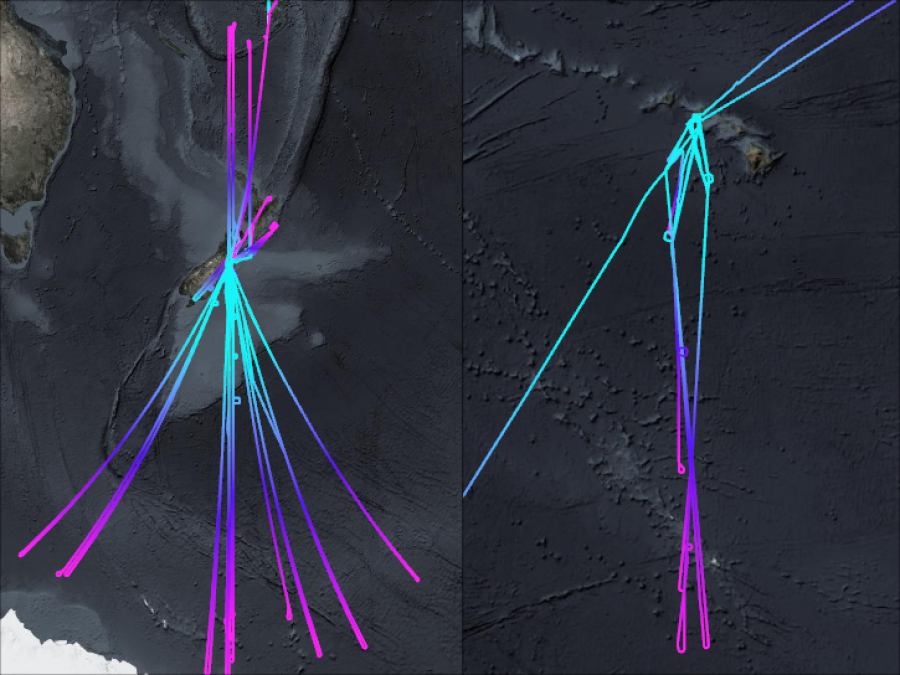
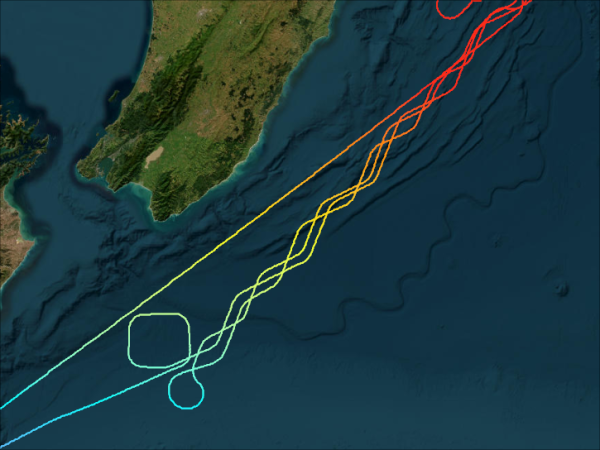
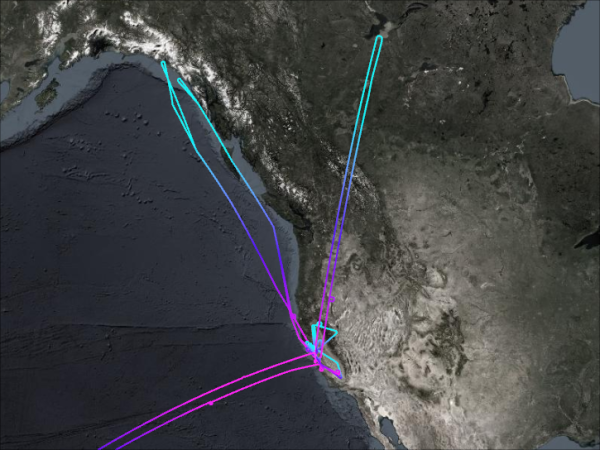
In order to accomplish these objectives, the ASHOE/MAESA team used the NASA ER-2 aircraft alongside balloons, ground sites, and satellite imagery. A total of 45 flights were conducted, including 26 from Christchurch, New Zealand, 5 from Barber’s Point, Hawaii, and 6 transit flights between Christchurch, Fiji, Hawaii, and California. Some additional flights were flown from California, including surveys up to Alaska and Canada. Most of the flights were flown from Christchurch into the Southern high latitudes to probe the outer regions of the Southern polar vortex. Overall, the latitudinal extent of the ASHOE/MAESA flights was from 70S to 60N.
The full payload was included on 32 of the flights, 11 carried the dynamics and radiation configuration, and 2 were test flights for individual instruments. The ER-2 was equipped with 20 instruments, including the Meteorological Measurement System (MMS), the NOAA NOy Instrument (NOAA NOy), Airborne Chromatograph For Atmospheric Trace Species (ACATS), the Airborne Tunable Laser Absorption Spectrometer (ATLAS), and the Wing Tip Air Particulate Sampler (APS). Some of the data collected by these instruments are as follows: temperature, NO, NO2, NOy, CH4, SF6, CHCl3, H2, O3, CO, SO4, and Black Carbon at various wavelengths.
Ground sites collected various data on atmospheric temperature, pressure, and ozone mixing ratio. Balloon sondes collected data on atmospheric variables (temperature, pressure, wind direction, etc.). An early version of the Goddard Space Flight Center’s assimilation system was used to monitor meteorological patterns during ASHOE/MAESA to assist in planning the best flight paths. These data, along with satellite data, were used to give global context for local measurements of the ER-2.