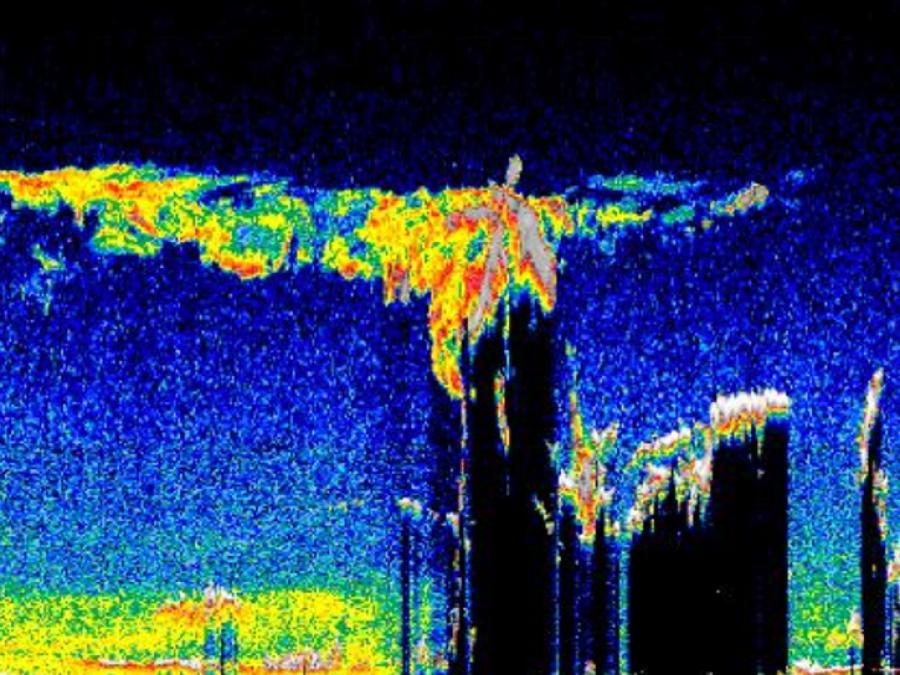
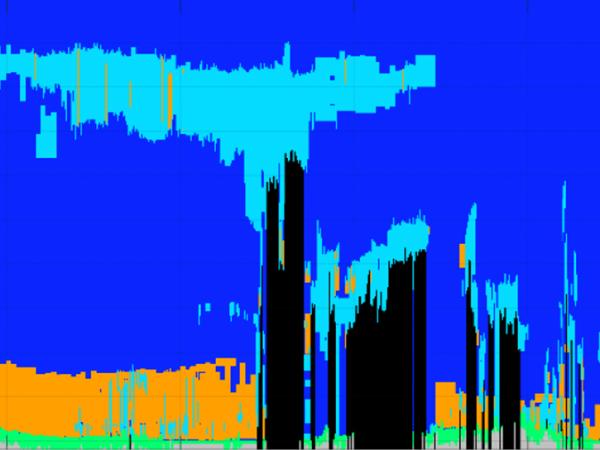
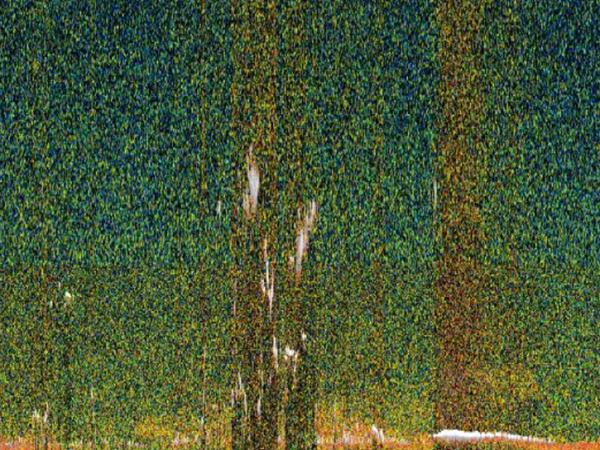
- To generate high-resolution vertical profiles of upper tropospheric and stratospheric aerosols
ARB
The Aerosol Research Branch (ARB) data contains data collected from a 48-inch lidar system located at NASA Langley Research Center in Hampton, VA. Data was collected from 1982 through 2001. The lidar system evolved over the years of collection and provides a valuable long-term history of middle-latitude stratospheric aerosols.
Each measurement consists of four parameters: stratospheric integrated backscatter over altitude, altitude levels, scattering ratio at each altitude level, and aerosol backscattering coefficient at each altitude level. The lidar system used a ruby laser that emits one joule per pulse with a repeat rate of 0.15 hertz (Hz) at a wavelength of 0.6943 micrometers and also used a 48-inch cassegrainian configured telescope mounted on a movable platform. The transmitter laser beam has a divergence of about 1.0 mrad, and the maximum receiver field of view is 4.0 mrad.
The lidar has a signal bandwidth of 1 MHz, which is equal to a 150 meter vertical resolution. Three photomultiplier tubes are used to enhance the dynamic range. These tubes are electronically switched on at specific times after the laser has been fired. The photomultiplier tube output signals are processed by 12-bit Computer Automated Measurement and Control (CAMAC) based digitizers and acquired by a personal computer.
Principal Investigator
Data Centers
Ground Based Stations, Langley Research Center | Light Detection and Ranging (LIDAR) Instrument |
|---|
| Campaign Dates | June 14, 1982 - December 4, 2001 |
|---|---|
| Region | Eastern United States |
| Focus Areas | Atmosphere |
| Scientific Topics | Aerosols |
Data from the ARB LIDAR Project can be accessed here: