

image of world map on binary code
image of burst shape over EMIT satellite data
image of unlocked icon on top of data points

Analysis and Review of the CMR

NASA is committed to enhancing the discoverability, accessibility, and usability of Earth Observing System Data and Information System (EOSDIS) products. The Analysis and Review of CMR (ARC) addressed this need by conducting quality assessments of NASA’s metadata records in the Common Metadata Repository (CMR). These records correspond to approximately 19,000 datasets collected from Earth-observing satellites, airborne instruments, and in situ sensors. 

Having high-quality metadata records is important in the context of open science since it is the content of these records that is indexed for search on the web and ultimately connects users to data. The CMR serves as NASA’s official, centralized metadata repository of records for Earth science data, and these records are harvested by a large variety of data portals, including NASA’s Earthdata Search and Data.gov

The ARC project was managed by the Office of Data Science and Informatics (ODSI), formerly the Interagency Implementation and Advanced Concepts Team (IMPACT), at NASA’s Marshall Space Flight Center. The project officially closed on September 30, 2025, but enhancing metadata quality is an ongoing collaborative effort among NASA’s Distributed Active Archive Centers (DAACs), the CMR, and metadata stewardship teams. 

The ARC project contributed to Earth science data curation and stewardship activities by conducting metadata quality evaluations of records stored within CMR. The ARC team achieved several objectives for improving metadata quality:

  • Collaborated with DAAC metadata curators to review metadata for quality from both the scientific and user perspectives
  • Improved metadata documentation, in collaboration with the CMR team, to make metadata curation easier
  • Developed methods to automate quality assessments and processes to minimize future issues
  • Reported lessons learned to both NASA's Earth Science Data and Information System (ESDIS) project and the broader community.

The ultimate goal of the ARC project was to guarantee that all records currently in CMR, and all future records, will meet a minimum quality requirement. This commitment to quality ensures that data will be consistently accessible and discoverable by users.

Developed a Metadata Quality Framework

ARC developed a metadata quality framework to systematically assess metadata records. This framework identifies quality criteria that help ensure consistent reporting and provides transparency of the assessment process to the DAACs. This framework also provides a baseline from which to generate quantitative metadata quality metrics to demonstrate improvements. 

The ARC metadata quality framework is described in detail in the following publication:

Bugbee, K., le Roux, J., Sisco, A., Kaulfus, A., Staton, P., Woods, C., Dixon, V., Lynnes, C. and Ramachandran, R., 2021. Improving Discovery and Use of NASA’s Earth Observation Data Through Metadata Quality Assessments. Data Science Journal, 20(1), p.17. DOI: http://doi.org/10.5334/dsj-2021-017 

Detailed Quality Assessments of NASA’s Metadata Records in the CMR

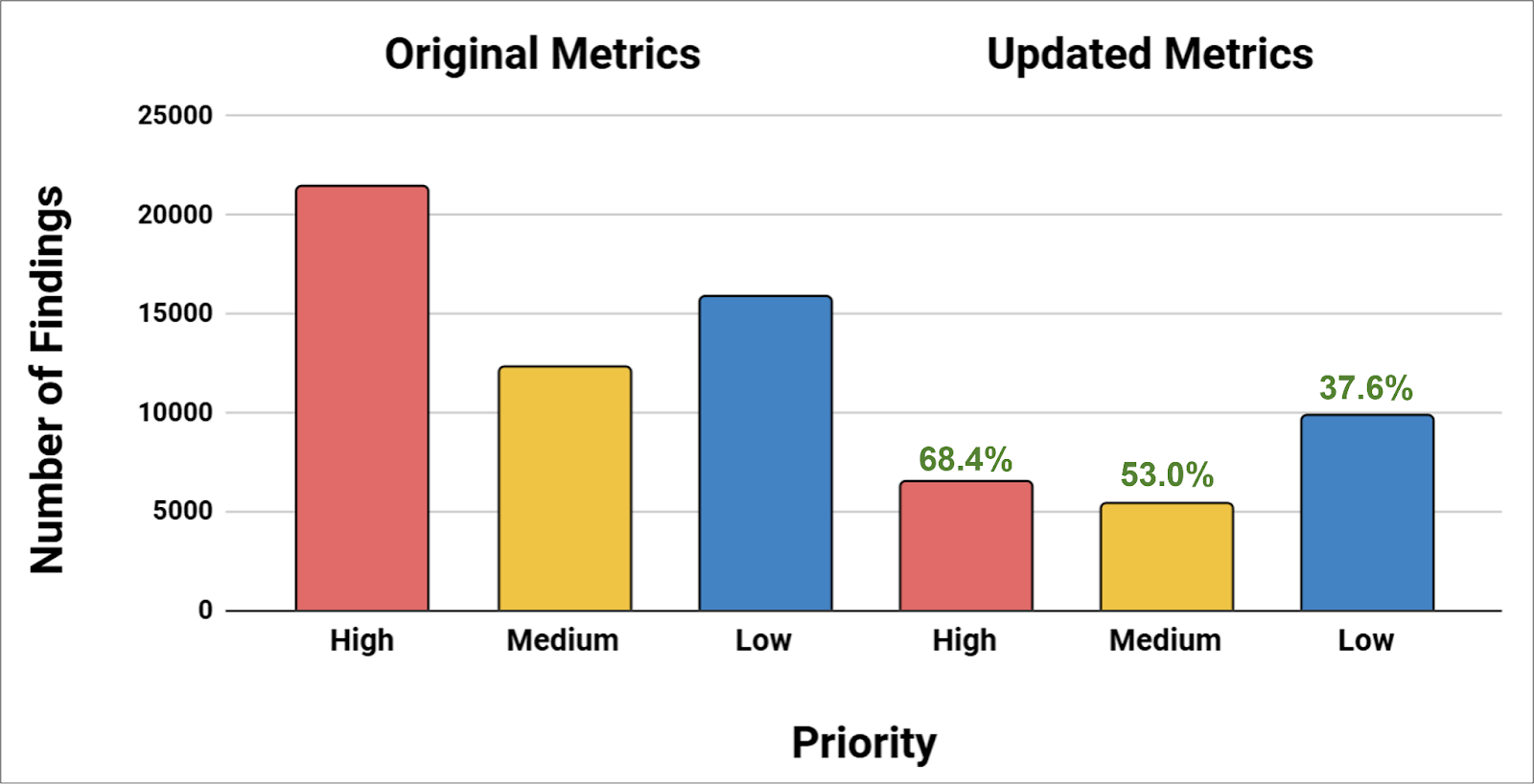
NASA’s collection in the CMR currently comprises approximately 19,000 datasets (or collections). Each collection metadata record, as well as one randomly selected file-level metadata record (or granule) per collection, is assessed against a set of quality criteria. ARC identified opportunities for improvement and worked with the EOSDIS data providers, who are the stewards of the records, to fix any findings identified. 

Image

ARC generated reports that highlighted opportunities for improvement and included actionable recommendations such as:

  • updating information that had become outdated;
  • adding contextual information to a record to make it more informative to general/non-expert users;
  • including links to all resources and tools relevant to a dataset;
  • improving the consistency of content between sets of related records; and
  • adopting newly developed metadata elements that enhance the ease of finding, accessing, or understanding the use of the data.

At the collection level, ARC flagged inconsistencies and errors in metadata elements including, but not limited to, lack of clarity in the abstract section, broken URLs, missing Digital Object Identifier (DOI), absence of a dataset landing page, inconsistency in the dataset’s temporal and spatial coverage, as well as failure to comply with NASA’s Global Change Master Directory (e.g., invalid descriptive science and location keywords). 

Image

At the granule level, elements were flagged for inconsistencies and errors, such as broken online access URLs, missing or incorrect platform and campaign names, invalid data formats, as well as failure to comply with the KMS-controlled list of Mime types.

Image

Automated Metadata Quality Assessment

ARC developed a suite of automated metadata checks called pyQuARC (pronounced "pie-quark"). The library helps streamline the process of metadata quality assessment by incorporating past automations, ARC’s metadata quality framework, and lessons learned throughout the course of the project. 

In addition to basic validation checks (e.g., adherence to the metadata schema, controlled vocabularies, and link checking), pyQuARC flags opportunities for improvement or adding contextual metadata information to help users connect to, access, and better understand the data product. pyQuARC also ensures consistency between information shared by both the data product (i.e., collection) and the file-level (i.e., granule) metadata. As an open-source software, pyQuARC can be adapted and customized to perform quality checks tailored to specific needs.

Communication

Resources and information about ARC are openly available, including:

  • Specific metadata quality criteria and best practices documentation are openly available on the Earthdata wiki.
  • Open source code for the CMR Metadata Curation Dashboard tool used to facilitate the assessment process and generation of metadata quality reports shared with the DAACs is available in Github.
  • Open source code for pyQuARC (ARC’s suite of automated metadata quality checks) is also available in Github.

Closeout Summary

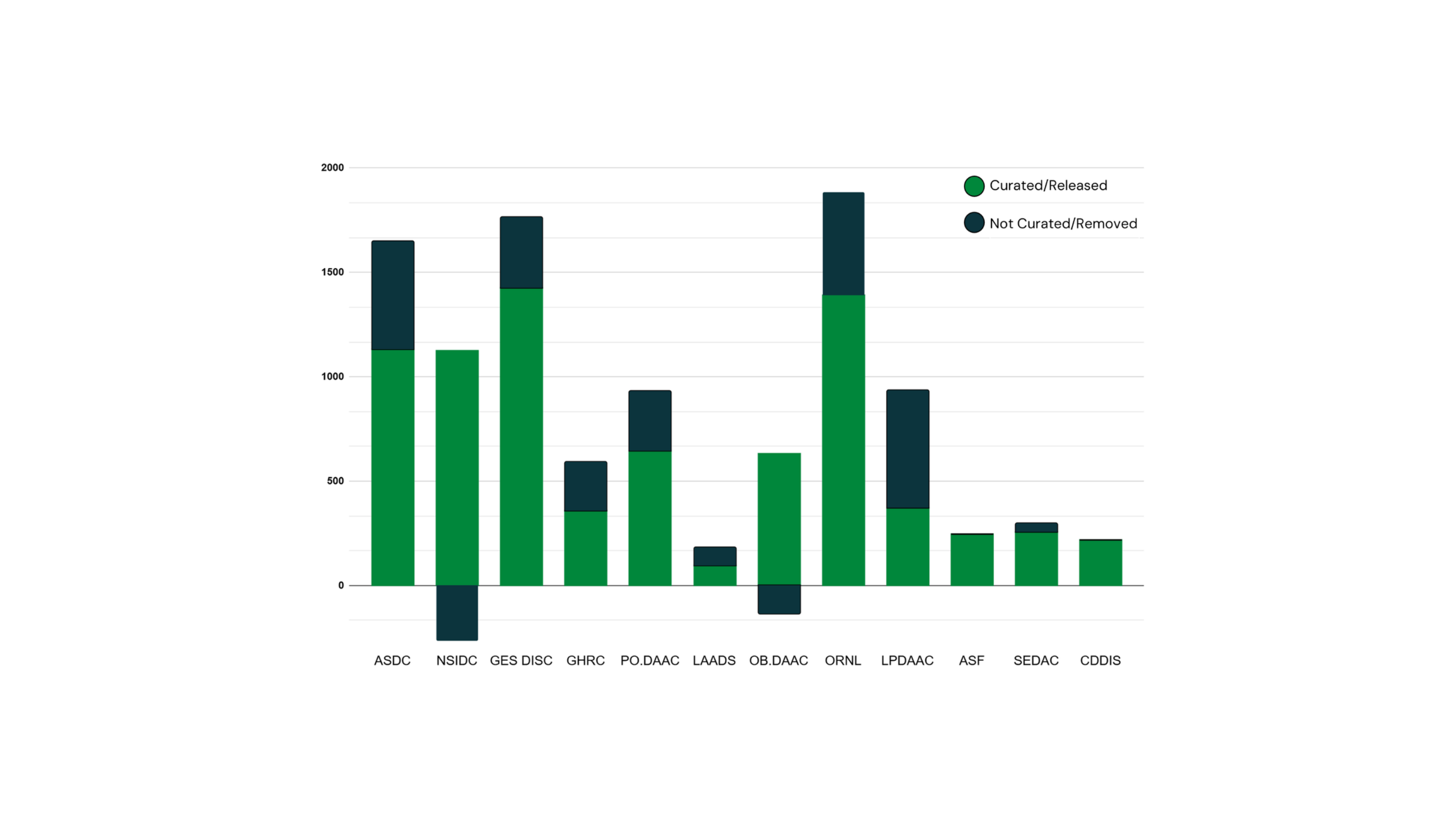
Since the establishment of ARC, roughly 7,900 data collections were quality-checked, curated, and released back to DAACs for improvement. 

Image