One of the best ways to understand blooms is to examine how they occur in an isolated body of water, such as a lake or a bay. The classic pattern is a seasonal sequence of events corresponding to winter, spring, summer, and fall. We'll start in the winter. During the winter, plankton activity is at a low level due to the lesser amount of sunshine during short winter days, and lower water temperatures. If ice forms, it's even more difficult for plankton to reproduce and grow. The plankton may enter a dormant stage in which metabolism is reduced, or even enter a stage of their life cycle in which they have a different form that is resistant to cold. However, life is not absent. During winter, some of the organic matter produced during the previous growing season is converted by bacteria back into dissolved nutrients (a process chemical oceanographers refer to as "remineralization"). The nutrient concentration in the water increases because there is very little planktonic activity to consume nutrients.
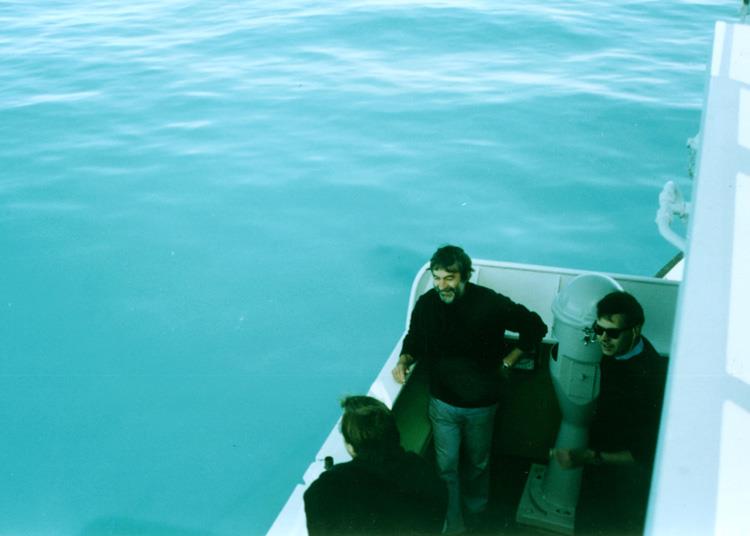
As spring begins, the amount of sunlight available each day increases. Water temperatures also begin to rise, eventually melting the ice on the surface. The plankton respond to the more advantageous conditions by initiating photosynthesis and reproduction, utilizing the high concentrations of nutrients that are available in the water column (due to remineralization). The number of individual phytoplankton cells increases at an almost explosive rate, so that the cells are packed close together in the water. The cells grow to their largest size, and the parts of the cell containing chlorophyll ("chloroplasts") increase in size, to utilize as much sunlight as possible. The abundance of phytoplankton can rapidly alter the color of the water. Grazers, which are zooplankton that eat phytoplankton, move in and gorge on the available cells. This phenomenon may even bring in larger zooplankton and fish that eat the grazers. The SPRING BLOOM is in full swing.
However, conditions can't stay this way for long. The main problem is that the explosive growth of the phytoplankton rapidly depletes the available nutrients. With the nutrient supply on the wane, the productivity of the phytoplankton decreases. Many of the phytoplankton cells die and begin to sink to the bottom. At the same time, the increasing water temperatures begin to cause a boundary to form between warm surface waters and deeper cold waters. This boundary is called the thermocline, and the condition where there are defined layers in the water column is stratification. Stratification is a typical summer condition in many bodies of water.
Under stratified conditions, remineralized nutrients in the deeper cold water can't reach the surface waters, where the light is strongest. Furthermore, the concentration of dissolved gases in the water, particularly oxygen, decreases, due both to higher temperatures and the respiration of organic matter by bacteria.
Under extreme conditions, there can be so little oxygen that fish can't survive, leading to "fish kills," where hundreds or thousands of fish may die and float at the surface. (In areas that receive an extra dose of nutrients from man, particularly from fertilizer in runoff from agricultural areas, organic matter production is artificially increased. Thus, when respiration takes over in the warm surface waters, oxygen concentration decreases more than for "normal" conditions, possibly causing an increasing occurrence of fish kills.)
The pattern of events in the fall is initiated by decreasing air temperatures. The temperature of the water at the surface decreases, to a point where the surface waters are cooler than the deeper water. Because warm water rises, the water column is unstable. In the deeper water, nutrient concentrations have been rising all summer, due to remineralization. When the winds pick up due to autumn weather patterns, the water column can suddenly reverse, bringing the warmer water and its higher concentration of nutrients back to the surface. When this occurs, it will initiate a fall bloom, not as strong as the spring bloom, but still significant to annual primary production.
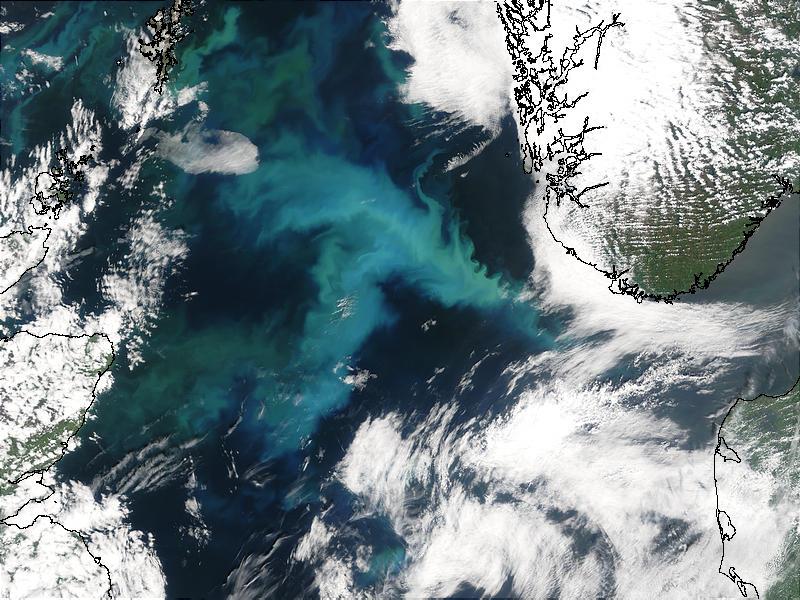
One of the largest ecological events known on Earth is the spring bloom in the North Atlantic, which can clearly be seen in regional and seasonal composite CZCS images of the North Atlantic. The spring bloom is a wave of productivity that begins between Cape Hatteras and the Strait of Gibraltar in March, and progresses northward, dominating the central North Atlantic in May and the eastern North Atlantic and North Sea in June.
Blooms are usually beneficial events in the ecological calendar of a given body of water. They are the most productive times of the year in many regions, responsible for much of the annual production (somewhat like the Christmas buying season in a gift shop). At times, though, there can be villains in a bloom's cast of characters. A well-known villain is Gymnodinium breve (now renamed Karenia brevis after scientist Karen Steidinger) one of the plankton species responsible for red tides. It's actually a dinoflagellate, and can swim using its flagellum, a propulsive tail. A red tide occurs because this species of plankton produces a potent neurotoxin, which can kill fish and make breathing uncomfortable if inhaled. The most serious threat to humans from red tides comes from shellfish, who filter the plankton from the water to consume, which concentrates the toxin in their flesh. Eating shellfish contaminated with red tide neurotoxin can kill. In areas where collecting and eating shellfish is popular, the concentration of toxic dinoflagellates is frequently measured, and advisories are announced when red tides occur, banning the collection of shellfish in affected areas. Sea spray from surf on the beach during a red tide can also be inhaled by humans and cause breathing difficulties.
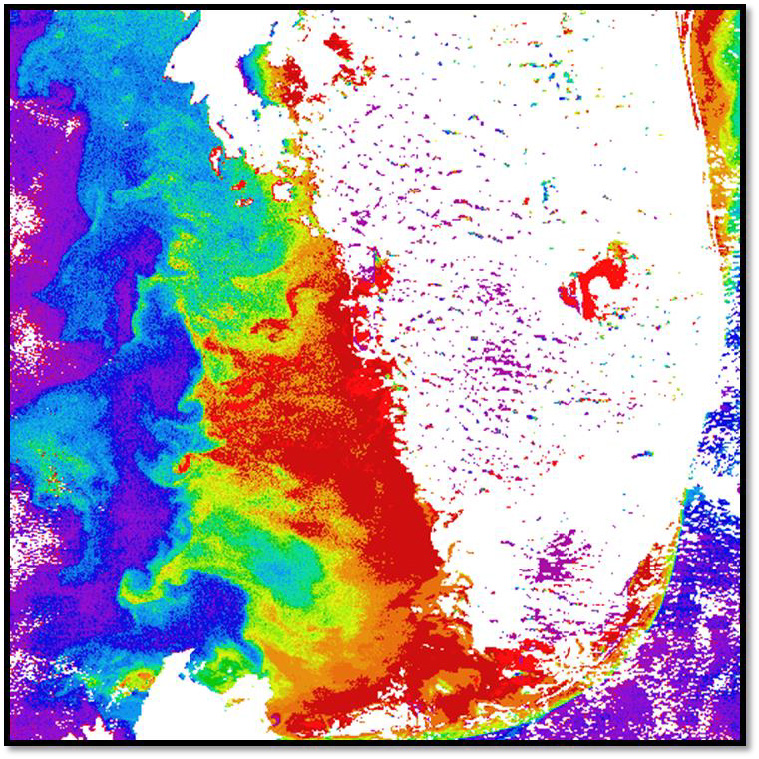
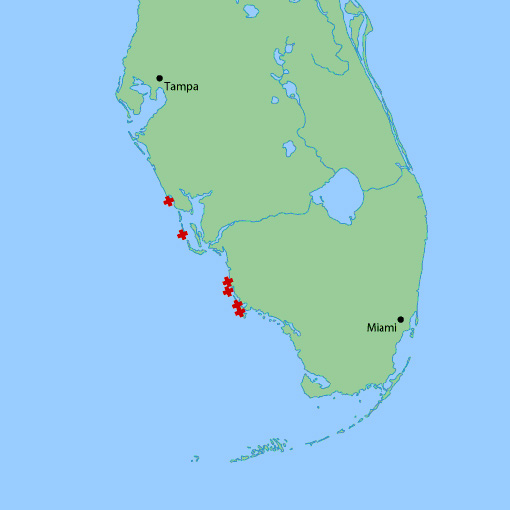
The image shown on the first page is one of the first obtained by the CZCS, in November of 1978. The image shows an area of high productivity to the west of southern Florida. Measurements of the concentration of Karenia brevis taken at the shore indicated a red tide was occurring southwest of Ft. Myers and Sanibel Island. (The positions are indicated below.) Researchers were able to make a rough estimate of the concentration of K. brevis in this area based on the CZCS pigment data. It's significant to note that the CZCS data appears to overestimate the concentration of phytoplankton chlorophyll in this area, which may be due to the effects of bottom reflection and suspended sediments. The waters of the West Florida Shelf are Case 2 waters, which were defined in Chapter 11.