We are in the process of migrating all NASA Earth science data sites into Earthdata from now until end of 2026. Not all NASA Earth science data and resources will appear here until then. Thank you for your patience as we make this transition.
Read about the Web Unification Project
Soils Data Access and Tools
Soils Datasets
| Dataset | Platforms | Instruments | Temporal Extent | Location Keywords | Spatial Extent | Data Format |
|---|---|---|---|---|---|---|
| BOREAS CanSIS Regional Soils Data in Vector Format, V2 | FIELD SURVEYS, AERIAL PHOTOGRAPHS | VISUAL OBSERVATIONS, MSS | 1982-01-01 to 1984-12-31 | N: 60 S: 49 E: -89 W: -110 | CSV | |
| BOREAS Follow-On FLX-01 NSA-OBS Tower Flux, Meteorological, and Soil Temp. Data | FIXED OBSERVATION STATIONS, FIELD INVESTIGATION | EDDY CORRELATION DEVICES, RAIN GAUGES, THERMOCOUPLES, NET RADIOMETERS, LICOR QUANTUM SENSOR | 1996-10-31 to 1999-01-01 | N: 55.8801 S: 55.8801 E: -98.4814 W: -98.4814 | CSV | |
| BOREAS Follow-On HMet-04 1996-1998 NSA Meteorological Data | METEOROLOGICAL STATIONS | BAROMETERS, NET RADIOMETERS, PYRANOMETERS, LICOR QUANTUM SENSOR, RAIN GAUGES, TEMPERATURE PROBES, ULTRASONIC DEPTH GAUGE, WIND MONITOR, TEMPERATURE SENSORS, HUMIDITY SENSORS, INFRARED THERMOMETERS | 1994-01-01 to 1999-01-01 | N: 60 S: 48 E: -90 W: -111 | CSV | |
| BOREAS HYD-01 Soil Hydraulic Properties | FIELD INVESTIGATION | VISUAL OBSERVATIONS, TENSION INFILTROMETER | 1994-01-01 to 1994-12-31 | N: 55.93 S: 53.63 E: -98.29 W: -106.2 | ASCII | |
| BOREAS HYD-01 Under Canopy Precipitation Data | FIELD INVESTIGATION | RAIN GAUGES | 1994-05-23 to 1997-06-24 | N: 55.93 S: 53.88 E: -98.29 W: -106.2 | ASCII | |
| BOREAS HYD-01 Volumetric Soil Moisture Data | FIELD INVESTIGATION | NEUTRON PROBE, TDR | 1994-05-25 to 1997-06-26 | N: 55.93 S: 53.66 E: -98.29 W: -105.32 | ASCII | |
| BOREAS HYD-06 Aircraft Gamma Ray Soil Moisture | AC-500S | GAMMA RADIATION DETECTOR | 1993-08-01 to 1994-09-10 | N: 55.94 S: 53.37 E: -98.26 W: -106.29 | ASCII | |
| BOREAS HYD-06 Ground Gravimetric Soil Moisture Data | FIELD INVESTIGATION | BALANCE, CORING DEVICES, SNOW TUBE | 1993-09-08 to 1994-09-05 | N: 57 S: 53.38 E: -98.23 W: -106.33 | ASCII | |
| BOREAS HYD-06 Moss/Humus Moisture Data | FIELD INVESTIGATION | SNOW TUBE, BALANCE | 1993-09-09 to 1994-09-05 | N: 55.94 S: 53.64 E: -98.23 W: -105.32 | ASCII | |
| BOREAS Regional Soils Data in Raster Format and AEAC Projection | MAPS | DIGITIZER | 1991-01-01 to 1991-12-31 | N: 59.98 S: 50.09 E: -93.5 W: -111 | Binary |
SHOWING 10 OF 546
Featured Soils Observation Method: MODIS
The Moderate Resolution Imaging Spectroradiometer (MODIS) aboard the Aqua and Terra platforms continually collects global data approximately every two days. One MODIS product, normalized vegetation difference index data, can be used to predict how much carbon dioxide is emitted from soils, which is major component of the global carbon cycle. Carbon is released in the process called soil respiration and driven by the decomposition of surface litter through microbial activity.
Researchers taught the SatVision Top-of-Atmosphere foundation model to recognize MODIS imagery features.
4 MIN READ
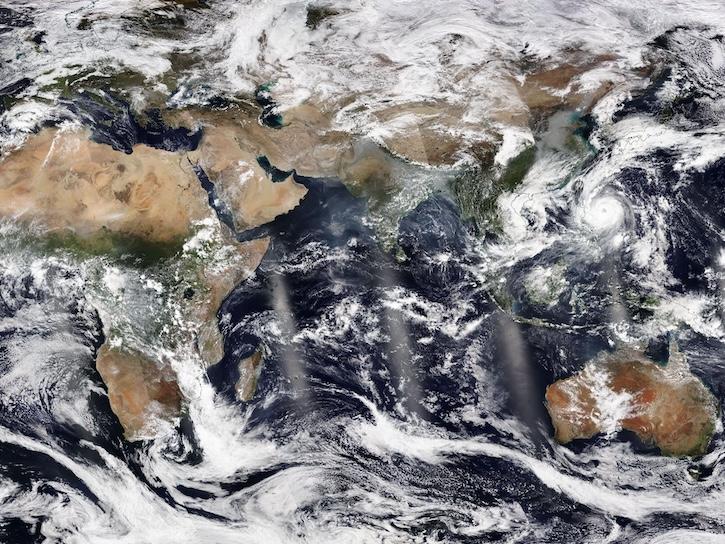
The Visible Infrared Imaging Radiometer Suite (VIIRS) will help ensure continuity of Earth observations after the upcoming retirement of the Moderate Resolution Imaging Spectroradiometer (MODIS).
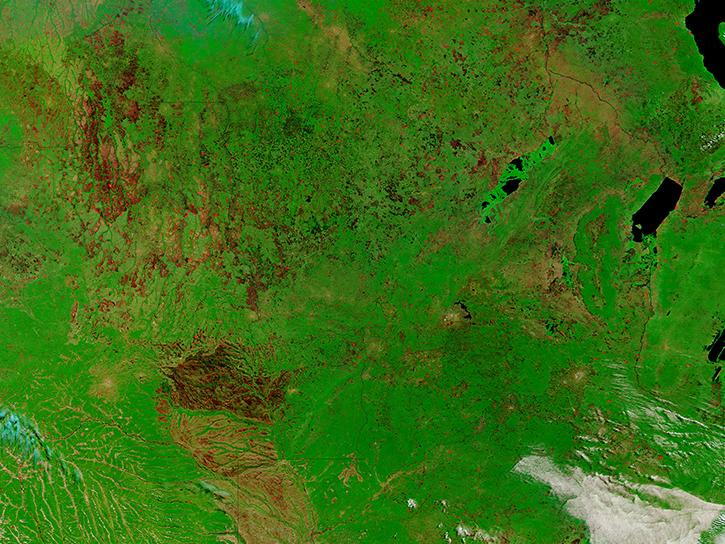
Learn how to access and use Moderate Resolution Imaging Spectroradiometer (MODIS) Version 6 land data.
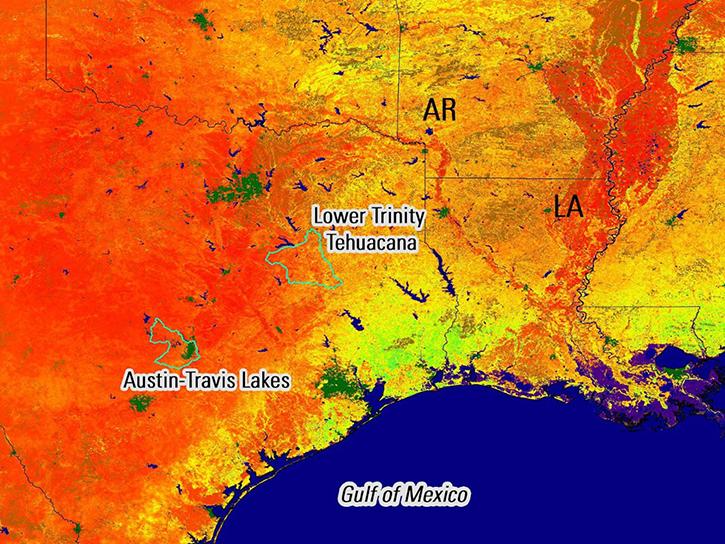
Remote sensing data's drought-indicating parameters are essential to manage the impact of water scarcities and minimize drought losses.
Soils Data Tools
| Tool Sort descending | Description | Services | |
|---|---|---|---|
| Vertex | Vertex is a graphical search interface for finding synthetic aperture radar (SAR) data. | Search and Discovery, Access, Downloading, Processing, Subsetting |
SHOWING 1 OF 1
Frequently Asked Questions
Earthdata Forum
Our online forum provides a space for users to browse thousands of FAQs about research needs, data, and data applications. You can also submit new questions for our experts to answer.
Submit Questions to Earthdata Forumand View Expert Responses