Earth Observation Data Basics

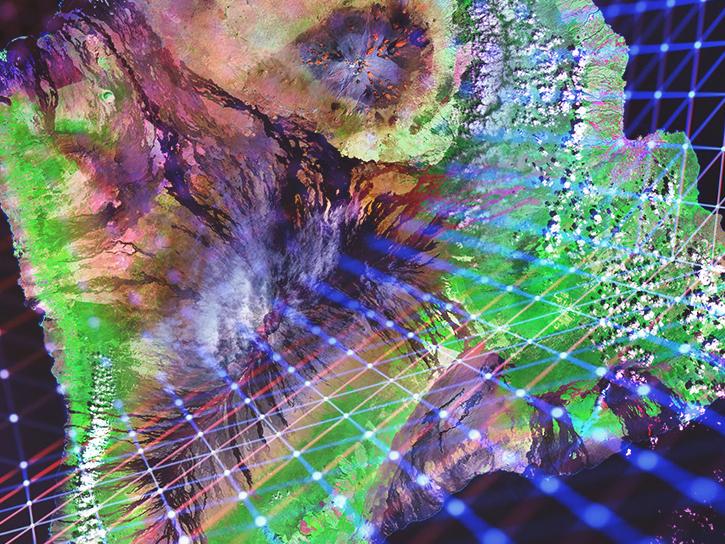
The life cycle of Earth observation data is rich and complex, with many points of entry along the pipeline. From collection to visualization, we dive deep into the basics to demystify the incredible data in our catalog.

Remote Sensing

Remote sensing is the acquiring of information from a distance. NASA observes Earth and other planetary bodies via remote instruments on space-based platforms (e.g., satellites or spacecraft) and on aircraft that detect and record reflected or emitted energy. Remote instruments, which provide a global perspective and a wealth of data about Earth systems, enable data-informed decision making based on the current and future state of our planet.

For more information, check out the Fundamentals of Remote Sensing training from the Applied Remote Sensing Training (ARSET) program.

Get Data

Explore the world’s largest repository of open-access Earth science data.

Remote Sensing Data Basics

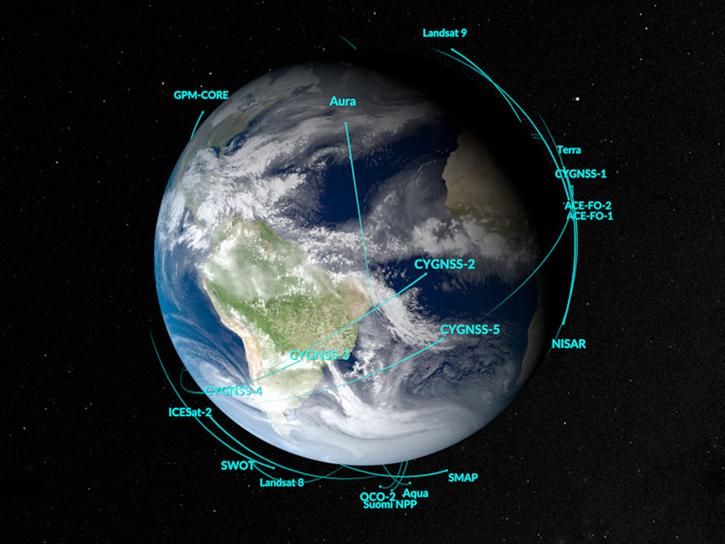
An orbit is the curved path a satellite follows around the Earth due to gravitational force.
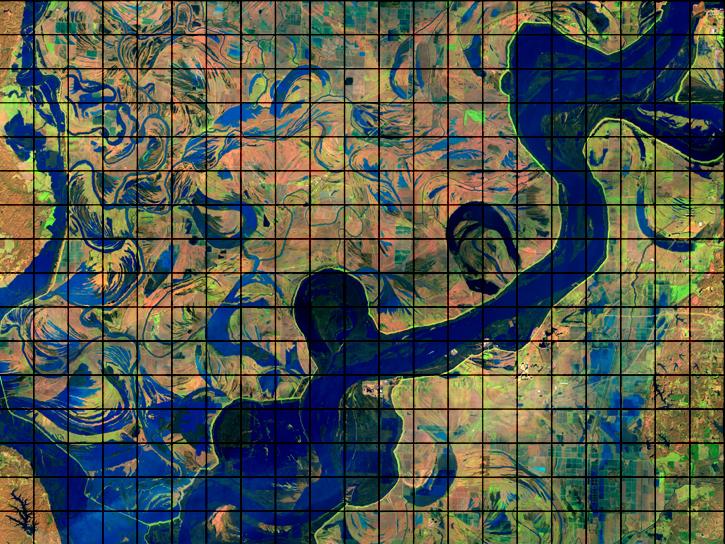
There are four types of resolution to consider for any dataset—radiometric, spatial, spectral, and temporal. Resolution plays a role in how data from a instrument can be used. Resolution can vary depending on the platform's orbit and instrument design.
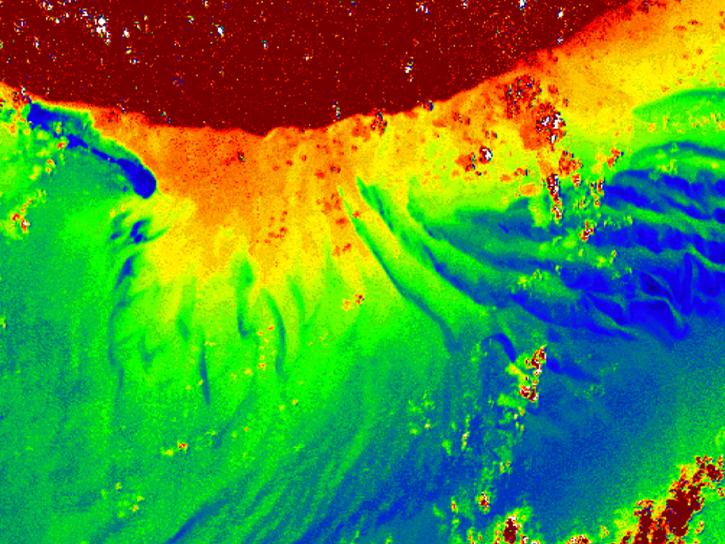
Active instruments emit energy and collect data based on changes in the return signal.
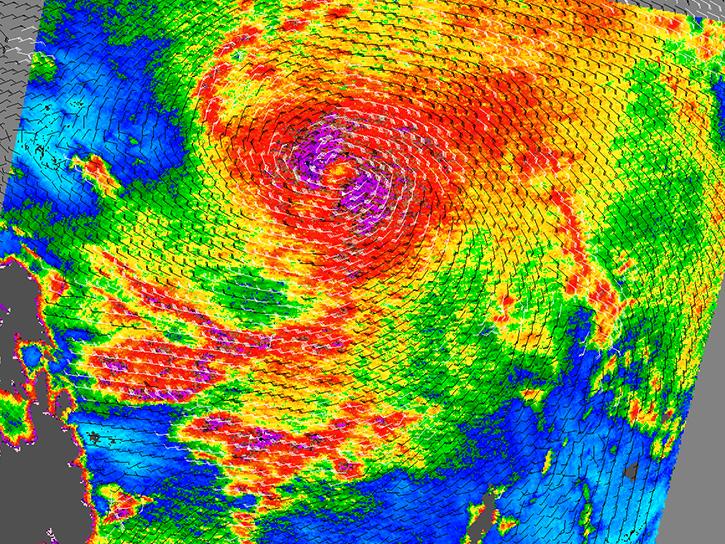
Essential variables are known to be critical for observing and monitoring a given facet of the Earth system

Understanding Metadata

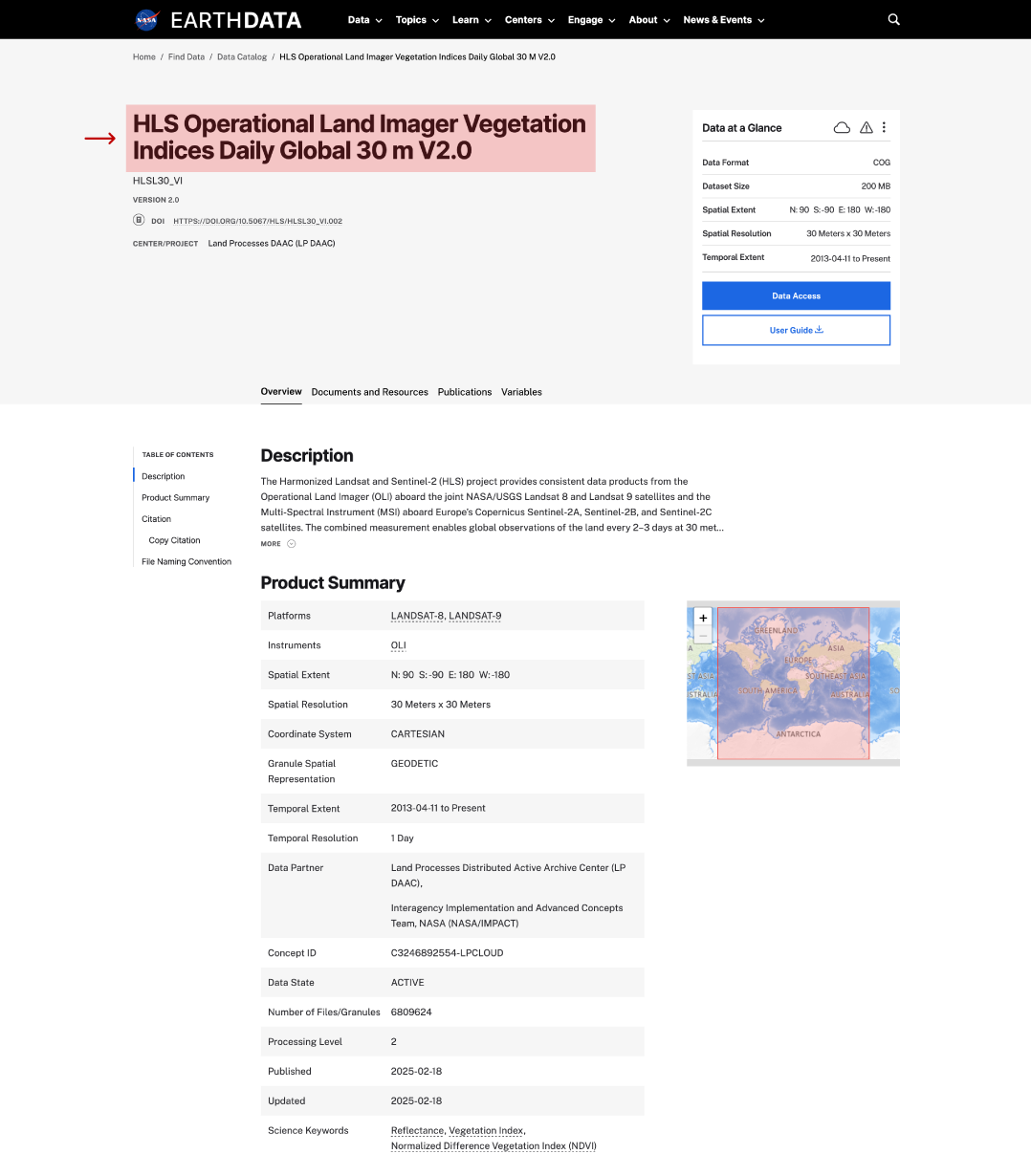
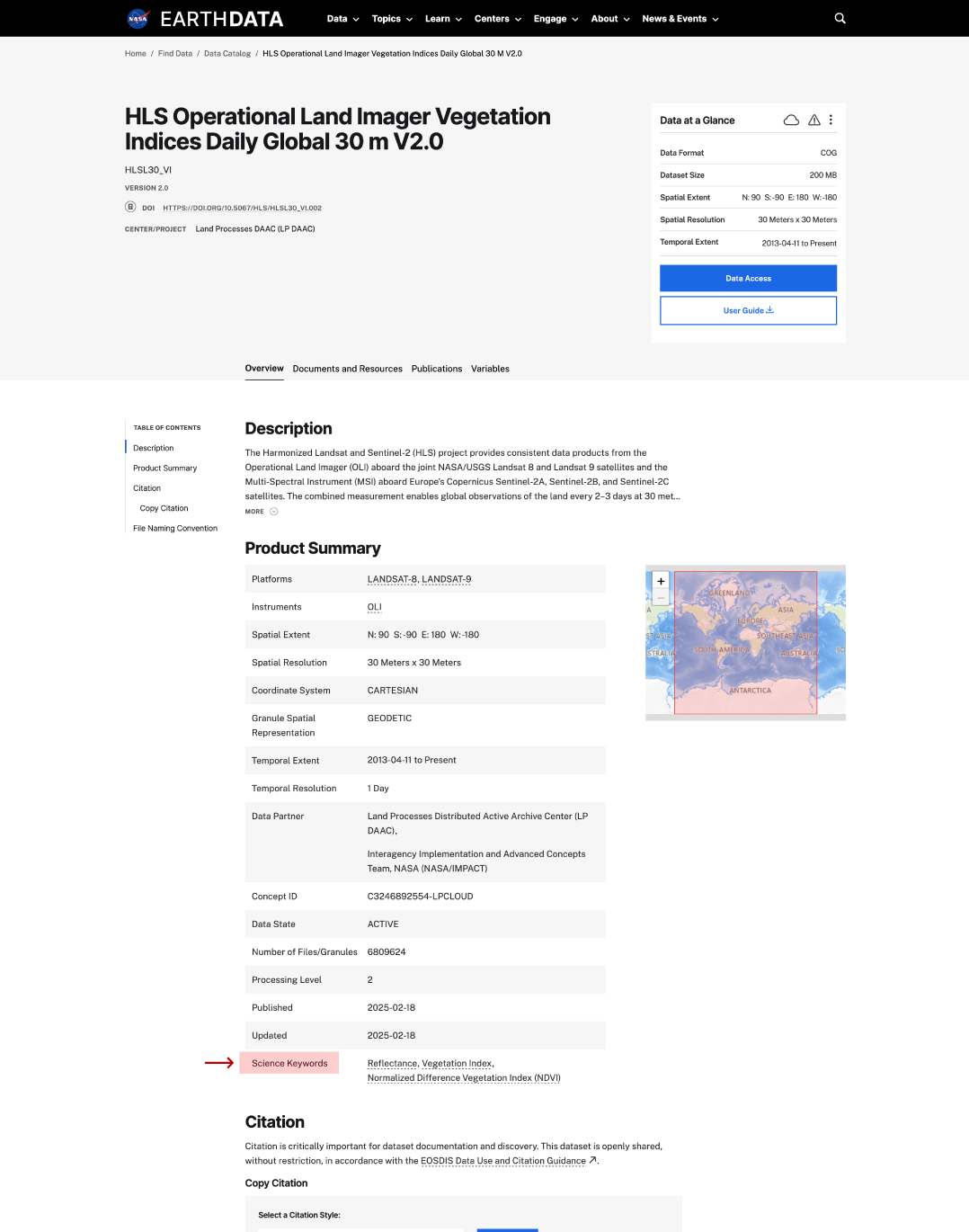
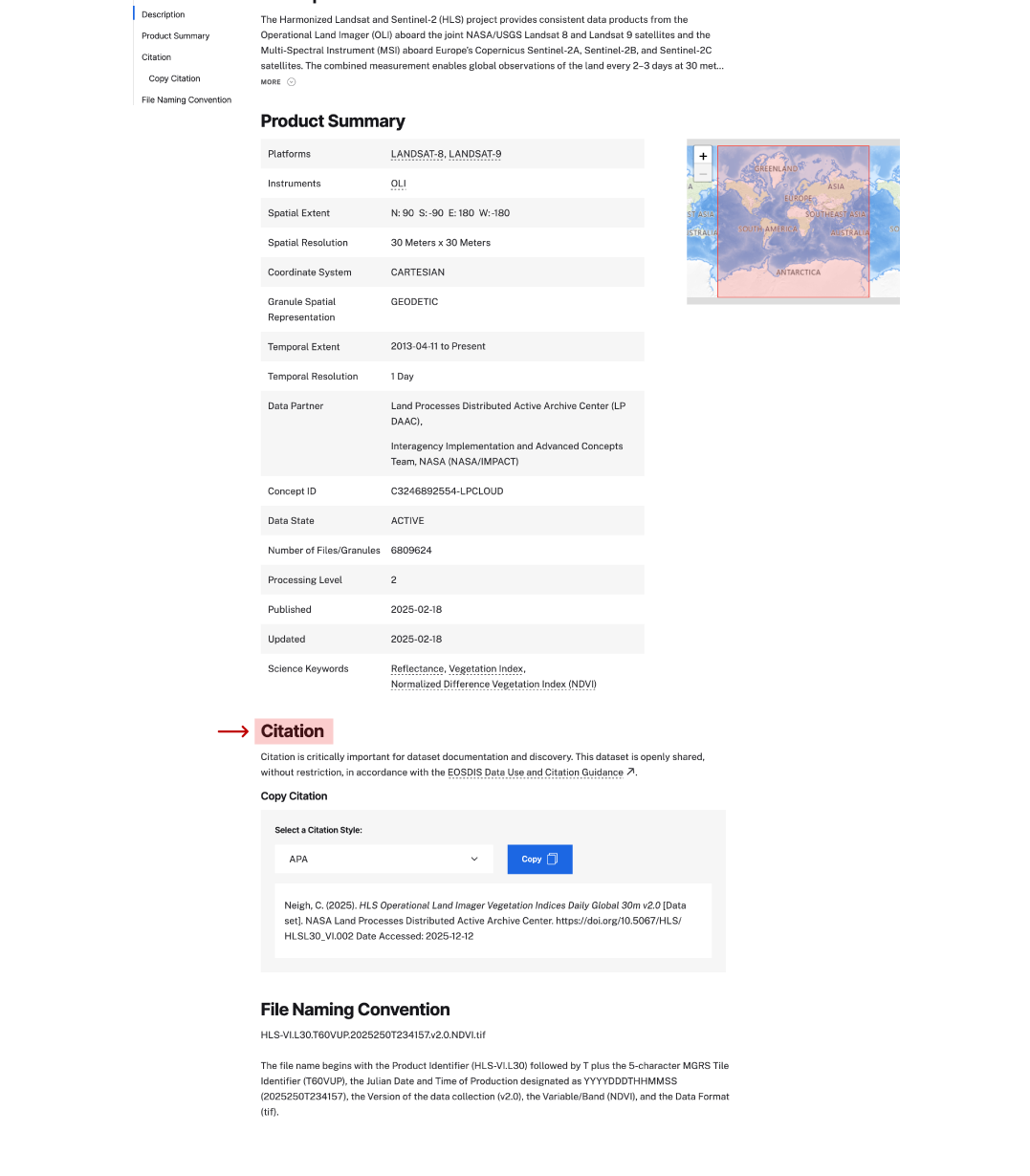
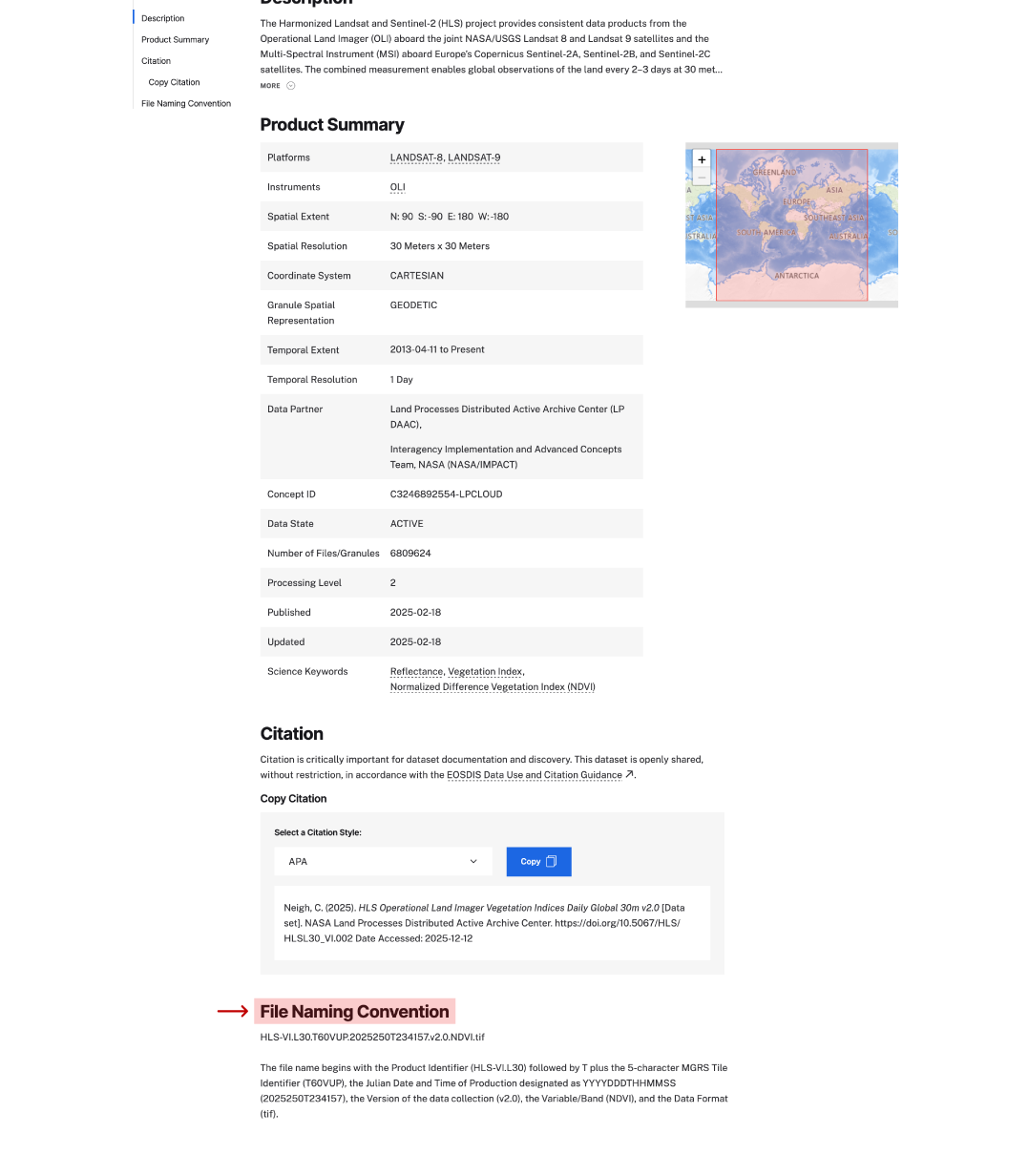
This interactive tool helps users navigate and understand essential metadata on our Earth science dataset landing pages. Through guided examples and hands-on exploration, learn critical context about our data to aid you in your own scientific discoveries.
Interactive

Parts of the Earthdata Dataset Landing Page

Explore
long name on dataset page
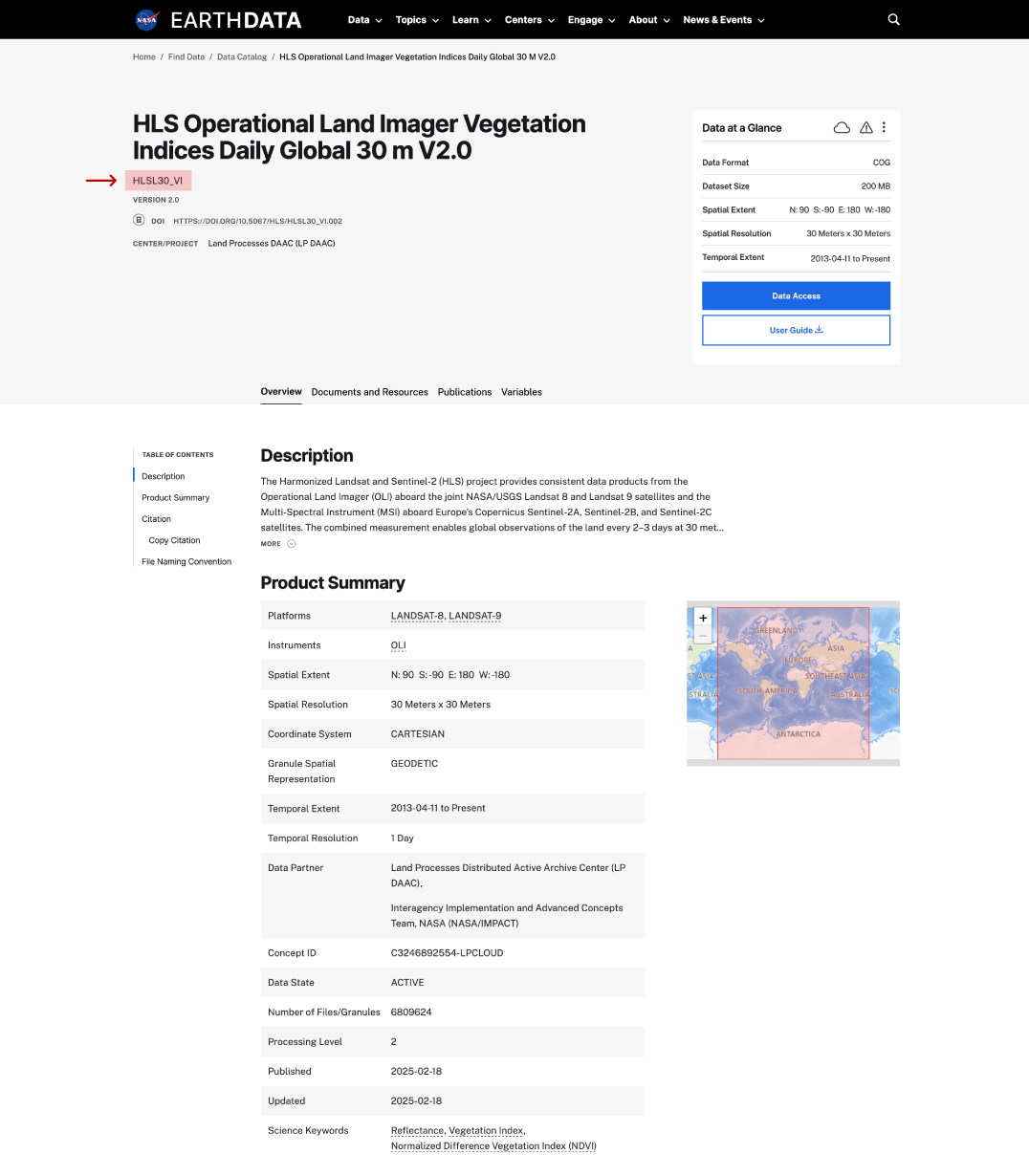
short name on dataset page
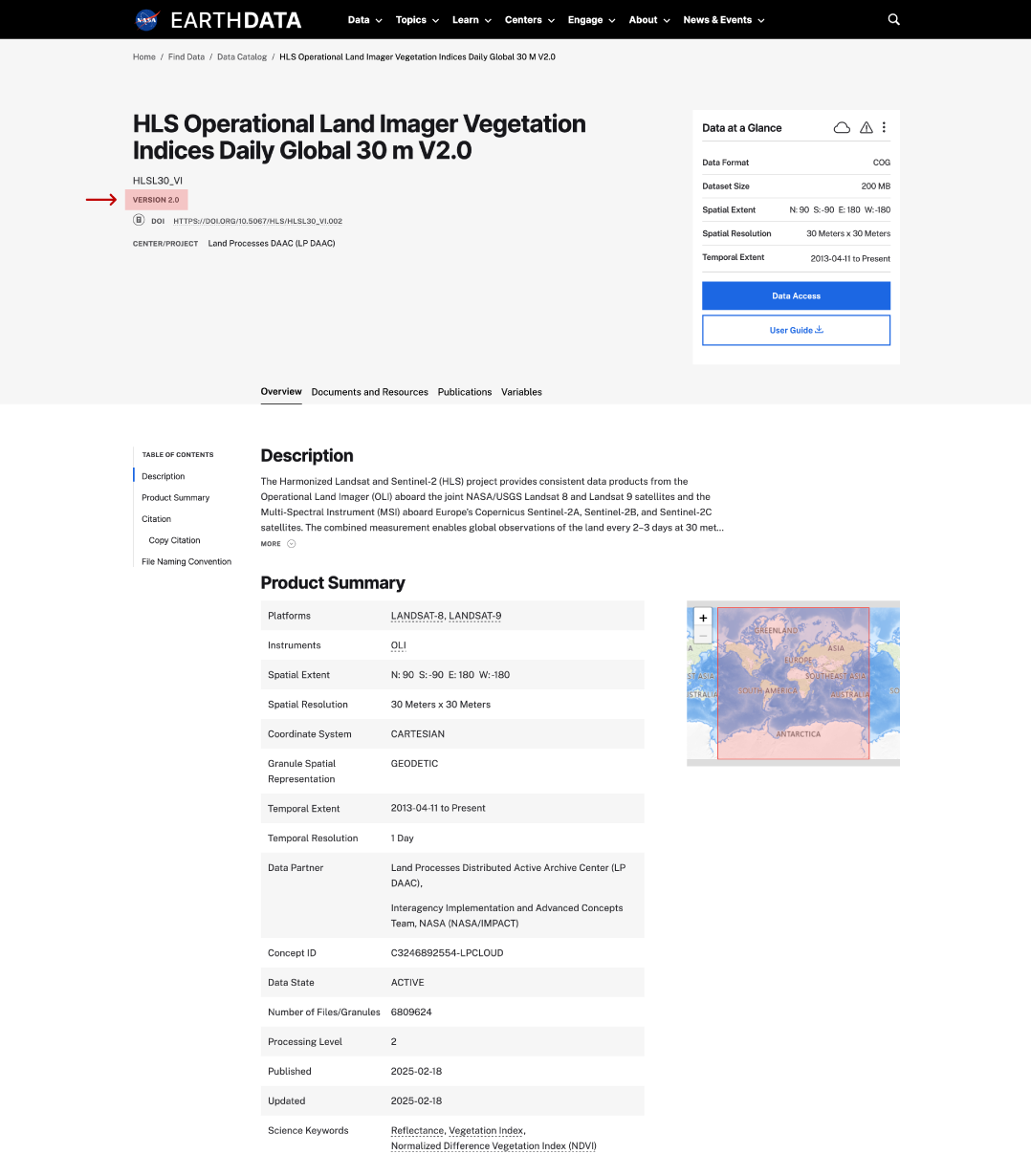
version on dataset page
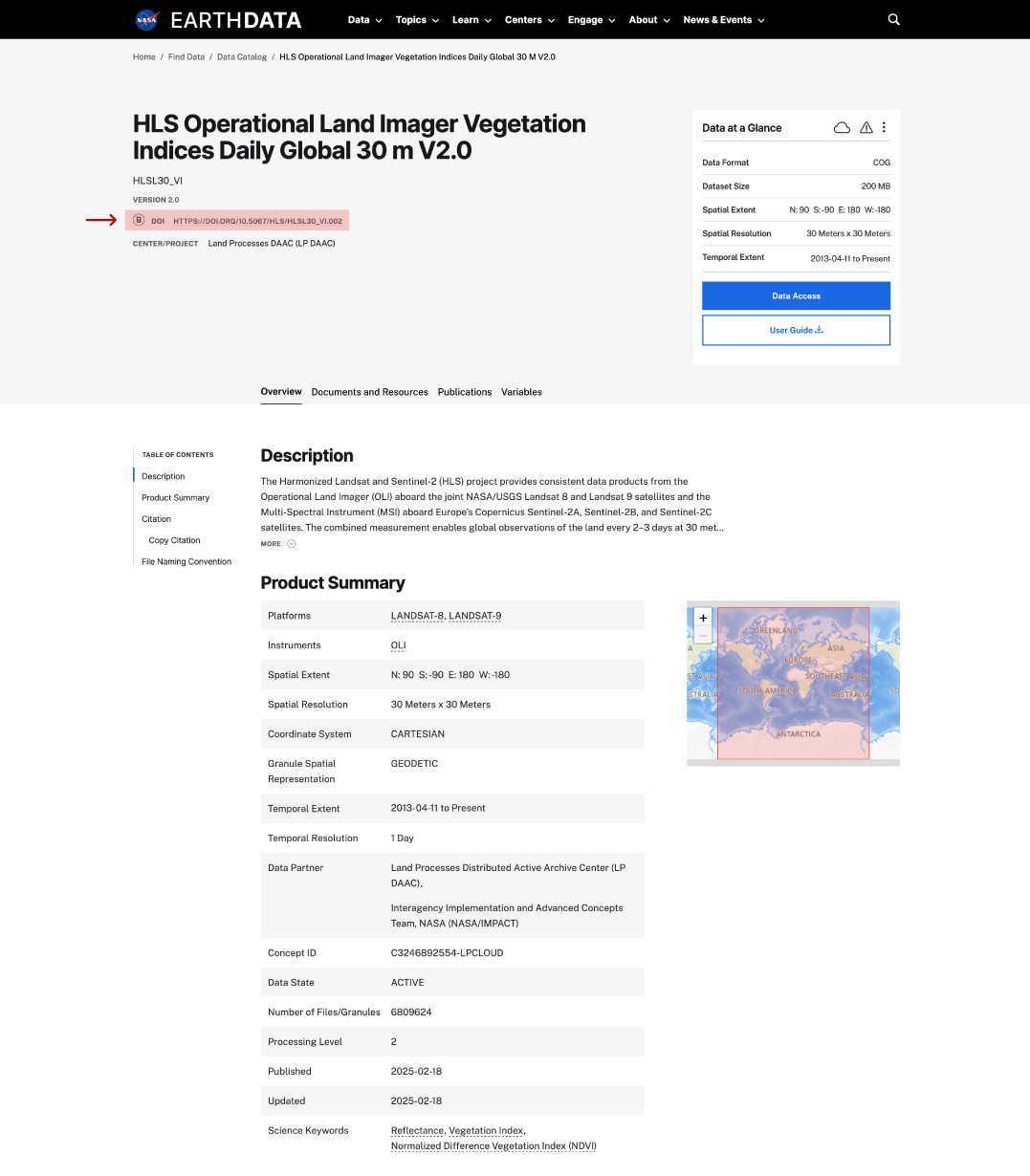
DOI on dataset page
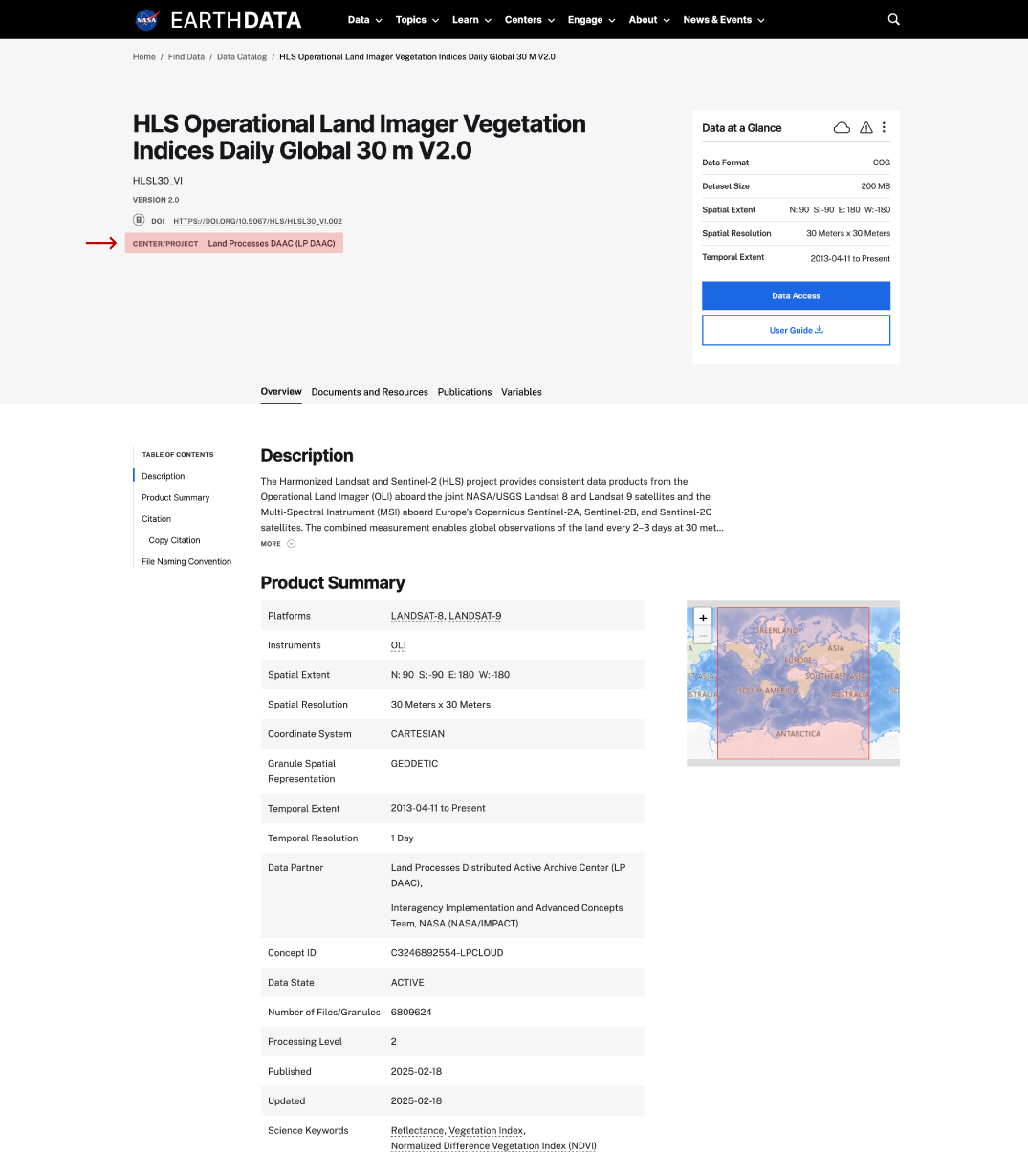
center/project on dataset page
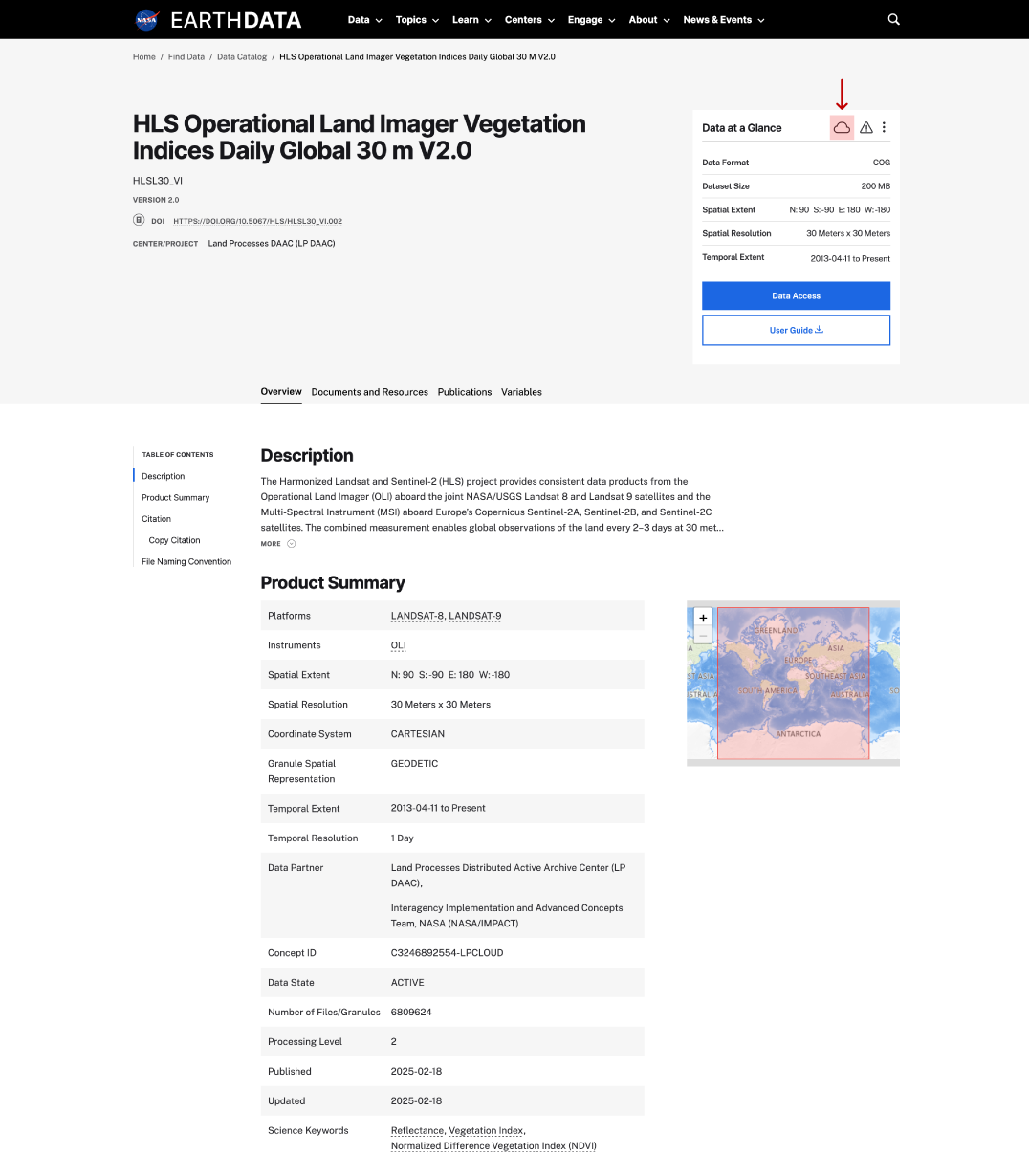
cloud icon on dataset page
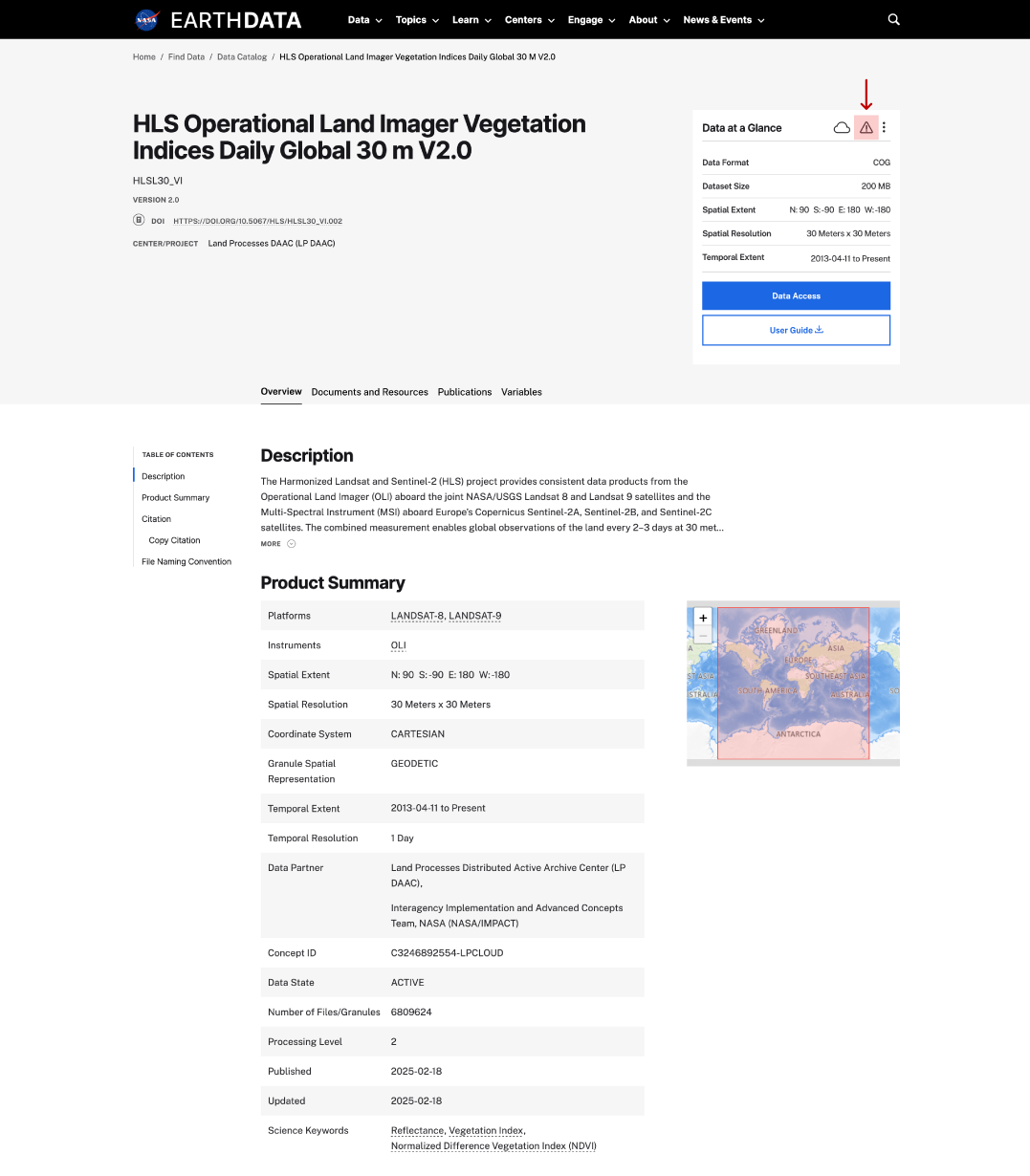
This is a screenshot of a dataset landing page showing the location of the alert icon.
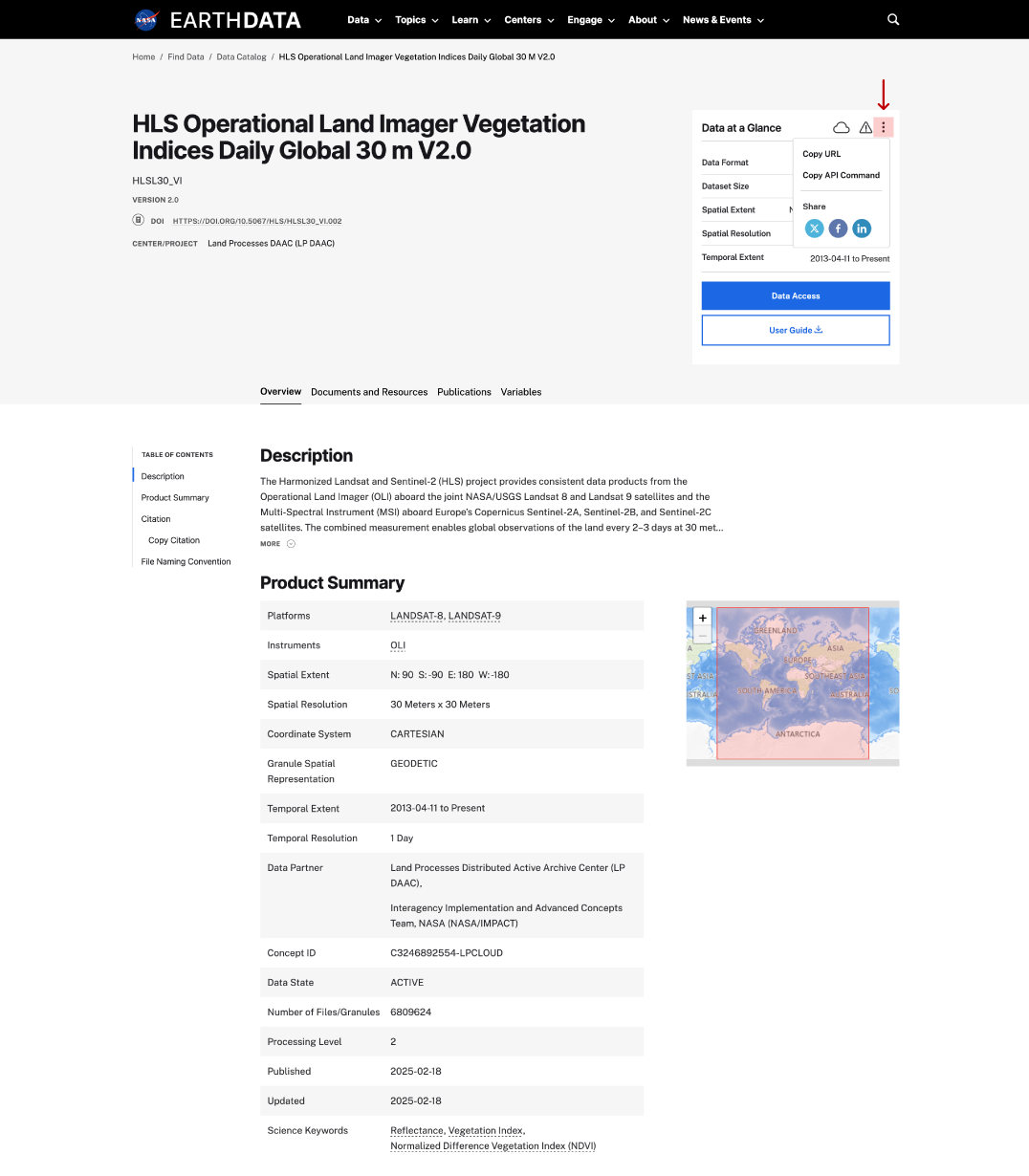
copy URL/API on dataset page
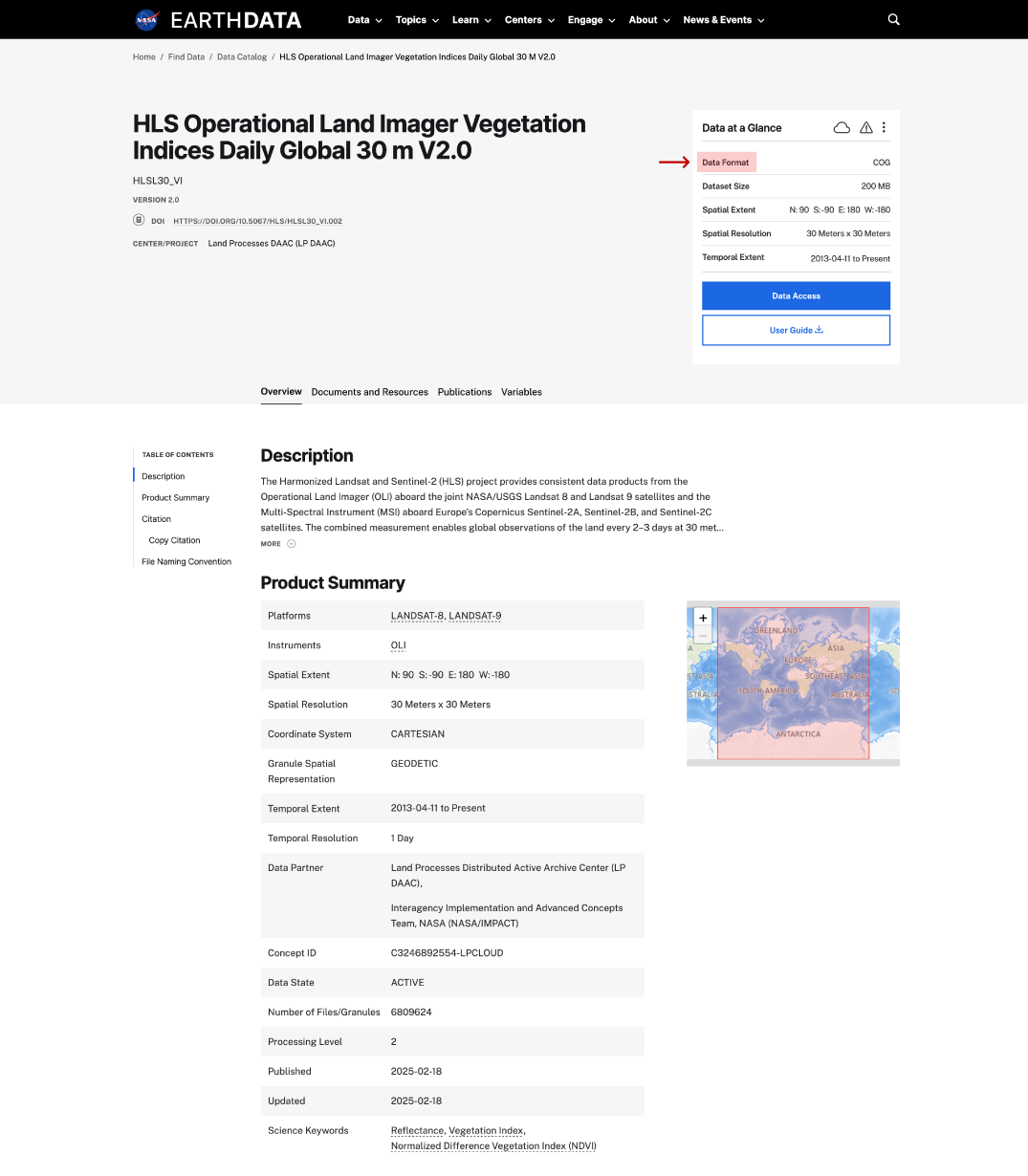
data format on dataset page
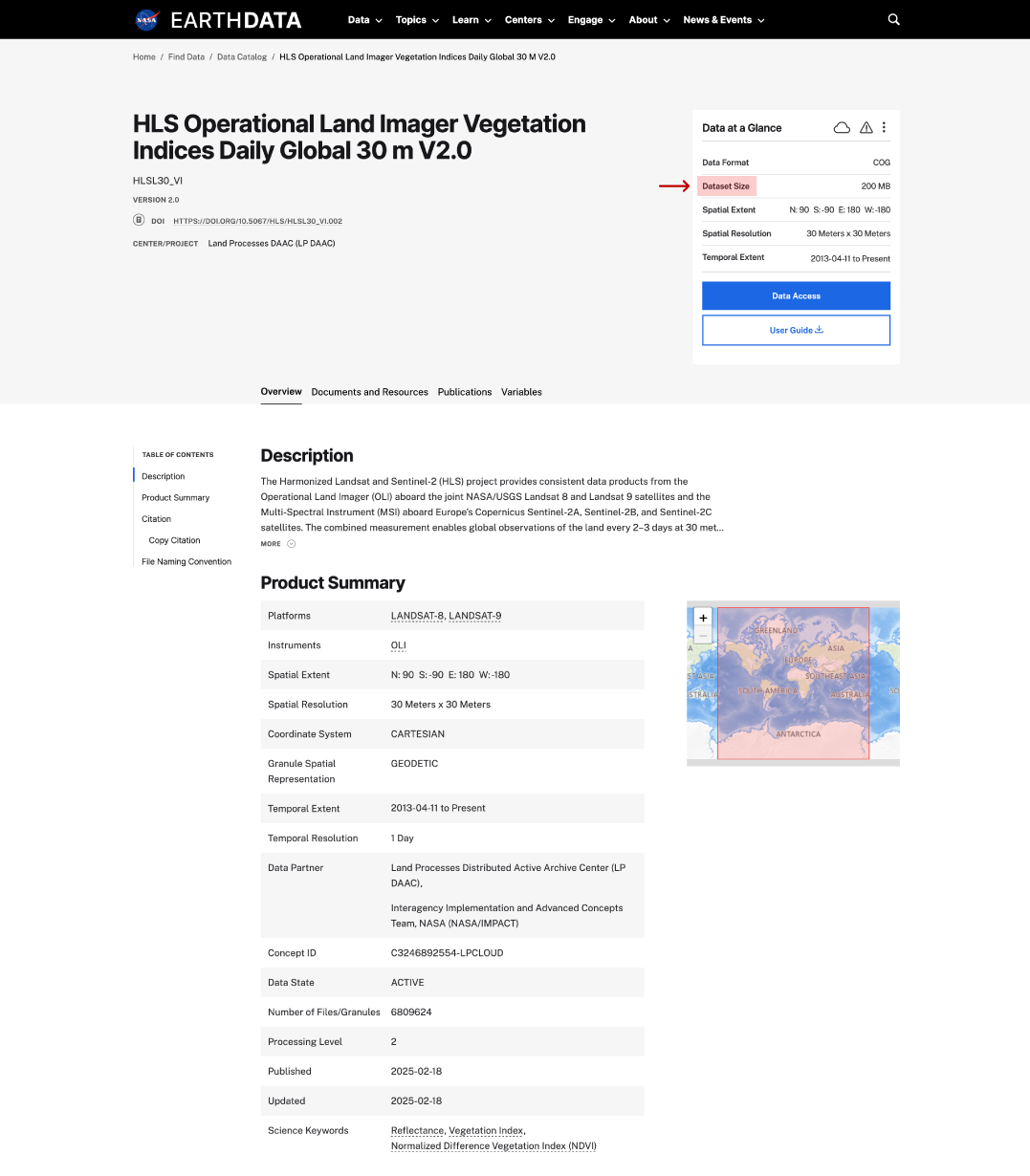
dataset size on dataset page
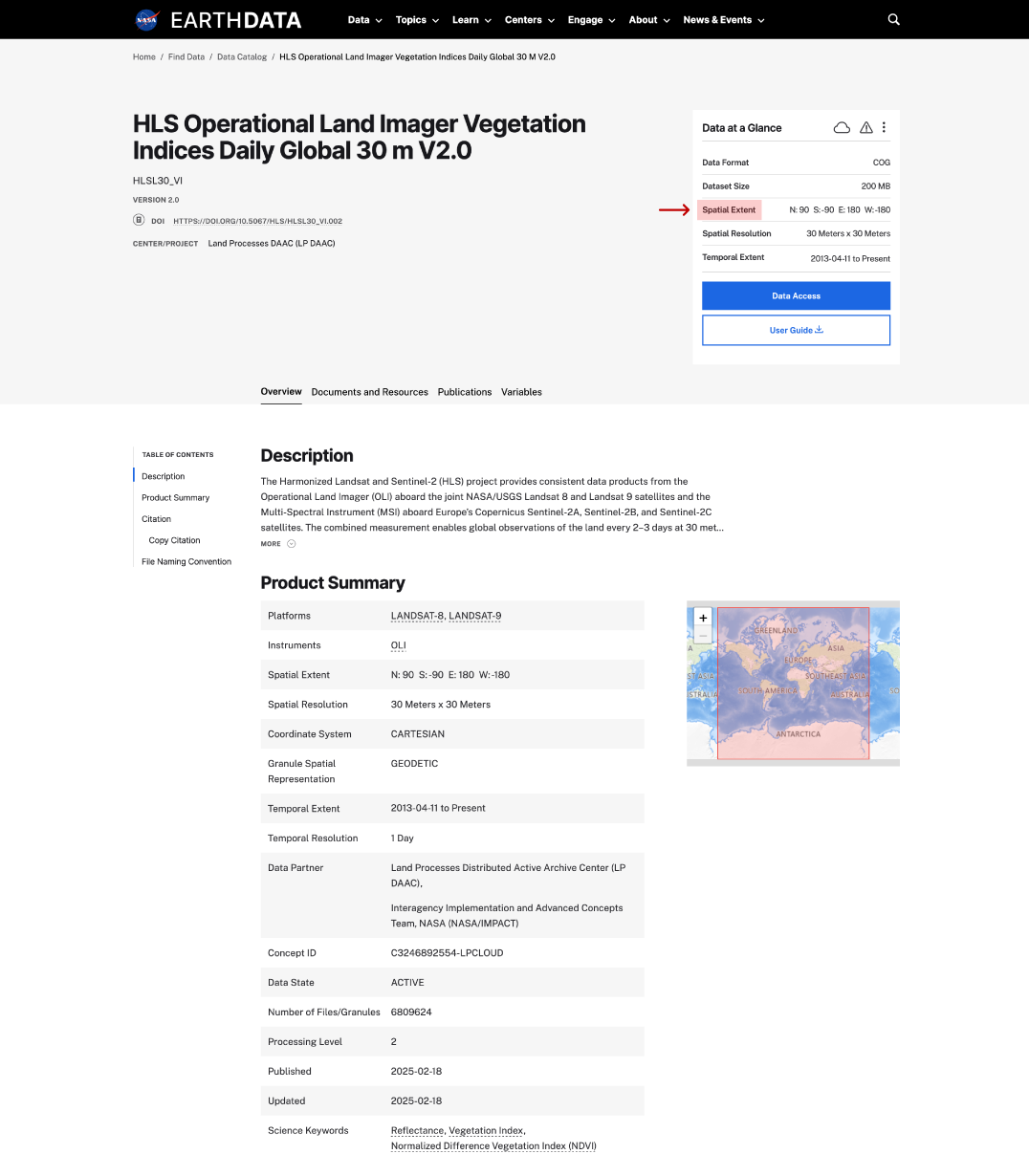
spatial extent on dataset page
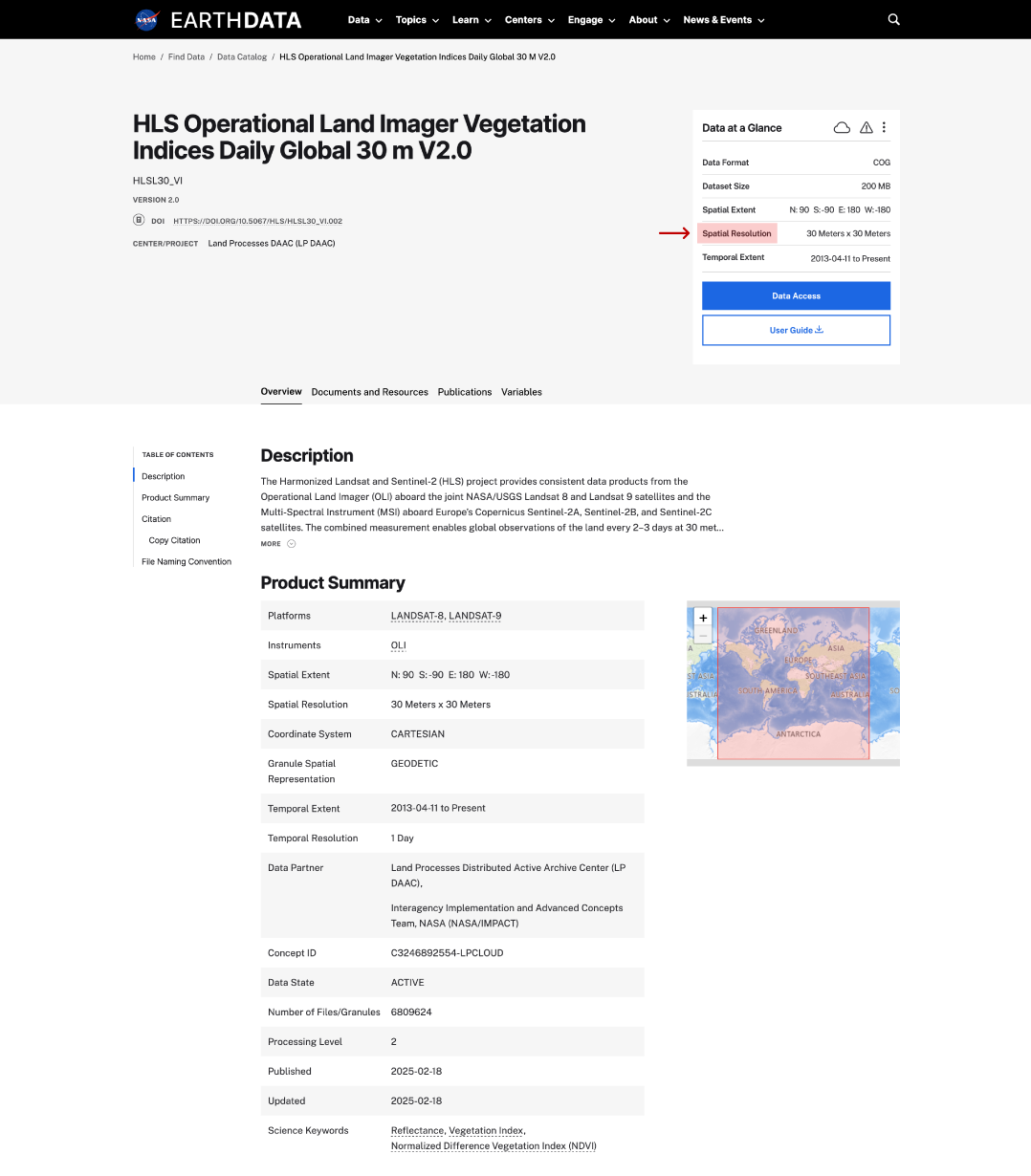
spatial resolution on dataset page
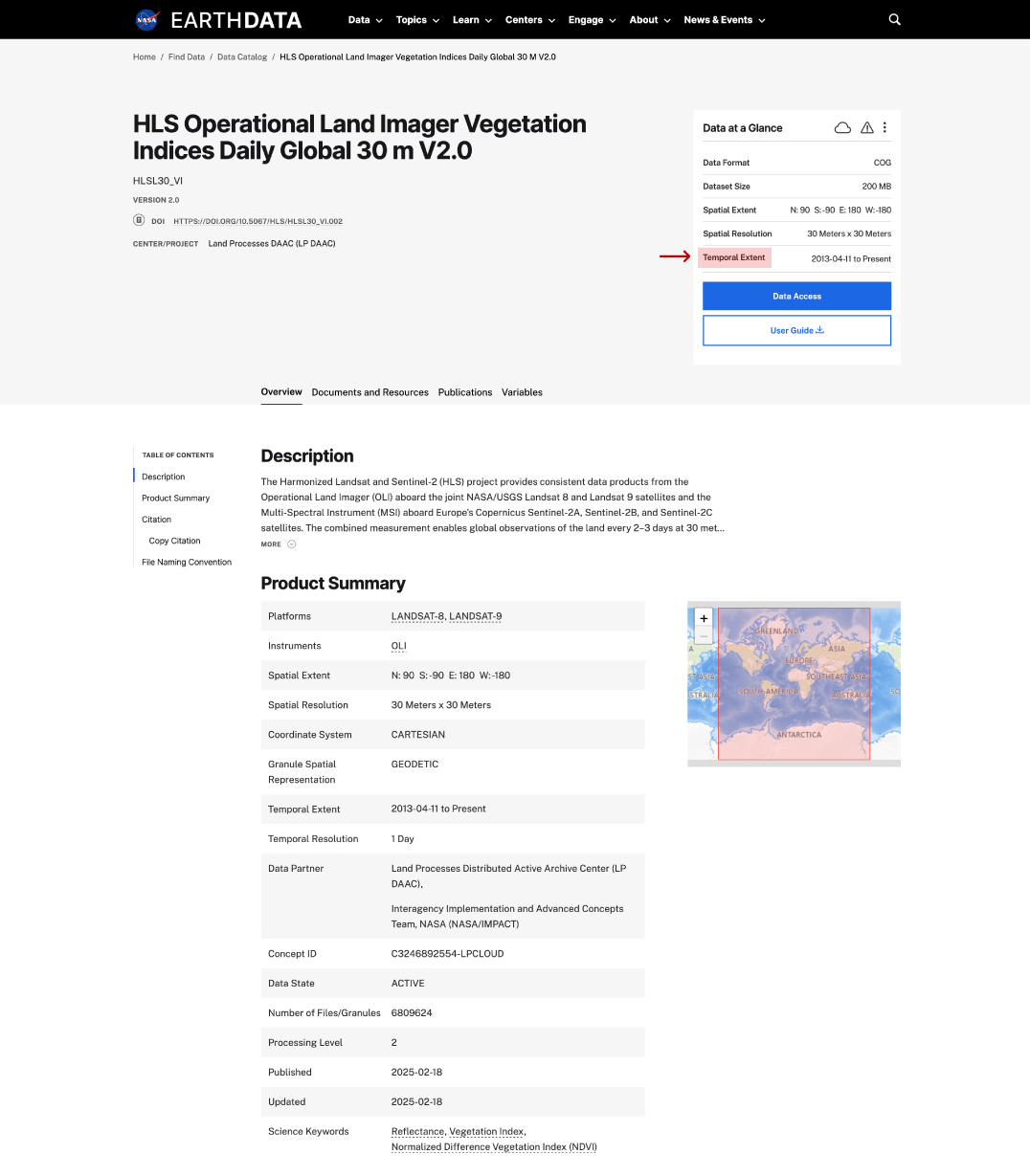
temporal extent on dataset page
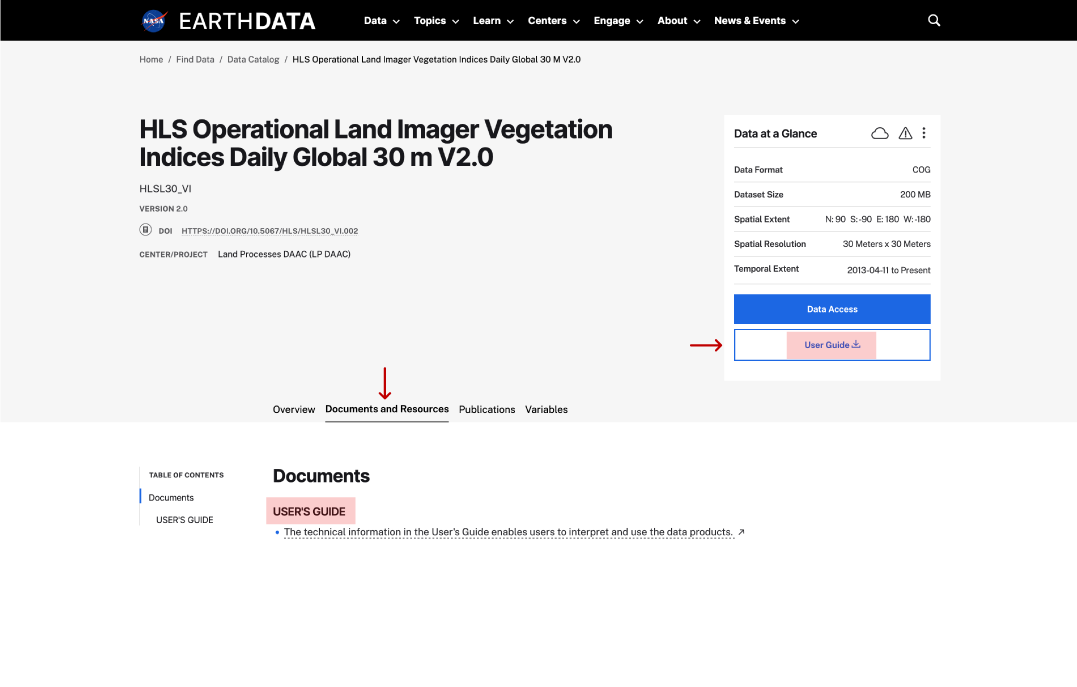
user guide on dataset page
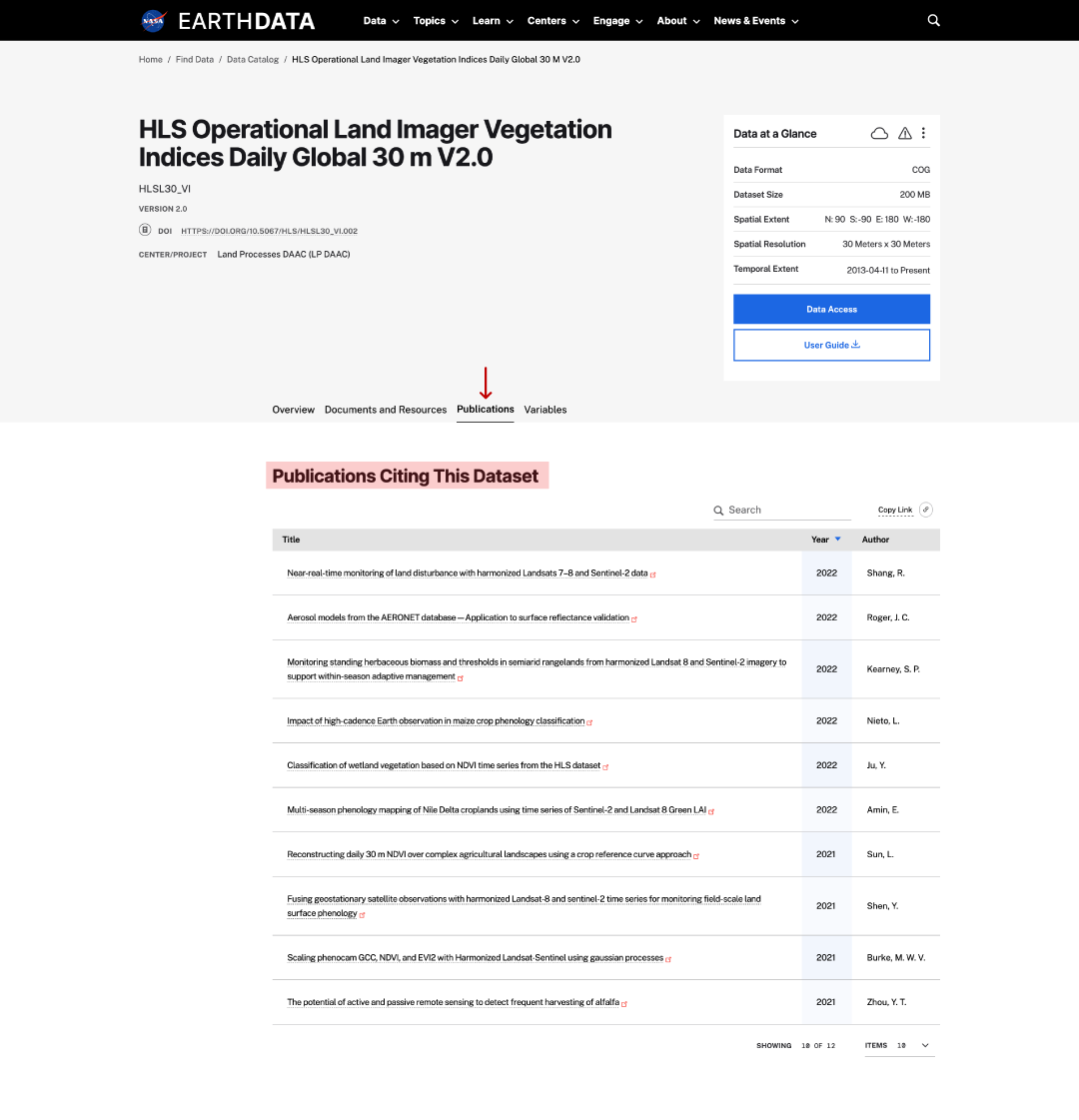
publications on dataset page
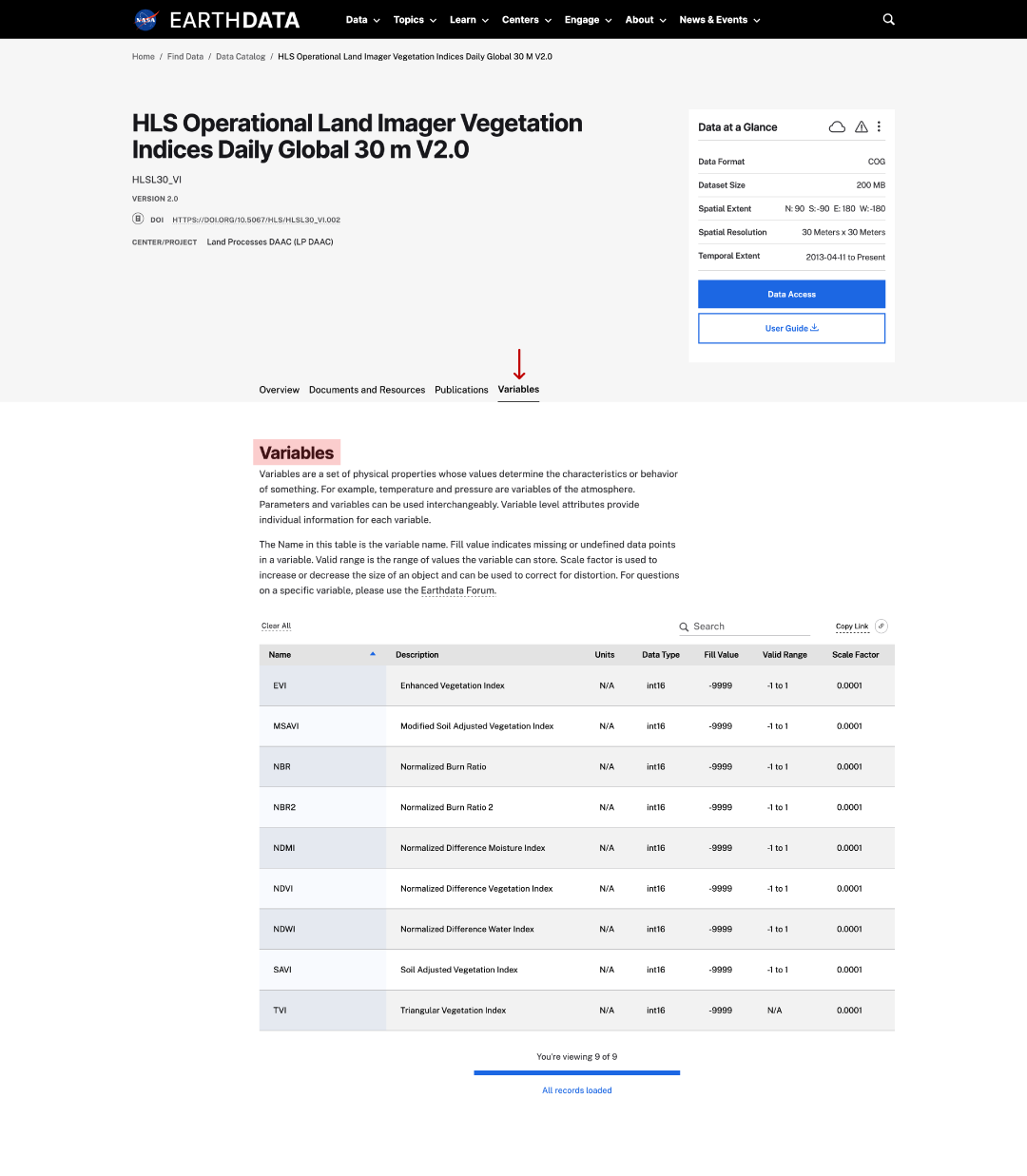
variables on dataset page
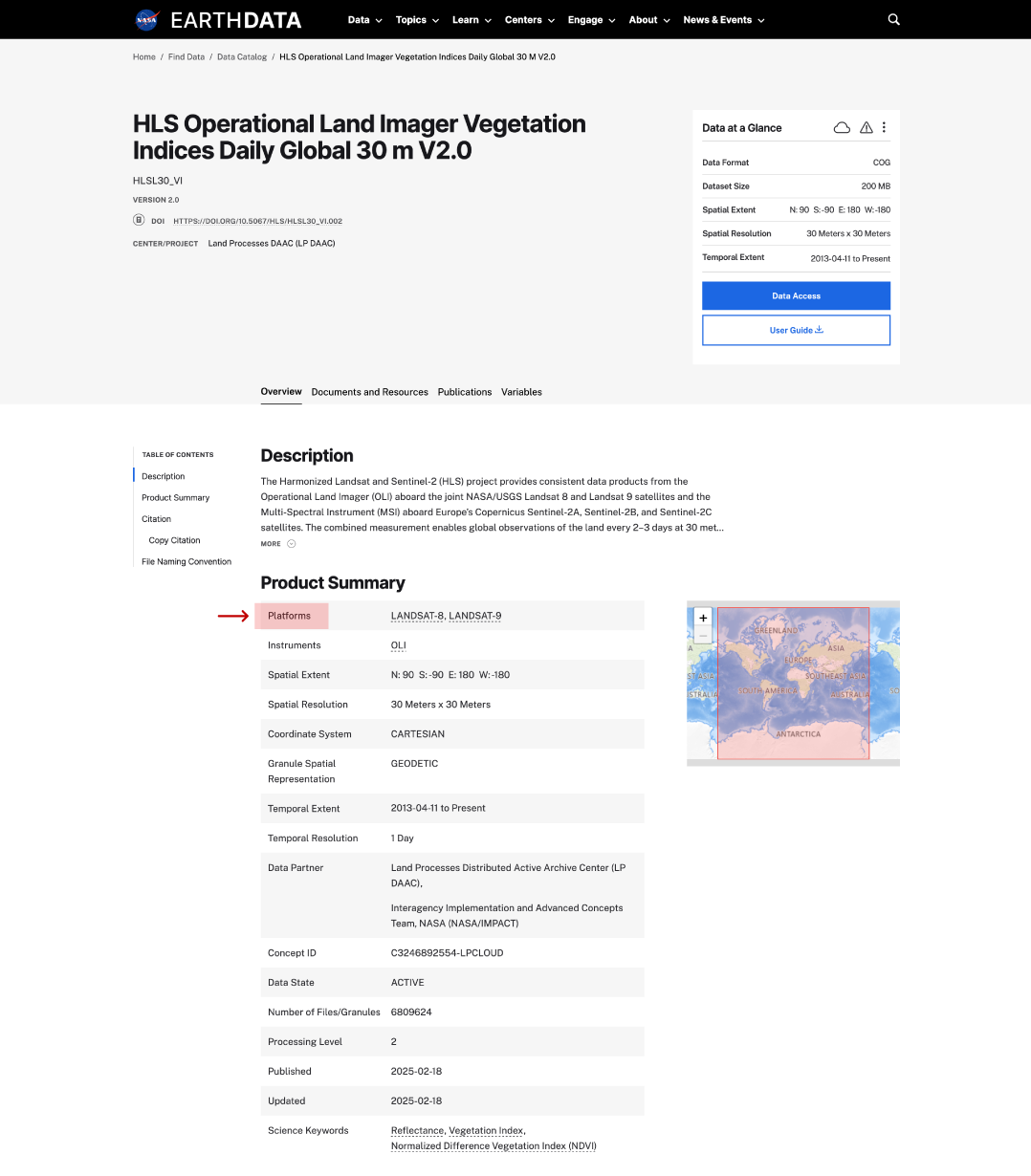
platforms on dataset page
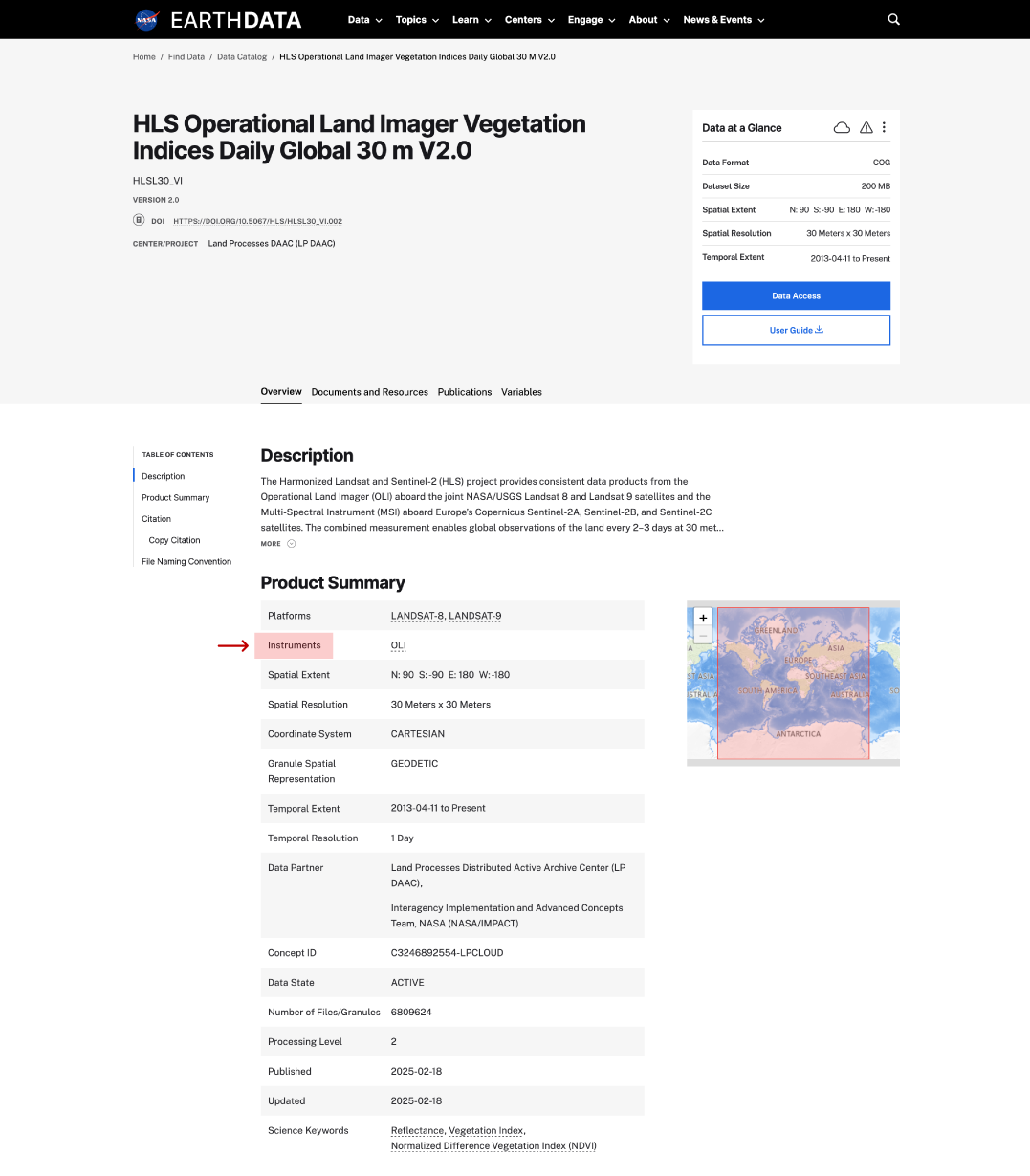
instruments on dataset page
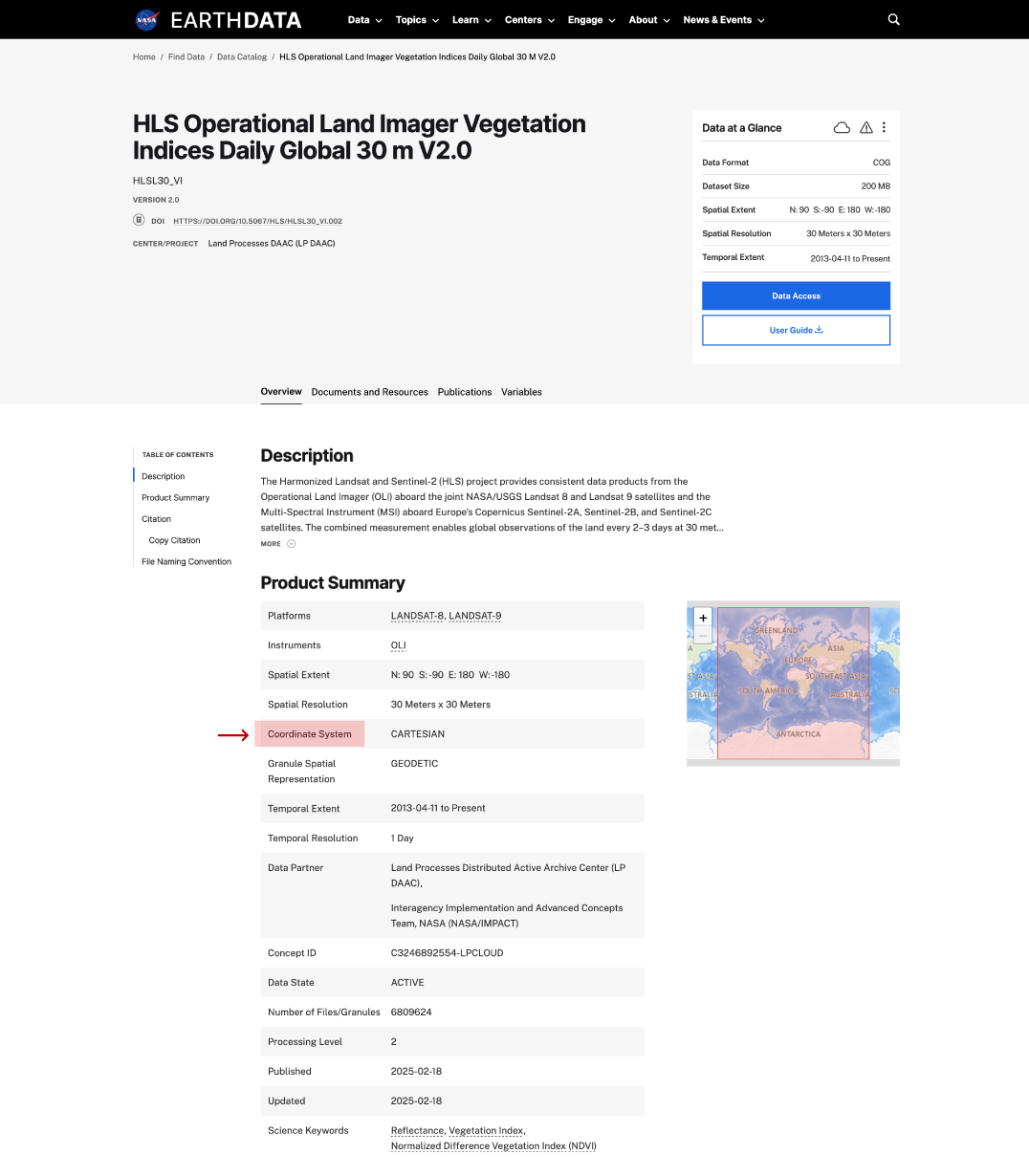
coordinate system on dataset page
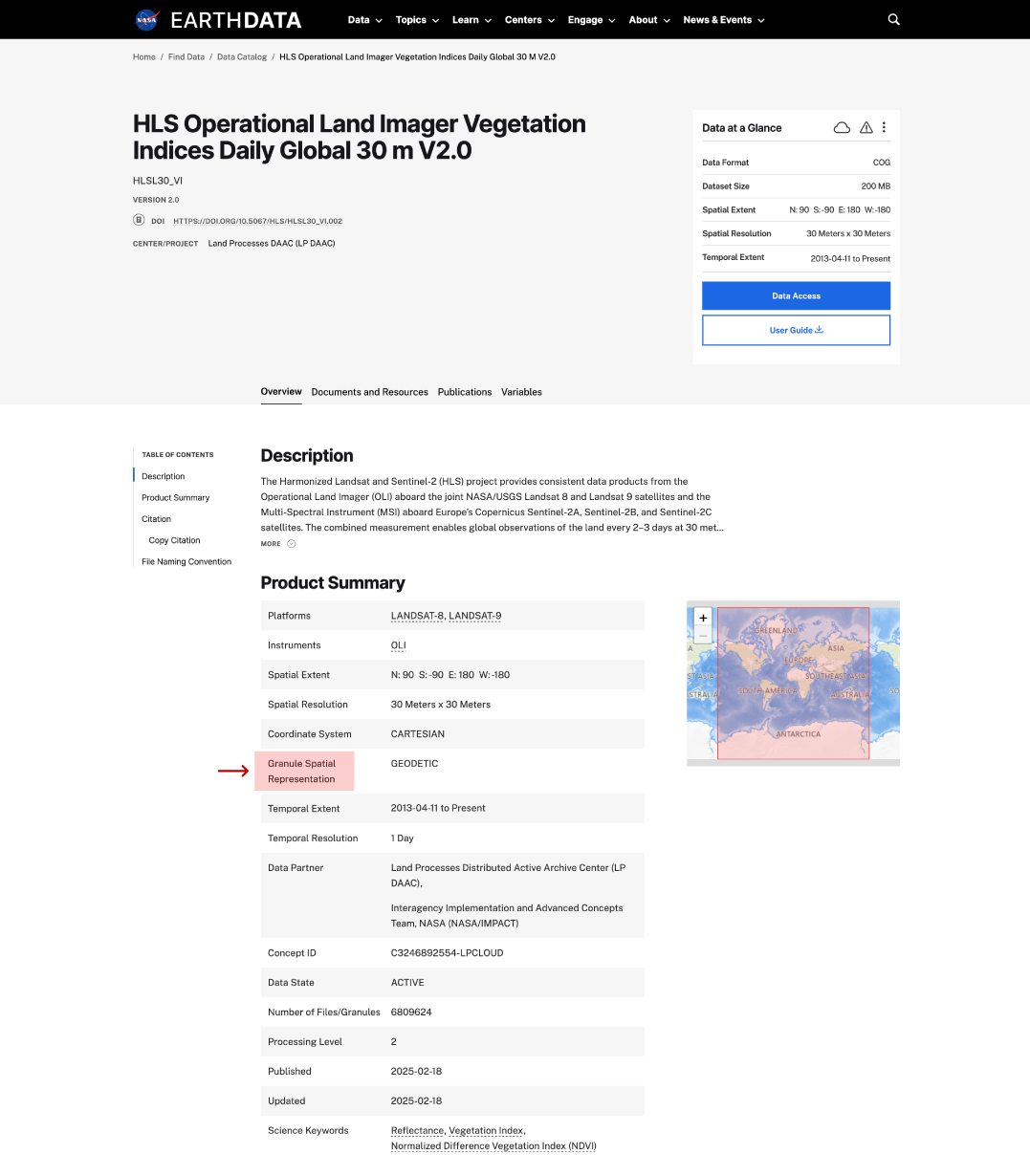
granule spatial representation on dataset page
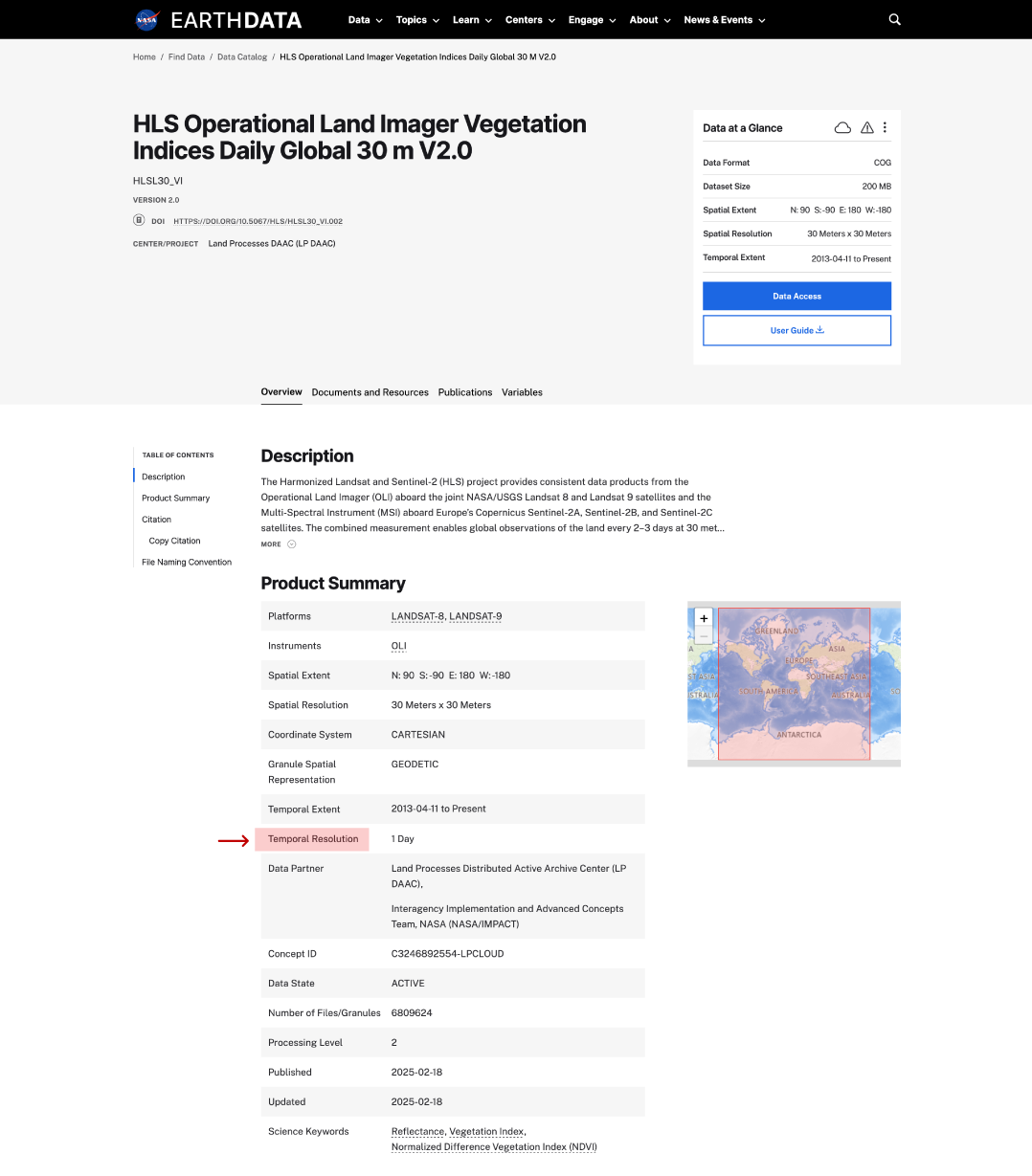
temporal resolution in dataset page
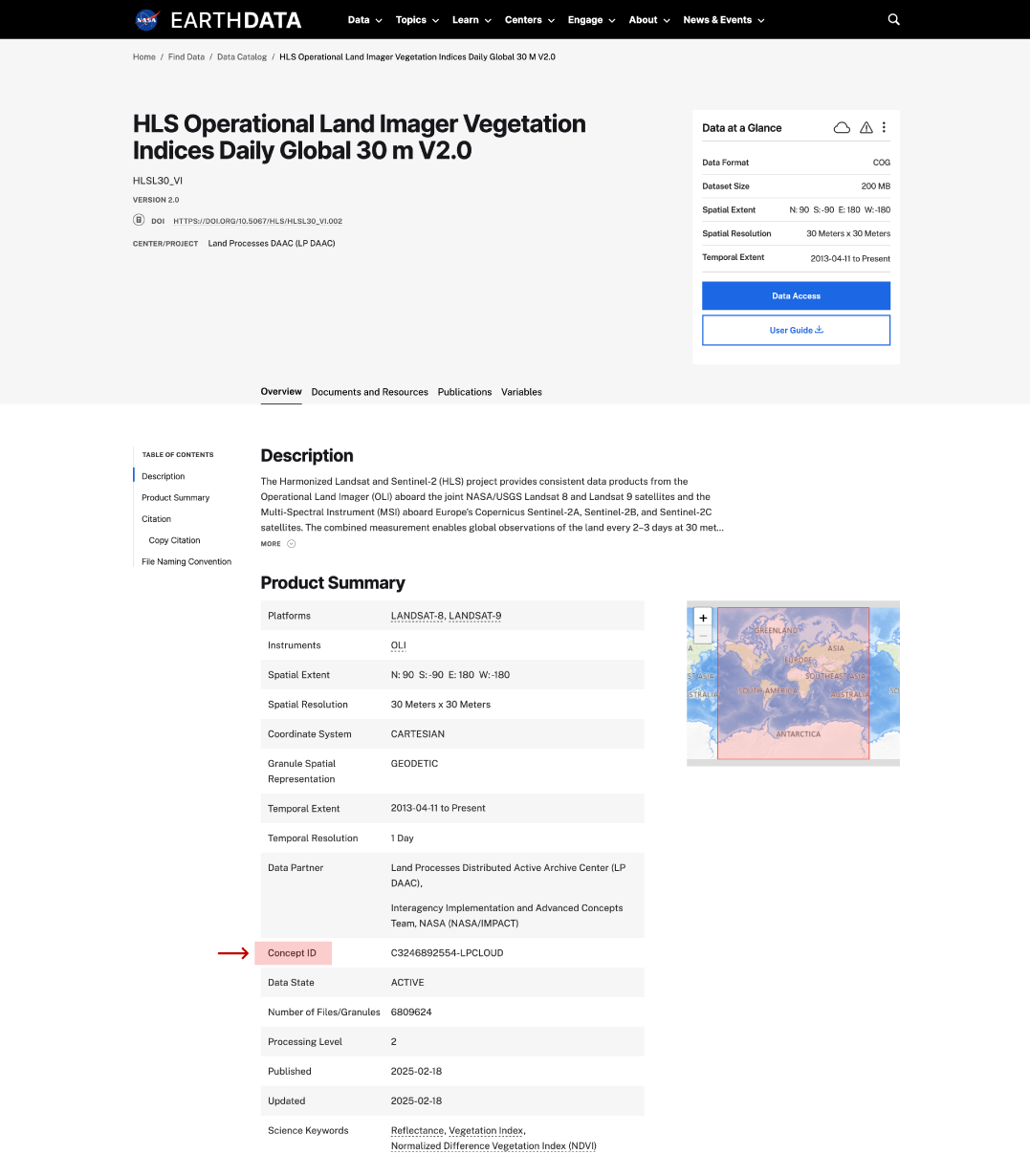
concept ID on dataset page
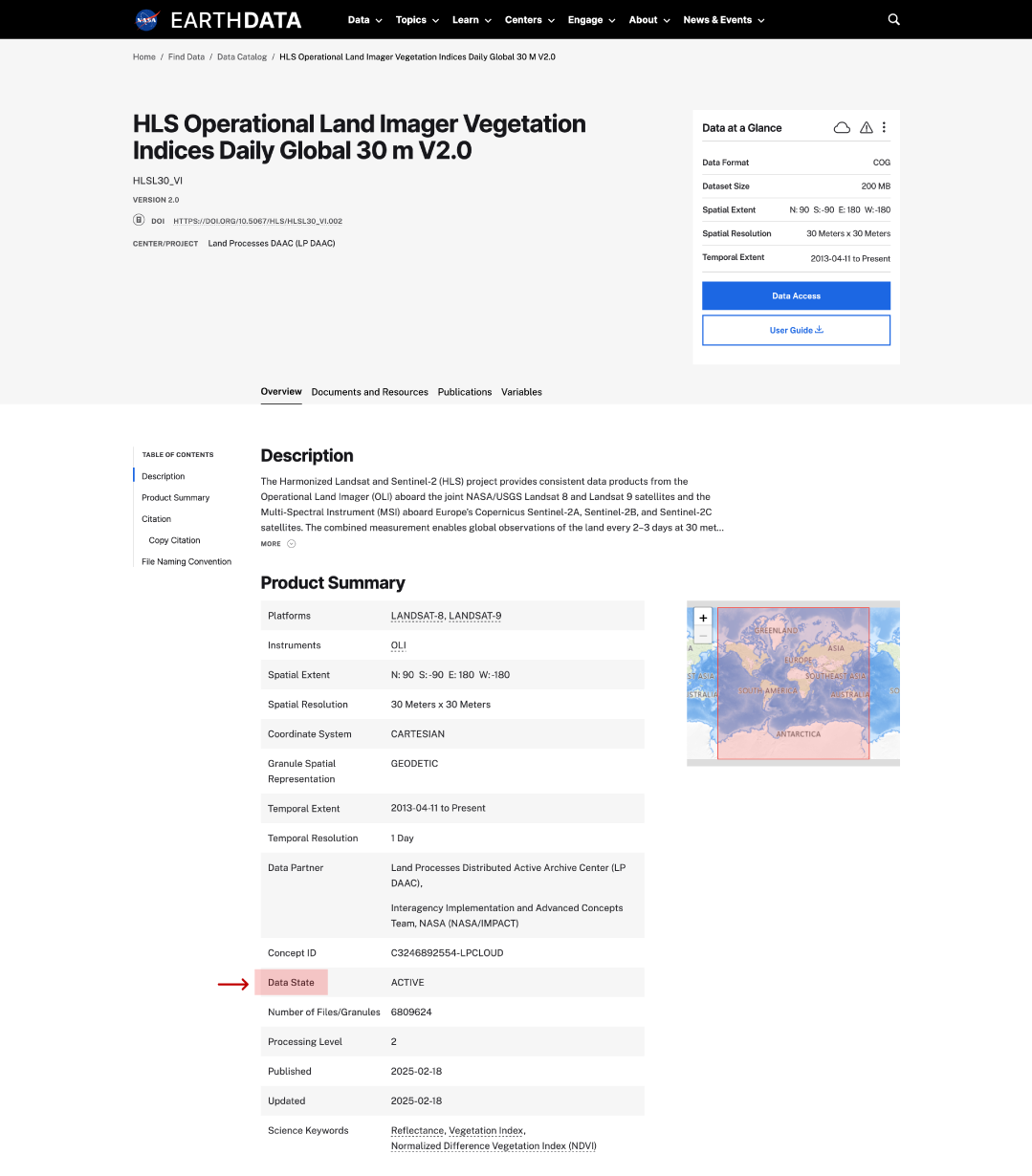
data state on dataset page
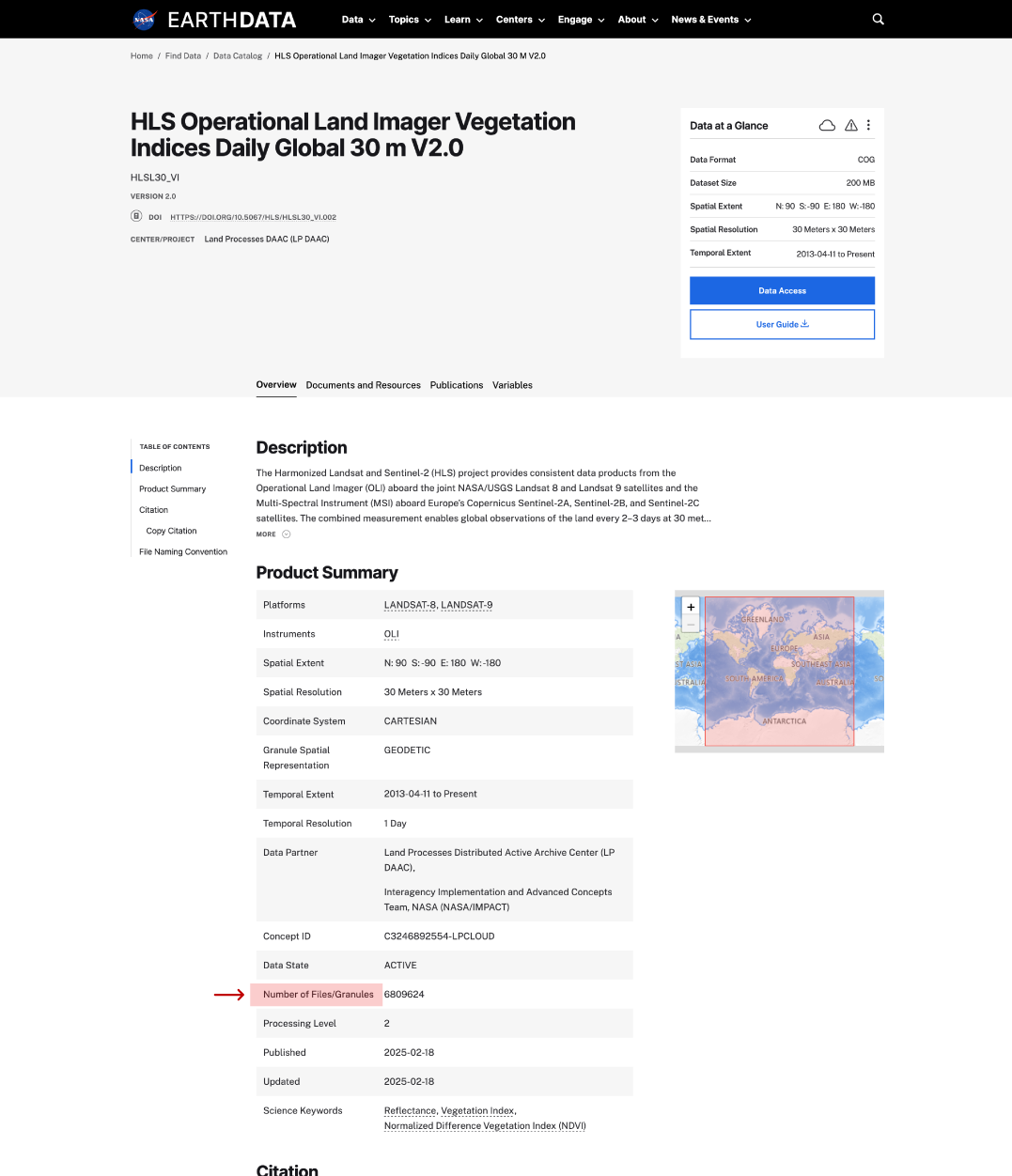
Number of files or granules
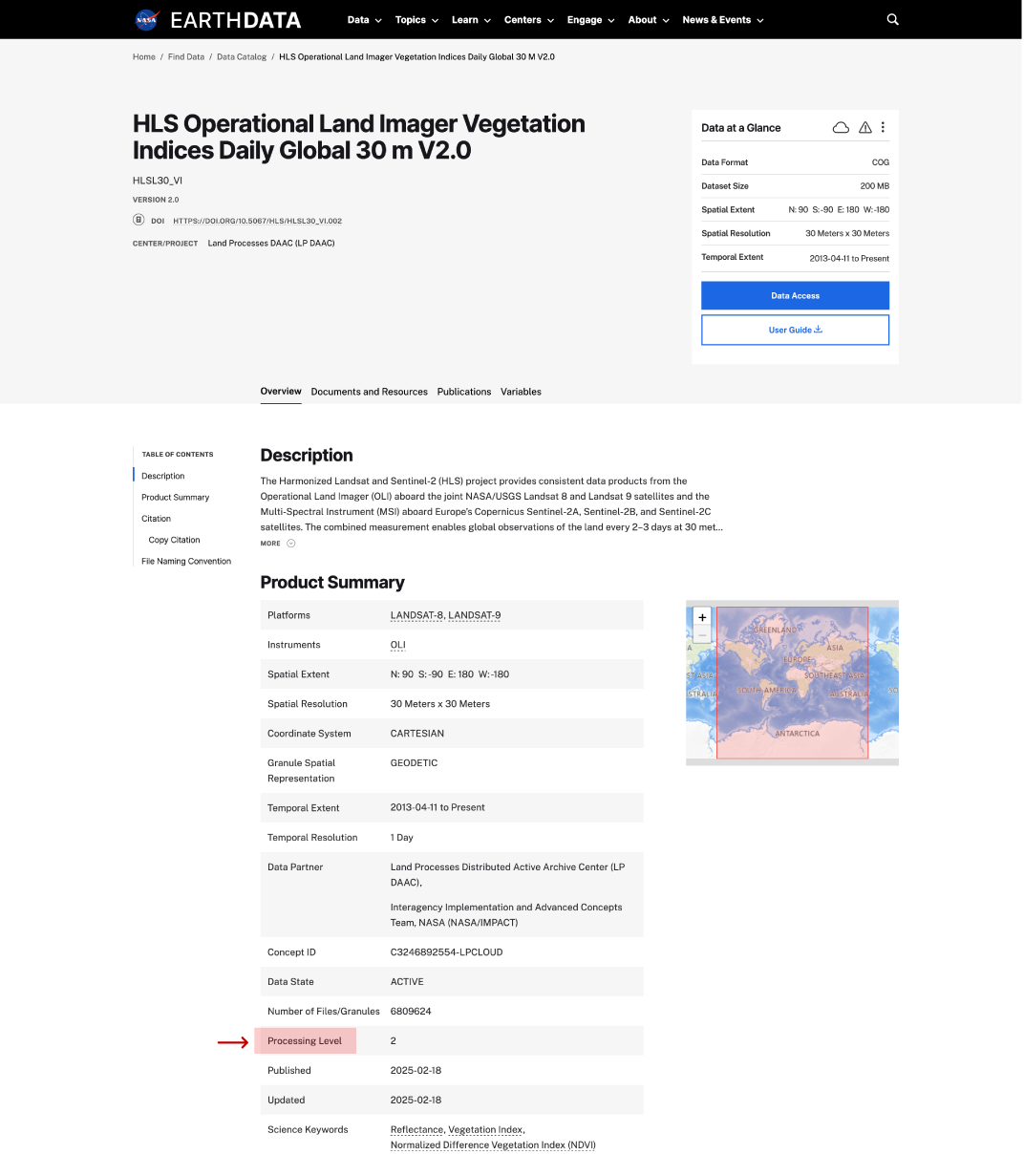
data processing level on dataset ppage
science keywords on dataset page
citation on dataset page
file naming convention on dataset page

Technology

Innovations in artificial intelligence, climate models, and cloud computing are improving the ways users work with Earth science data, especially massive datasets like those expected from NISAR. NASA leverages modern computing approaches to optimize the quality of data collected and the speed at which users are able to drill down to the details they need to support on-the-ground science.

Image

Cloud Computing

Nearly all of NASA’s Earth science data is accessible through Earthdata Cloud, making access, analysis, and visualization more efficient and cost effective. We offer resources including Python libraries, tutorials, and data recipes to help users optimize working with data in the cloud.

Image

Earth Observation Data and Artificial Intelligence

The application of artificial intelligence (AI) to Earth science data makes it possible to search through large amounts of data to find relationships.

Synthetic Aperture Radar

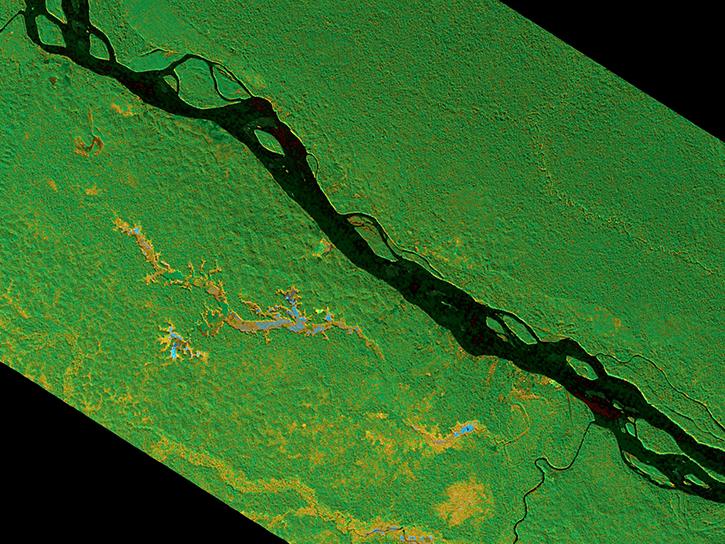
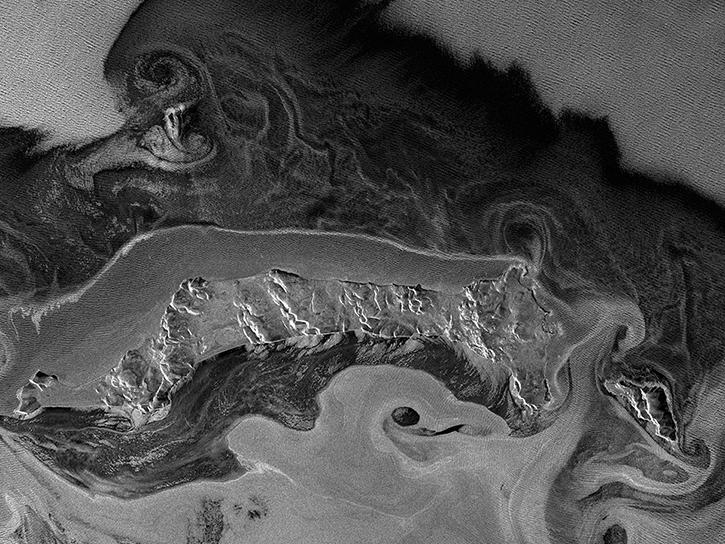
Synthetic aperture radar (SAR) is a type of remote sensing that produces fine-resolution data using a technology that, over time, can detect even minute changes on Earth’s surface.

SAR is one of the power technologies of remote sensing, and enables high resolution imagery to be created night or day, regardless of weather conditions.
The SAR Handbook was created in 2019 as a guide for forest monitoring and biomass estimation with synthetic aperture radar (SAR).

View a table of synthetic aperture radar (SAR) products and their processing levels available through NASA's Earth Science Data Systems (ESDS) Program.

General rules of thumb for interpreting synthetic aperture radar (SAR) imagery and resources for viewing SAR imagery.

Glossary of Terms

Reference the Earth Observation Data Basics Glossary to better understand terms related to the data provided by our program.

All
A B C D E F G H I J K L M N O P Q R S T U V W X Y Z
Working Agreement (W/A)

A working agreement (W/A) outlines the working commitments made between the ESDIS Project and another organization for developing, implementing and/or operating portions of the data system.

Join Our Community of NASA Data Users

While NASA data are openly available without restriction, an Earthdata Login is required to download data and to use some tools with full functionality.

Learn About the Benefits of Earthdata Login

Frequently Asked Questions

Earthdata Forum

Our online forum provides a space for users to browse thousands of FAQs about research needs, data, and data applications. You can also submit new questions for our experts to answer.

Submit Questions to Earthdata Forumand View Expert Responses

Earthdata
Forum