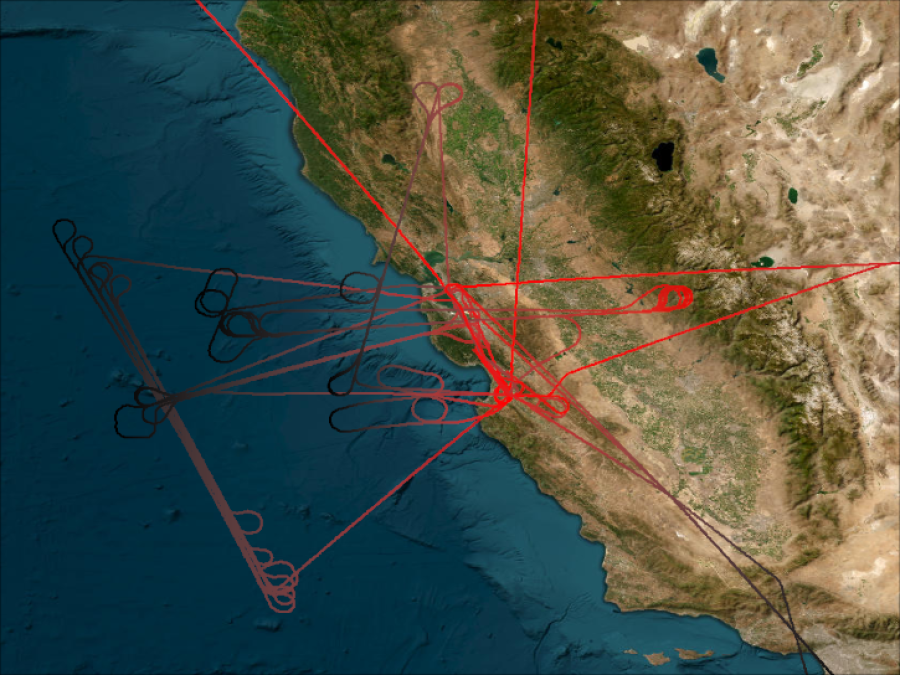
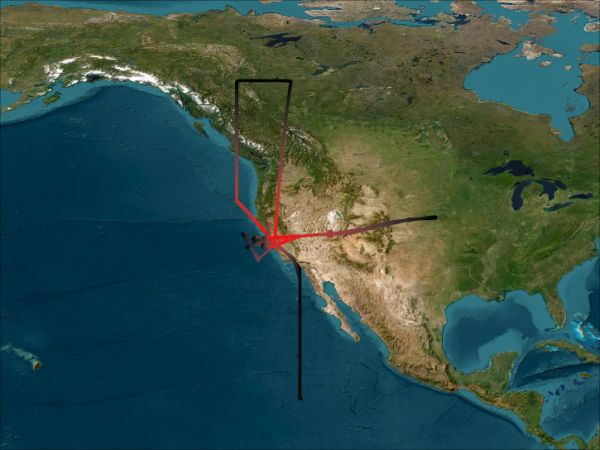
The Stratospheric Photochemistry, Aerosols and Dynamics Expedition (SPADE) campaign was a field mission conducted by NASA from October 1992 to October 1993. SPADE’s primary goal was to quantify key chemical reaction rates affecting ozone production and loss.
In order to complete its scientific objectives, the SPADE field team deployed the NASA ER-2 aircraft and balloon sondes. The ER-2 was equipped with 12 instruments to collect various atmospheric measurements. Among these instruments, the High-Sensitivity Fast-Response CO2 Analyzer (Harvard CO2) collected in-situ measurements of CO2, while the Airborne Tunable Laser Absorption Spectrometer (ATLAS) recorded in-situ measurements of N2O, CH4, CO, and ozone.
Another in-situ instrument was the Aircraft Laser Infrared Absorption Spectrometer (ALIAS), which collected data on N2O, H2O isotopes, H2O, CO, CH4, CO2 isotopes, and HCl. The Airborne Chromatograph for Atmospheric Trace Species (ACTAS) instrument, a gas chromatographer, was used to collect measurements of CFCl3, SF6, N2O, CHCl3, and CH4 among others.
The ER-2 was also equipped with the O3 Photometer (NOAA O3) and the Meteorological Measurement System (MMS). The NOAA O3 measured ozone in the atmosphere, while the MMS analyzed meteorological variables such as temperature, turbulence, altitudes, true air speeds, and 3D wind. The balloon sondes were responsible for collecting measurements on temperature, geopotential, wind direction, wind speed, and dew point depression.